
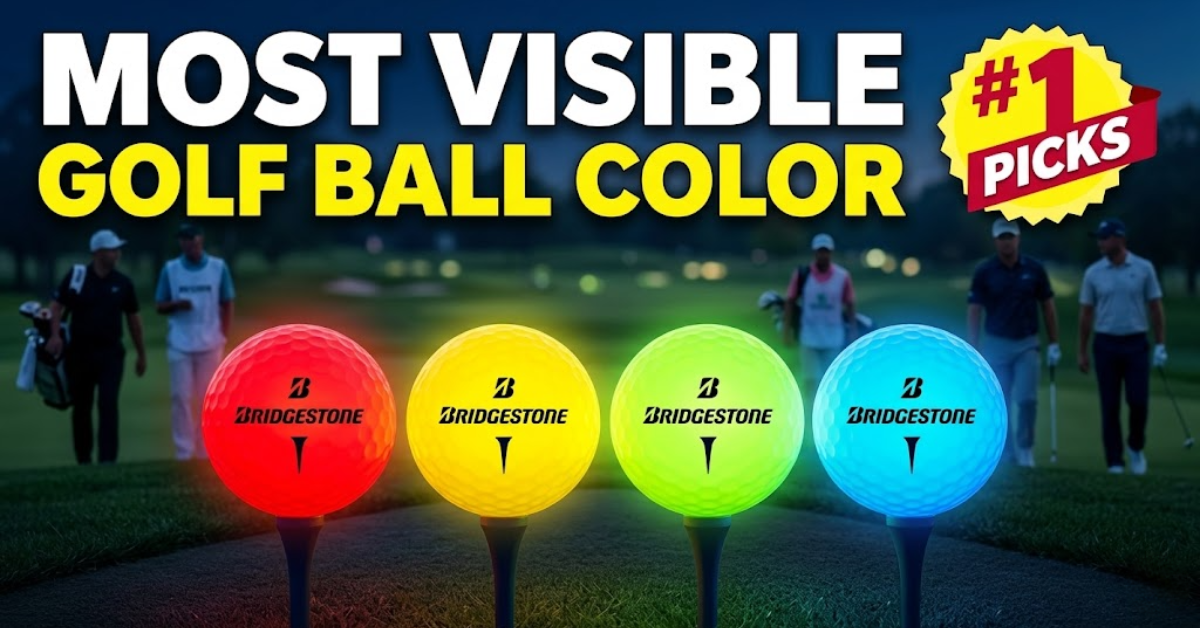
The most visible golf ball color for most golfers is yellow — but the right answer depends on where you play and what your eyes struggle with most. Lose a ball in thick rough, under autumn leaves, or into a low sun, and you quickly realize that not all colors work in all conditions. At Madknows, we have broken it down color by color so you can stop losing balls and make a smarter choice before your next round.
Why the Color of Your Golf Ball Actually Affects Your Round
Most golfers spend hundreds on clubs and barely think about ball color. But consider this — on a 200-yard drive, a colored golf ball can be tracked in flight up to 50% more easily than a white ball. That is not a small difference when you are trying to watch a ball disappear into the distance on a grey morning.
The reason comes down to how the human eye works. Your eyes have cone cells that are most sensitive to yellow-green wavelengths of light. This is the same reason high-visibility safety vests are yellow or orange — they sit in the part of the color spectrum your brain registers fastest. White balls, despite their traditional appeal, can glare in bright sunlight and vanish against a pale sky or snow-covered ground.
The other factor is contrast. A ball only stands out when it contrasts sharply against its background. That is why the best color shifts depending on the course conditions you are dealing with.
The Most Visible Golf Ball Colors Ranked by Condition
Yellow Golf Balls — Best All-Around Visibility
Yellow is the most visible golf ball color in the widest range of conditions. Against a blue sky, a green fairway, and even in damp morning rough, yellow stands out better than any other color. It sits at the peak of the human eye’s sensitivity range, which means you see it faster and track it easier in flight.
Where yellow works best: Overcast days, green fairways, wet rough, links courses, parkland courses.
Where yellow struggles: Autumn. Once fallen leaves cover the fairway in orange and gold tones, a yellow ball blends right in. Switch to a different color between September and November if you play through leaf fall.
Best yellow golf balls to try: Titleist TruFeel Yellow, Srixon Soft Feel Brite Yellow, Callaway Supersoft Yellow
Orange Golf Balls — Best in Low Light and Overcast Skies
Orange is the second most visible golf ball color and is the top choice for golfers who play early mornings or in low-light winter conditions. Against a dark sky or shadowy tree line, orange pops in a way that yellow sometimes does not.
Where orange works best: Early morning rounds, twilight golf, dark tree-lined courses, winter golf.
Where orange struggles: Do not use orange in autumn. Just like yellow, orange blends directly into fallen leaves and debris. It is also harder to spot on dry, brown fairways in summer.
Best orange golf balls to try: Volvik Vivid Orange, Vice Pro Soft Orange, Callaway Supersoft Matte Orange
Neon Green Golf Balls — The Surprise Winner in Autumn
Neon green or lime green is the best choice when leaves are on the ground. While yellow and orange disappear into the autumn colours, neon green stands out because it does not match the colour of dead leaves. Against a background of brown, red, and orange foliage, a bright neon green ball is surprisingly easy to spot.
Where neon green works best: Autumn golf, courses with a lot of leaf debris, desert-style courses with brown sandy rough.
Where neon green struggles: Summer parkland courses where green rough will swallow the ball. Avoid neon green on lush green fairways — the contrast disappears.
Best neon green golf balls to try: Volvik Vivid Lime Green, Srixon Soft Feel Brite Green
Pink Golf Balls — Best in Bright Sunlight
Pink golf balls perform surprisingly well in direct sunlight and against blue skies. Bubba Watson famously played a pink Volvik ball on the PGA Tour and the high contrast against the sky made it one of the most trackable balls in his bag. For golfers who play in hot, sunny climates — including courses in the UAE, Spain, Portugal, and Florida — pink is worth considering.
Where pink works best: Bright sunny days, blue-sky conditions, open courses with minimal tree cover.
Where pink struggles: Grey overcast days and in rough — pink loses contrast quickly in dull light.
Best pink golf balls to try: Volvik Vivid Pink, Callaway Supersoft Matte Pink
White Golf Balls — When to Stick With Tradition
White remains the most popular golf ball color for one reason: tradition. Almost every professional golfer uses a white ball, and the psychological association between white balls and serious golf is deeply embedded. However, white is objectively harder to track in bright sunlight (glare effect), against a pale sky, and in light rough.
White works best: Soft light, early evening, courses with dark-coloured rough, artificial turf facilities.
If your eyesight is good and you are playing in ideal light conditions, white is perfectly fine. If you are losing balls regularly, switching to yellow or orange will make an immediate difference.
Are colored golf balls easier to see?
Yes — and the science backs it up. Yellow and orange balls sit in the wavelength range that human eyes process fastest. In tests of visual acuity, golfers tracked colored balls in flight up to 50% better than white balls on drives over 200 yards. Whether you have perfect vision or are finding your eyesight is not quite what it was, a colored ball gives you a genuine advantage in tracking your shots.
Are Colored Golf Balls Worse Than White Ones?
No — full stop. The color of a golf ball only affects the cover dye, not the construction, compression, or performance. A yellow Titleist TruFeel performs identically to a white Titleist TruFeel. A matte Volvik plays the same regardless of which color you pick. Any golfer who tells you colored balls are “less serious” is going off old assumptions, not evidence.
Do High-Visibility Golf Balls Improve Your Score?
Not directly — a yellow ball will not fix your slice. But there is a real indirect benefit. When you know where your ball landed, you walk to it with confidence. You are not searching the rough for 3 minutes, losing your rhythm, and stepping up to your next shot flustered. Golfers who lose fewer balls tend to play faster, stay calmer, and score more consistently. The mental benefit is real even if the ball itself is not doing anything different.
Which Golf Ball Color Should You Avoid?
Blue and red are the two worst colors for golf ball visibility. Blue blends into the sky during flight, making it almost impossible to track. Red disappears against the ground almost everywhere except snow. Green golf balls are also a poor choice on any lush parkland course — they vanish the moment they land on the fairway. Save green for desert and brown-rough courses only.
Advantages of Using a High-Visibility Ball
The use of golf balls with high visibility offers three main benefits. The first one is quite obvious. High-visibility balls make it much easier to keep track of a ball while it is in the air. As mentioned earlier, it is disappointing to hit a flawless tee shot and then not be able to appreciate it because you are unable to follow where the ball goes. Using high-visibility balls greatly increases your chances of fully enjoying all of your good shots.
Another benefit, as we read previously, is the ability to spot golf balls in the fairway or rough. There is nothing more vexing than knowing your ball is in play, but not being able to locate it. Being able to easily spot high-visibility balls saves time and speeds up the pace of the game, benefitting all involved. This is a win-win scenario.
The final benefit of high-visibility balls is their utility when putting. Golf balls such as the TaylorMade Pix and Srixon Divide are highly advantageous when aligning putts and assessing the stroke’s precision. The following are some of the benefits of using high-visibility golf balls:
Best High-Visibility Golf Balls in 2026
Here are the top picks across colors that will actually help you find your ball and enjoy your round more:
Best Yellow — Srixon Soft Feel Brite Yellow
A soft two-piece ball with excellent feel around the greens and a bright yellow finish that holds its color even after scuffing. Great all-rounder for mid and high handicappers.
Best Orange — Volvik Vivid Orange
Volvik’s matte finish reduces glare and the orange color is outstanding in low-light conditions. The matte surface also makes the ball slightly easier to track through the air.
Best Neon Green — Volvik Vivid Lime Green
The go-to ball for autumn golf. Stands out against fallen leaves and brown rough better than any other color on the market right now.
Best Pink — Callaway Supersoft Matte Pink
Callaway’s Supersoft is one of the most popular balls for regular golfers worldwide, and the matte pink version is genuinely easy to track in bright sunlight. Low compression suits slower swing speeds too.
Best Overall Value — Titleist TruFeel Yellow
If you want a Titleist ball in a visible color, the TruFeel Yellow gives you the brand quality and consistency you trust with a finish that is easy to spot in most playing conditions.
Frequently Asked Questions — Most Visible Golf Ball Color
Yellow is the most visible golf ball color in most playing conditions. It sits at the peak of the human eye’s sensitivity range and creates strong contrast against green fairways, blue skies, and grey overcast backgrounds. For autumn and leaf-fall conditions, neon green is a better choice.
Yes — colored golf balls are completely legal under both USGA and R&A rules. As long as the ball meets the standard size and weight requirements, there is no rule against playing a yellow, orange, pink, or any other colored ball in competition. Several Tour professionals have used colored balls in official events.
Orange and neon green are the easiest colors to find in thick rough. Yellow is good in green rough but avoid it when there are fallen leaves on the ground. White is one of the worst colors for finding in long grass because it blends with light-colored soil and dead grass underneath.
Yes — the construction, compression, cover material, and performance of a colored golf ball are identical to its white version. The only difference is the dye used on the outer cover. A Srixon Soft Feel Brite Yellow performs the same as a Srixon Soft Feel White.
Blue is the hardest color to track in flight because it blends into the sky. Red is the hardest to spot on the ground because it disappears against most terrain types. Green golf balls are problematic on lush courses for the same reason — too much background color match.
Final Thought
For most golfers, most of the time, yellow is the answer. It works across the widest range of conditions, it is available in almost every major ball brand, and the science behind why it works is solid. If you play through autumn, switch to neon green from September through November. If you play early mornings or winter rounds, orange is your best bet in low light.
The one thing all golfers can agree on: losing a ball is frustrating, slows down the group, and costs money. Picking the right color for your conditions is one of the simplest improvements you can make to your game today — no lesson required.
Want to find the right ball for your handicap and swing speed, not just your eyesight? Head over to the Madknows Golf Ball Guide for full reviews and comparisons of the best balls for every type of golfer. And if you are thinking about upgrading more than just your ball, check out our Golf Gear Reviews section — everything you need to play better is right here at Madknows.