

Most golfers think buying a new, expensive putter will fix their greenside struggles. But the truth is, putters are not designed to hit curveballs. You step up to a simple putt and miss the cup entirely. Frustration quickly sets in.
The embarrassment of three putting ruins your scorecard and wrecks your weekend. You keep giving away easy strokes on the green because you trust the wrong feelings.
It really does not have to be this hard. According to expert Mister One Putt, the reality is that every putt is a straight putt. You just need to learn three mechanical and visual tricks to execute them perfectly. If you learn these secrets, you will beat almost everyone else on the course.
Putting Aligner
1. The Physics of Putting: How to Roll the Golf Ball Straight

Have you ever blamed your putter for a bad roll? Many players think special grooves create magic spin. That is a myth. Gravity and physics dictate the break. Your clubface does not. Putters are simply flat metal tools. They push a ball forward.
Your only real job is to roll the golf ball straight. Every single putt you hit is a straight putt. The biggest difference between a pro and a weekend player is face rotation. The average amateur has 20 degrees of face rotation during a stroke. They twist the club back and twist it forward. Meanwhile, tour pros have only 4 to 6 degrees of rotation. Less rotation means a much straighter roll. You want a quiet clubface.
You can fix this twist with the 5 inch rule. Research proves this is a real fact. You just need to keep the putter square for 5 inches back. Then you keep it square for 5 inches through impact. If you do that, the face will be perfectly square at contact. You do not need to worry about the club arcing after that point. Just focus on that small area.
Next, you need to learn the 9 inch rule. This applies to any putt over 3 feet. You must hit the ball with proper firmness. Hitting it firm ensures the ball rolls perfectly straight for the first 9 inches. It will power through any small bumps.
After that 9 inches, gravity takes over. The slope of the green will pull the ball to the hole. Practice keeping the face quiet for those small distances. You will roll the golf ball straight every single time.
2. Overcome the Optical Illusion: Putting Alignment Tips
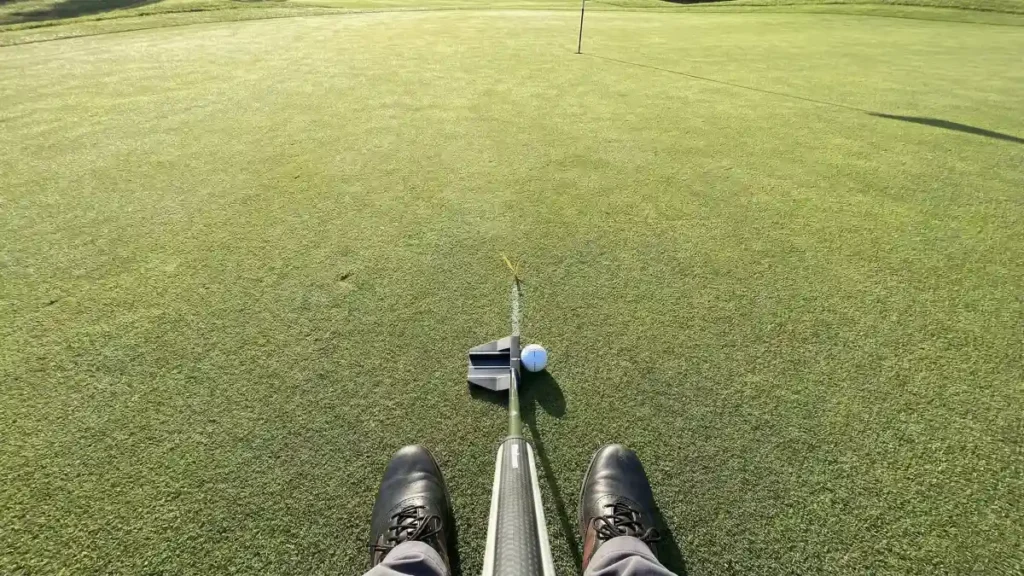
Have you ever lined up a putt, stood over the ball, and felt like you were aiming in the completely wrong direction? This happens to everyone. It happens because your eyes play tricks on you.
When you stand behind the ball, you read the green with binocular vision. You see the whole picture clearly. When you stand over the ball, your head is down. Your face is turned to the side. It is exactly like driving a car down the road while sitting in the passenger seat. You are trying to steer while looking out the side window.
Intermediate Target
-
1. Read the Green
Read the green from directly behind your golf ball to visualize the overall break and slope.
-
2. Find Start Line
Based on the break, determine the exact straight line your ball needs to start on.
-
3. Pick Your Spot
Pick an intermediate target (like a discolored blade of grass) exactly 9 to 12 inches in front of your ball.
-
4. Align the Face
Ignore the hole entirely. Align your putter face directly square to that specific 12-inch target.
-
5. Confident Stroke
Trust your setup. Make a confident stroke to roll the ball directly over your spot and let the green do the rest.
Because your eyes are tricking you, you need a physical anchor. This anchor removes all the guesswork. Here is the exact routine to get the best putting alignment tips:
- Read the green from behind your golf ball.
- Find your intended start line.
- Pick an intermediate target exactly 9 to 12 inches in front of your golf ball.
- Align your putter face directly to that specific target.
- Trust your setup and make a confident stroke.
Your target can be very simple. Look for a discolored blade of grass. You can also use an old ball mark or a grain of sand. You must completely trust this spot. Do not trust your brain’s deceptive feelings. When you follow this process, you stop second guessing yourself. You will hit your intended line much more often.
3. Aiming vs. Reading: Why Your Subconscious is Ruining Your Stroke
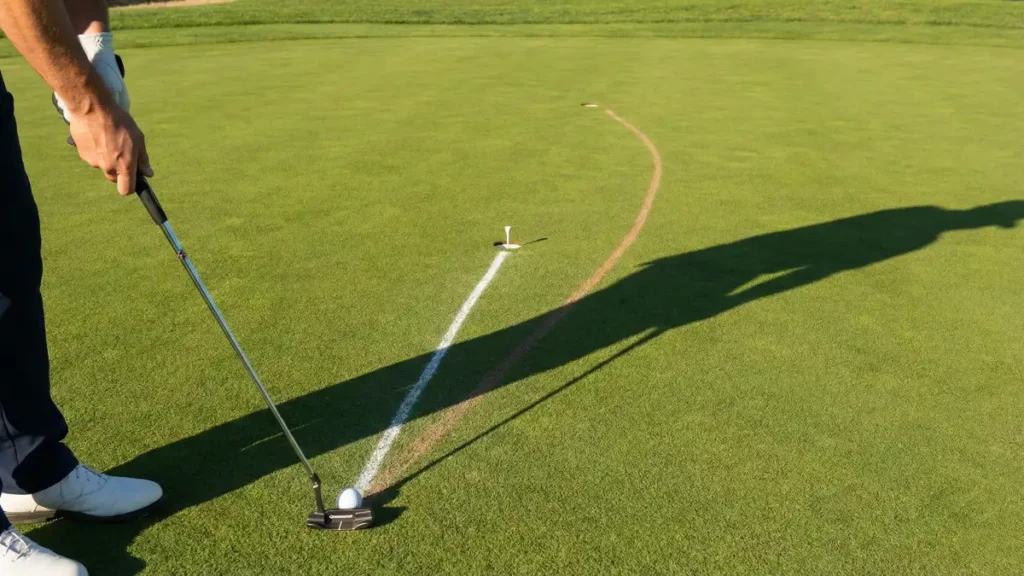
Do you ever read a putt correctly but still miss the hole by a wide margin? There is a massive difference between reading a green and actually aiming your putter.
You might know a putt breaks 6 inches to the right. But that does not mean your putter is actually pointed 6 inches right. Many players aim straight at the hole by mistake. Their subconscious brain knows the putt needs to go right. So they make a bad, jerky stroke. They try to push the ball 6 inches to the right at the last second. They manipulate their hands to make up for bad aim.
This mechanical compensation completely ruins your consistency. It works sometimes. But you will badly miss putts that break the opposite way. You need to verify your aim to learn how to putt better. You can fix this disconnect by using the Tee Test.
First, use a proven method like the T read green reading system to pick your spot. Next, place a wooden tee exactly where you want the ball to start rolling. Then, set up to your ball as normal.
4. The Best Golf Putting Aids for Immediate Feedback
Do you practice for hours without knowing if your stroke is actually improving? Feeling a good stroke is incredibly hard. Your hands lie to you. You need real tools that force you to practice correctly.
Putting Precision
-
Alignment Sticks
Place two sticks parallel. Practice making your stroke between them to keep a square face. Make the gap tighter as you improve.
-
True Stroke Putting Track
This amazing tool by Brian Tennyson forces your stroke to stay on a proper path, making it impossible to over-rotate the face.
-
DIY One Putt Ruler
Cut a metal yardstick to 14 inches. Draw a line 9 inches from the front. Place the ball on the line and roll it straight off to groove the physics rules.
-
Alignment Ball Mark
This small adjustable marker helps perfectly match the line on your ball to your visual read, training your eyes to see the correct start line.
These golf putting aids will give you instant visual feedback on the practice green:
- Alignment Sticks: Place two standard sticks parallel on the green. Drop a ball between them. Practice making your stroke between the sticks to keep a square face. Make the gap tighter as you get better.
- True Stroke Putting Track: Brian Tennyson created this amazing tool. It forces your stroke to stay on a proper path. It makes it completely impossible for you to over rotate the putter face.
- DIY One Putt Ruler: Buy a simple metal yardstick. Cut it down to exactly 14 inches. Draw a line 9 inches from the front end. That leaves 5 inches in the back. Place your ball on the line. Practice rolling the ball straight off the front end. This grooves the physics rules perfectly.
- Alignment Ball Mark: This is a small adjustable marker. It helps you perfectly match the line on your golf ball to your exact visual read. It trains your eyes to see the correct start line.
Using these physical tools ensures your practice time is not wasted. They provide strict boundaries for your stroke.
5. How to Fix Your Eye Bias on the Practice Green
Do you feel completely uncomfortable when you stand over a breaking putt? You read the green perfectly from behind the ball. But when you get into your stance, your brain says your aim is wrong.
This creates a huge disconnect in your head. Your eyes tell your hands to change the stroke at the last second. You hit a terrible putt just to satisfy your brain. You must train your eyes to accept the true line.
You can fix this eye bias with a simple drill. First, place your metal yardstick on the practice green. Point the front dot exactly where you want the ball to start. Stand behind the ruler to verify the line is perfect.
Next, step up and take your normal putting stance. Just look down at the setup. Notice how different the correct line looks from this side angle. Memorize this exact picture. If you repeat this drill, your brain will finally learn to trust the correct aim.
Conclusion
Putting does not require magic or expensive gear. You just need to roll the ball straight. You must trust your intermediate alignment targets. You also need to verify your aim matches your actual read.
These three simple concepts will completely transform your scorecard. You will stop giving away easy strokes. You will finally feel confident standing over the ball.
Your next step is simple. Go grab a metal yardstick and cut it to 14 inches. Head to the practice green this weekend and start testing your stroke. Follow these steps and you will finally know how to putt better.