
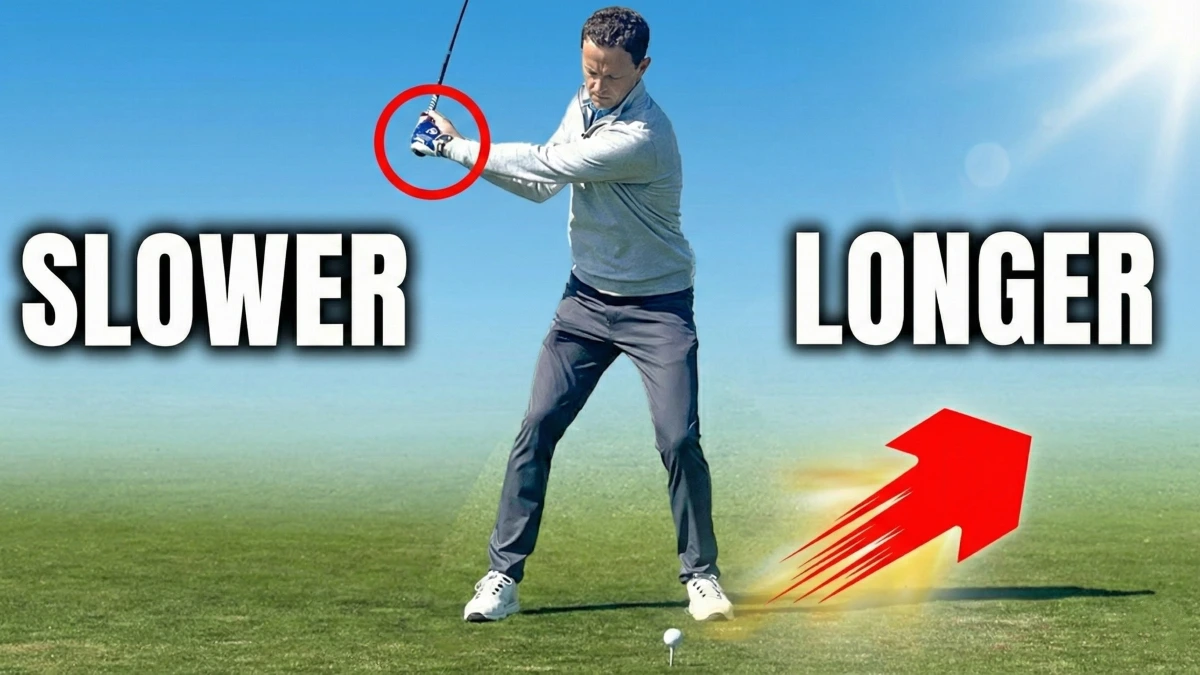
Ever feel like you put 110 percent effort into your swing, only to watch the ball fly shorter than it did during your warm up? You grip the club tight and swing with all your might. This forced effort causes severe tension.
It ruins your strike and sends the ball deep into the trees. Effort rarely equals efficiency in golf. Your playing partners probably outdrive you with buttery smooth swings. That feels incredibly frustrating.
Golf coach Danny Maude sees amateurs fall for this exact trap every single week. Good players look like they barely try because they find a specific downswing position. This optimal position makes hitting the ball far incredibly easy. You will learn their secret today.
The Swing Sequencer
The Distance Trap: Why Trying Harder Ruins Your Swing
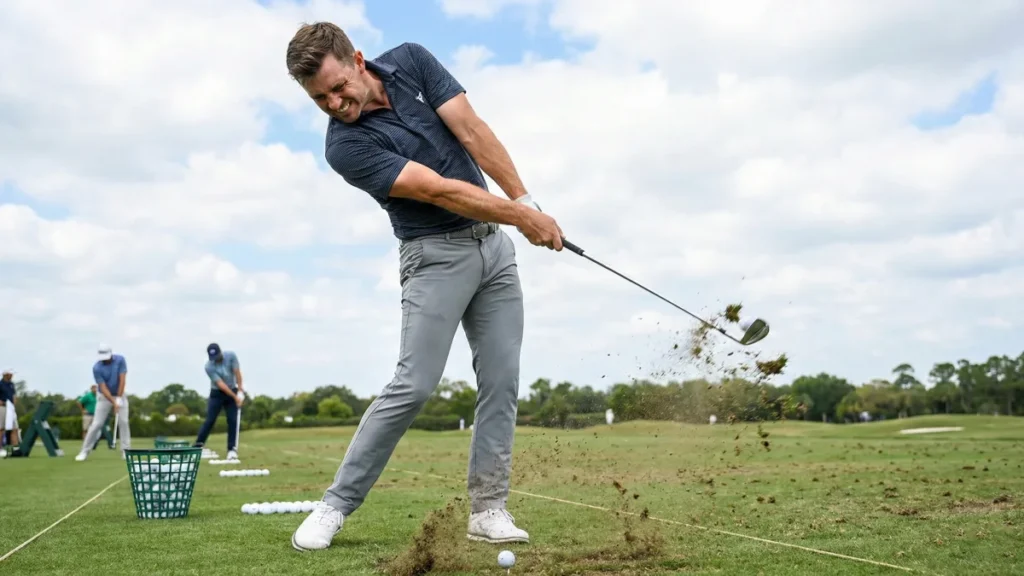
We have all been there on the 18th tee box. You need a big drive. You tense up. You swing out of your shoes and hit a weak slice.
This happens because tension ruins your swing sequence. The primary fault is rolling your forearms inward too early in the backswing. This moves the clubhead entirely behind your hands. The shaft gets completely horizontal way too early.
Think about a baseball swing. A baseball swing is perfectly horizontal. Golf is very different because the ball sits on the ground. Golf requires a tilted 45 degree swing arc to make proper contact.
When you roll your forearms early, your body panics. It forces the club steep on the way down to reach the ball. This steep path causes the dreaded chicken wing finish. You end up hitting weak and slicing shots.
Trackman launch monitors show that maximum distance comes from a high Smash Factor. A perfectly centered strike at 85 miles per hour goes much further than an off center strike at 95 miles per hour.
To fix your downswing, we actually must start with the first two feet of your backswing. This is how you swing slower hit further.
Step 1: Fix Your Backswing with the Straight Back Drill
A bad backswing forces a bad downswing. Going from a shallow backswing to a steep downswing kills your power. You want the exact opposite sequence. You want to move from steep to shallow.
Your goal is to keep the clubhead outside your hands during the takeaway. This prevents that early inward roll. A slightly steeper backswing naturally encourages a shallower downswing. We have two reliable golf downswing drills to fix this immediately.
The Takeaway Fix
-
The Extra Ball Push
Place a second ball directly behind your clubhead at address.
-
Push Straight Back
Practice pushing that ball straight back along the target line. Don’t let wrists roll.
-
Razor Blade Fence
Picture a sharp metal fence right behind your hands/heels at address.
-
Avoid the Danger
Keep hands away from the fence (Nicklaus visualization) to keep the clubface looking at the ball longer.
Drill 1: The Extra Ball Push Place a second golf ball directly behind your clubhead at address. Practice pushing that second ball straight back along your target line. Do not let your wrists roll. You will feel the clubhead stay well outside your hands.
Drill 2: The Razor Blade Fence Picture a sharp metal fence right behind your hands at address. Keep your hands away from the fence as you take the club back. This stops your wrists from rolling inside. Jack Nicklaus used this exact visual to keep his clubface looking at the ball longer.
Grab a sleeve of golf balls. Hit your first ten shots using the straight back drill. Once your backswing stays on the right track, your downswing can finally become effortless.
Step 2: The Downswing Toss for Effortless Power
Drop your golf club for a second. Pretend you hold a baseball in your right hand.
How would you throw that ball far down the fairway? You would drop your trail elbow right underneath your lead arm. You would simply toss the ball out into the grass. This is the exact motion you need for an effortless golf swing.
Grab your club again. Hold it out in front of you. Place your trail elbow naturally below your lead elbow. Make a gentle tossing motion.
Notice how your body unwinds naturally. Your body moves forward without any forced rotation. You do not need to pull or yank the club. You just let the weight of the club fall naturally. Forcing your trail elbow high is what causes that steep over the top swing. The tossing motion drops the club perfectly onto the 45 degree track.
But this throwing motion has one major flaw. It leaves the clubface wide open. If you stopped right here, you would hit a beautiful push slice into the next fairway. Here is how we square the face.
Step 3: Squaring the Face Without Flicking
You have the perfect downswing path now. But you must square the clubface to hit the ball straight. Do not flick your wrists at impact.
Flicking your wrists causes weak and inconsistent strikes. You need a much stronger release. The right fix is turning your forearms down toward the grass. Think of this as tipping the club.
Practice this in slow motion without hitting a ball first. Make your downswing toss. As you reach the impact zone, let your forearms rotate. Your trail arm will move from underneath your lead arm to over the top of your lead arm. Left arm stays under and right arm turns over.
This simple forearm tip squares the face naturally. You do not need perfect timing. Bring it all together into one cohesive flowing motion. This simple turn creates serious speed without the extra physical strain. This specific sequence will help you hit every club longer.
| Step | The Goal | The Action |
| 1. Fix Backswing | Keep the clubhead outside your hands to stop early wrist rolling. | Push an extra golf ball straight back on your takeaway. |
| 2. Downswing Toss | Drop your trail elbow under your lead arm for a proper swing path. | Make a smooth throwing motion like tossing a baseball down the fairway. |
| 3. Square Face | Close the open clubface at impact without flicking your wrists. | Turn your right forearm over your left arm as you swing through the ball. |
How to Find the Perfect 45 Degree Swing Arc

Many golfers swing the club straight up and down. This creates a completely vertical circle. A vertical chop destroys your power. You end up slicing the ball into the woods.
Golf requires a specific tilted path to make solid contact. Look at your shaft angle at address. It sits near a 45 degree angle.
The best players return the club to this exact angle on the downswing. Their hands drop down smoothly. The clubhead stays slightly behind their hands. This allows your body to turn beautifully onto the golf ball. The club moves naturally through the impact area. You make zero late compensations to hit the ball straight.
Stop chopping at the ball. Let the club fall onto that 45 degree track. You will create speed with zero extra physical stress.
Why a Simple Frisbee Fixes Your Swing Speed
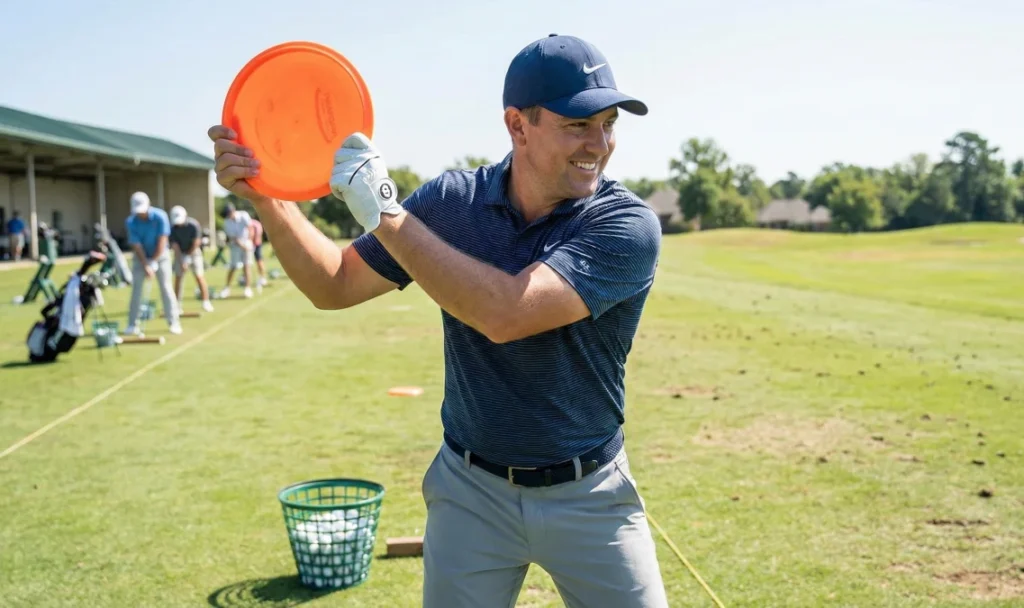
Hitting a tiny golf ball makes you tense. You easily forget the smooth throwing motion when you look down at the grass. You revert right back to your old steep swing.
Grab a plastic frisbee to build good habits without the stress. Stand in your normal golf posture. Practice tossing the frisbee straight down the fairway.
The Frisbee Toss
-
Reduce Tension
Hitting a tiny ball creates anxiety. Tossing a frisbee removes the stress and promotes a natural motion.
-
The Drill
Stand in your normal golf posture. Practice tossing a frisbee straight down the fairway.
-
Natural Drop
Notice how your trail arm drops underneath naturally. You don’t force it; it just happens.
-
Massive Speed
This builds trust. You will feel like you are swinging slower, but you will create more speed through the ball.
Notice how your trail arm naturally drops underneath. You do not force this motion. It just happens. You will probably leave the clubface open at first when you try this with a real club. That is completely fine. Focus entirely on the simple throwing sensation first.
Once you master the smooth toss, you add the forearm turn to square the face. This simple practice builds incredible trust in your swing. You will swing slower but create massive speed through the ball.
Conclusion
Distance is never about brute muscle. Distance is about proper sequence and striking the center of the face. You generate incredible power when you let the club do the work. Keep the club outside your hands on the way back. Drop your trail elbow under on the way down. Naturally turn your forearms to square the face at impact.
Grab two golf balls today. Head straight to the driving range. Try the straight back drill for your first ten shots to feel the proper takeaway.
Once you feel this sequence, you will swing slower, make better contact, and hit every club longer.