
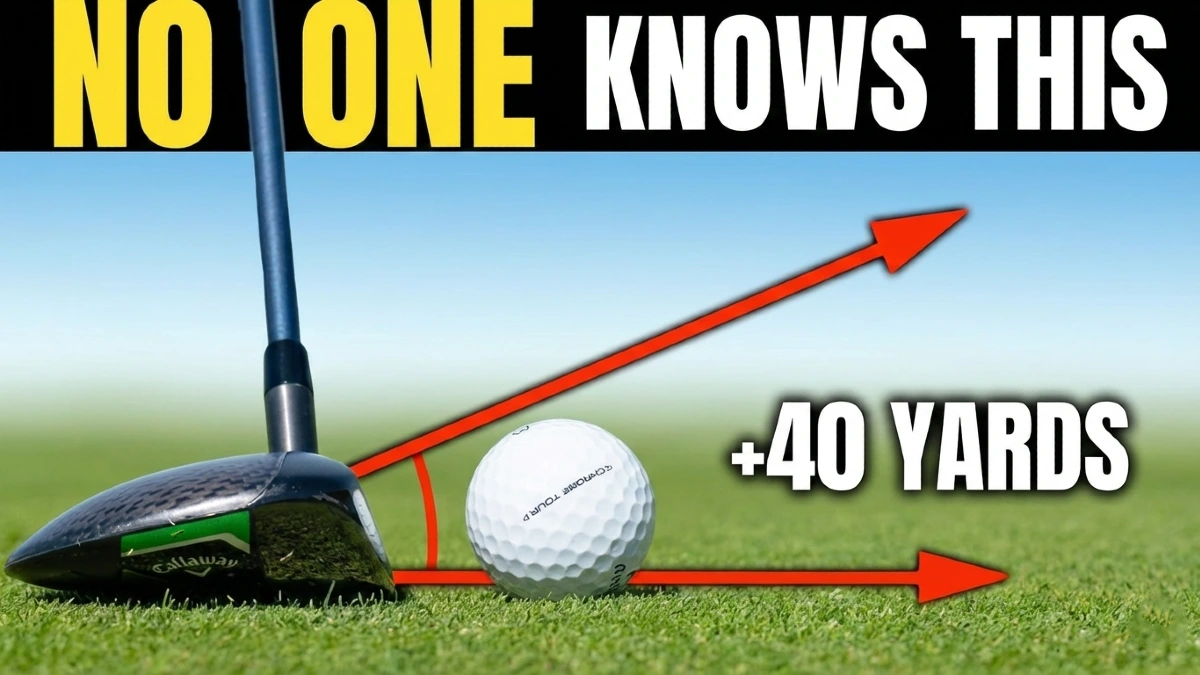
Striking long clubs off the ground is one of the hardest skills in golf. You top the ball or hit the ground first. You feel frustrated every time you reach for a long club.
The longer the club, the worse the contact. You try to help the ball in the air. The result is always a weak and rolling shot.
Golf coach Danny Maude recently revealed a concept that fixes this issue. You will learn how to control the bottom of your swing arc for crisp contact.
Low Point Master
1. The Secret To Consistent Golf Contact

Every golf swing creates an arc. This arc has a specific bottom point. You need this bottom point to happen after the club hits the ball.
Professional players control this bottom point perfectly. They get this low point forward every single time. Tour pros control their low point within half a degree.
Amateurs let the low point drift backward. This is the main reason you hit the ground before the ball. Moving the low point forward ensures you strike the ball first.
Mastering this skill is the foundation of controlling golf swing low point. It separates great ball strikers from high handicap players. The USGA reports the average male amateur handicap in 2026 sits around 14. Improving your low point control is the fastest way to lower that number.
2. Why A Three Wood Ruins Your Shot
A standard three wood has only 15 degrees of loft. To get the ball airborne you must play the ball forward in your stance. This forward position requires precise low point control.
Strike Zone Errors
-
Loss of Control
If you lack low point control, your club bottoms out erratically, causing major mistakes in contact and distance.
-
The Fat Shot
Hitting the ground behind the ball. The club digs deep into the turf, killing your swing speed entirely.
-
The Topped Shot
Topping the ball with the bottom of the club. The ball is driven into the ground and dribbles forward weakly.
-
The Thin Shot
Thinning the shot across the grass. The leading edge strikes the equator, sending the ball low and fast.
If you lack this control you will make big mistakes. Common errors include:
- Hitting the ground behind the ball.
- Topping the ball with the bottom of the club.
- Thinning the shot across the grass.
Think about a standard eight iron shot. You can move an eight iron back in your stance to ensure ball first contact. The iron still leaves enough loft to get the ball high in the air.
A three wood does not give you this luxury. Moving a three wood back takes away all the loft. This makes hitting hybrids consistently and learning how to hit fairway woods very difficult for beginners.
3. Play A Seven Wood For Better Results
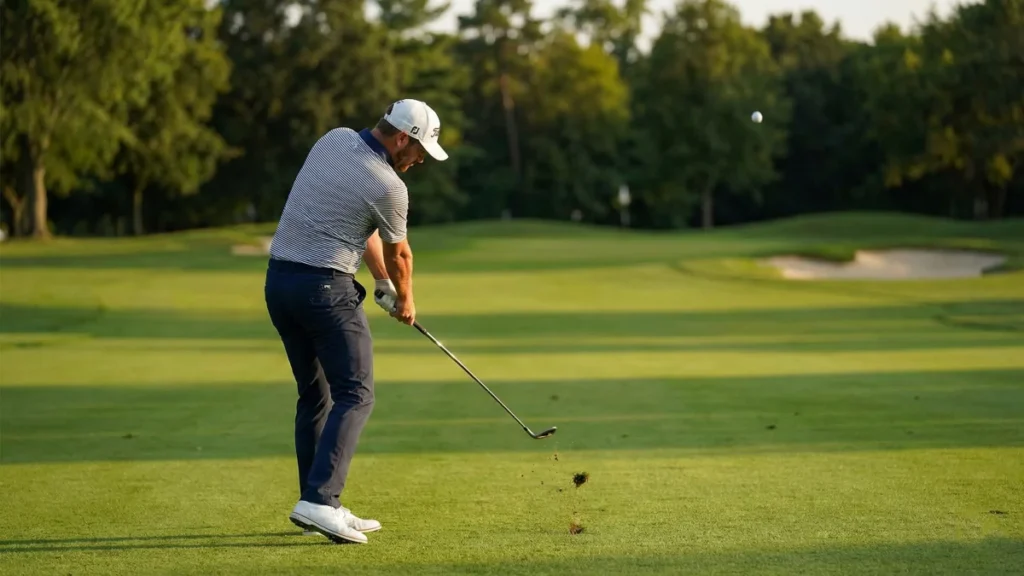
More loft is your absolute best friend on the golf course. A seven wood has about 20 degrees of loft. This extra loft allows you to move the ball slightly back in your stance.
Moving the ball back safely increases your margin of error. You ensure crisp contact without sacrificing much distance. Data shows a seven wood can carry 240 yards with much less effort than a three wood.
Shot Scope data states amateurs use these long clubs 25 percent of the time. So choosing the right club matters.
Using a seven wood or nine wood is one of the best golf tips for beginners. It builds confidence while you learn better swing habits.
4. The 4 Step Tee Drill For Swing Control
You need a simple way to practice this on the range. This drill helps you move your swing arc forward.
The Tee Drill
-
1. Place the Tee
Place a tee in the ground right next to the golf ball to serve as your visual low point marker.
-
2. Practice Swing
Take a normal, full practice swing without hitting the ball. Treat the tee as your focus point.
-
3. Watch the Ground
Watch exactly where the club hits the ground relative to the tee. Is it behind, at, or past it?
-
4. Adjust Forward
Adjust your movement until the club consistently strikes the ground past the tee.
Follow these exact steps to practice:
- Place a tee in the ground right next to the golf ball.
- Take a practice swing without hitting the ball.
- Watch exactly where the club hits the ground next to the tee.
- Adjust your movement until the club strikes the ground past the tee.
Keep your head completely centered during this drill. You must move your trail side forward through the impact zone. Feel your trail foot banking forward as you swing.
Do not throw your upper body sideways. Your head stays still while your lower body pushes forward. This is the ultimate secret to controlling golf swing low point on every swing.
| Section Focus | Core Problem | The Fix & Takeaway |
| Swing Contact | Amateurs hit the ground before the ball. | Move the bottom of your swing arc past the ball. |
| The 3 Wood | 15 degrees of loft demands perfect swing control. | Skip this club for now to avoid topped shots. |
| The 7 Wood | You need a bigger margin for error. | 20 degrees of loft lets you move the ball back safely. |
| Tee Drill | It is hard to feel the correct swing bottom. | Practice hitting the ground past a tee keeping your head still. |
How To Graduate To A Three Wood

You probably want to hit a three wood eventually. It is a very powerful club. But building that skill requires a patient process.
Start by making practice swings where you intentionally fall backward. This lets your body feel the bottom of the swing behind the golf ball. Next, gradually push that low point forward with each new swing.
Keep playing your higher lofted woods on the actual golf course. Use five woods or nine woods to score well. Build your confidence with these forgiving clubs. Practice your low point control in the background.
Mastering this forward swing bottom takes time. Once you get it right, you can safely move the golf ball forward in your stance. This is the exact moment you can finally pull out a three wood and crush it.
Conclusion
Getting the ball airborne with long clubs does not require magic. Stick to higher lofted clubs like a seven wood or nine wood while you practice.
Take time to practice moving your swing arc forward. You will see a massive difference in your ball striking.
What is your favorite club to hit off the fairway? Let us know in the comments below and download a free practice guide. Learning how to hit fairway woods takes time but this strategy will speed up your progress.