
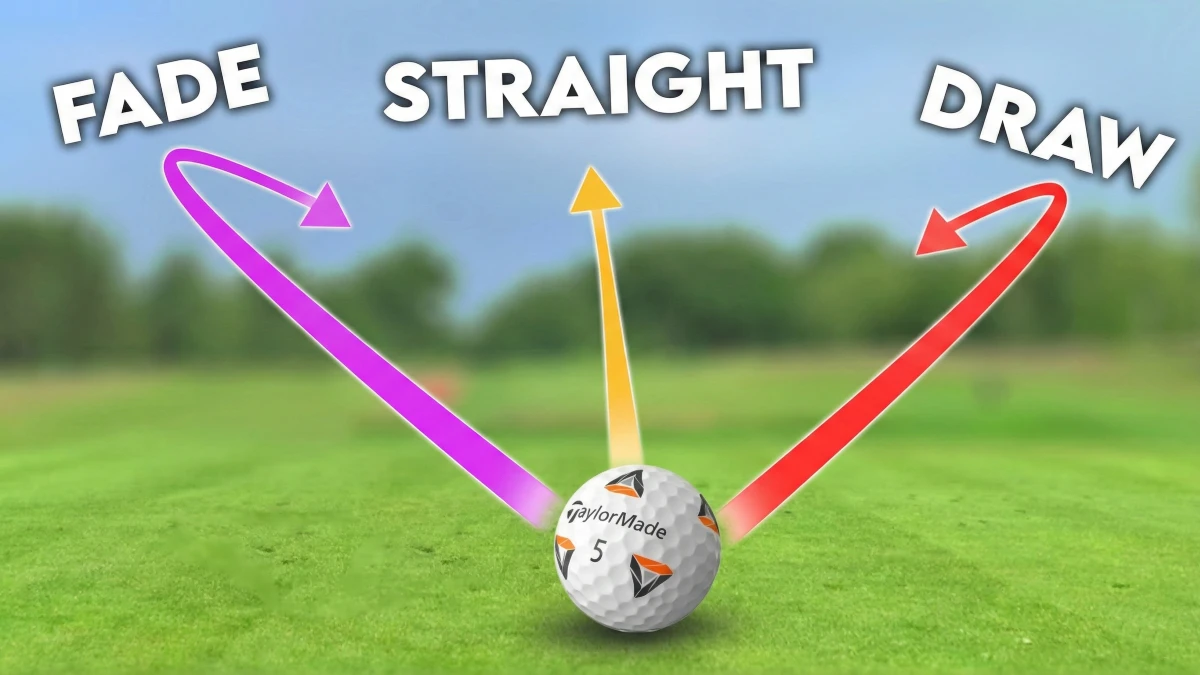
You are standing on the tee box and a massive tree blocks your direct line to the green. Most weekend players only have one shot shape. They hit the ball and pray it works every time.
When an obstacle blocks your path, that single predictable shot fails. You are forced to punch out back to the fairway. Your score goes up, and the game feels incredibly frustrating.
It does not have to be this way. You will learn exactly how to alter your club face and swing path to control the ball. This guide shows you how to shape golf shots on purpose. You will discover how to hit a draw, play a golf fade shot, and hit straight lines or low stingers.
Golfers like Peter Finch use this exact course vlog strategy to adapt and shape shots on the fly. Let us break down the exact methods so you can impress your friends and shoot lower scores.
The Shot Shaper
How the 9 Window Drill Builds Better Course Skills
Do you practice with a real target or just smash balls into an open field? Hitting balls without a goal wastes your time. Professional players use a specific structured drill to build real skills.
Tiger Woods uses a famous practice routine to master golf shot shaping. He pictures a giant tic tac toe board in the sky. This creates nine distinct windows for the golf ball.
- The Top Row: High fade, high straight, high draw.
- The Middle Row: Standard fade, standard straight, standard draw.
- The Bottom Row: Low fade, low stinger, low draw.
You can use this nine window drill on the course to force creativity. Challenge yourself to hit a different window on every single hole. Keep track of your score. Challenge yourself to complete the full grid before leaving the driving range. Cross off each shot once you hit it successfully.
How Face and Path Fix Your Ball Flight

The club face is the steering wheel. The swing path is the engine. The club face dictates where the golf ball starts its flight.
The path your club takes through impact controls the curve. These two elements work together to create spin. You do not need to be a physics expert to learn this. You just need to know the basic rules.
A club face that is open to the swing path creates a fade. A club face that is closed to the swing path creates a draw. Modern launch monitors prove this science.
- Trackman Data for a Draw: A face to path ratio of negative 2 degrees creates a consistent baby draw. The face must point slightly left of a rightward path.
- Trackman Data for a Fade: An out to in path of 4 degrees with a face open 2 degrees produces a standard fade.
3 Steps to Hit a Draw and Fade on Command
Now it is time to take this science and apply it to your swing. Most pros pick one curve and stick with it. Here is how to rank the difficulty of shots from easiest to hardest.
- The Fade: This is the easiest curve for most amateur golfers to learn.
- The Draw: This takes more practice because you must swing from the inside.
- The Dead Straight Shot: This is the hardest shot in golf because your face and path must be perfectly matched at zero.
How to Hit a Draw:
- Aim your body to the right of your target.
- Close the club face slightly using a stronger grip at address.
- Swing the club from inside to outside along your body line.
How to Hit a Fade:
- Aim your body to the left of your target.
- Open the club face slightly at address.
- Swing the club from outside to inside across the ball.
| Shot Type | Body Aim | Club Face | Swing Path |
| Draw | Right of target | Closed (stronger grip) | Inside to outside |
| Fade | Left of target | Open | Outside to inside |
Practice makes these moves permanent. Exaggerate the feelings first to see the ball curve. Try a simple range drill. Lay two spare golf clubs on the ground. Use them as train tracks to guide your swing path visually.
How to Master the Low Stinger Golf Shot
Picture a very windy day. A high shot will get blown right off the golf course. A low stinger golf is your best weapon here.
This shot keeps the ball under tree branches and cuts through heavy wind. You must change your setup to hit down on the golf ball. Hitting down actually moves your swing direction more to the right.
The Punch Shot
-
Ball Position: Back
Place the ball further back in your stance (middle or slightly rear) to promote a downward strike.
-
Forward Press
Push your hands forward ahead of the ball at address. This delofts the club for a lower flight.
-
STOP
Abbreviated Finish
Stop your swing early after impact (rib-high). A long follow-through adds loft, which you don’t want.
Setup Keys for the Stinger:
- Place the ball further back in your stance.
- Push your hands forward ahead of the ball.
- Stop your swing early for an abbreviated finish.
Practice this shot with a 4 iron or a 3 wood first. You must keep the club head low through impact. This prevents the ball from ballooning high into the sky.
How to Hit a Dead Straight Golf Shot

Most amateur players think a straight shot is the standard golf swing. This is a massive trap. Peter Finch considers the dead straight shot the hardest move in golf.
Hitting a straight line means your club face and swing path must perfectly match at exactly zero degrees through impact. This is exceptionally difficult to do. This is why most top professionals favor one type of curve instead.
But sometimes a narrow fairway demands a perfectly straight flight. You need to know how to execute it. Here is how you can practice this exact setup.
The Train Tracks
-
Lay Down Tracks
Place two clubs on the ground parallel to your target line, creating a visual corridor.
-
Match the Face
Point your club face directly at your true target, keeping it square relative to the tracks.
-
Control the Path
Take a small half swing. Keep the club moving straight back and through the space between the clubs.
Steps for a Straight Flight:
- Lay Down Train Tracks: Place two spare golf clubs on the ground. Make them run parallel to your target line.
- Match the Face: Point your club face directly at your true target.
- Control the Path: Take a small half swing. Try to keep the club moving straight back and straight through the space between the two clubs.
Start with these small swings first. Get the feeling of the club face staying completely square. This builds the muscle memory you need to find the fairway under pressure.
Conclusion
Mastering your club path and face angle gives you true freedom on the course. You can escape bad lies and attack difficult pins. You no longer have to rely on a single predictable swing.
Grab two alignment sticks today. Head out to the driving range right now. Try the nine window drill and see how many shapes you can hit. Learning exactly how to shape golf shots will make the game incredibly fun.