
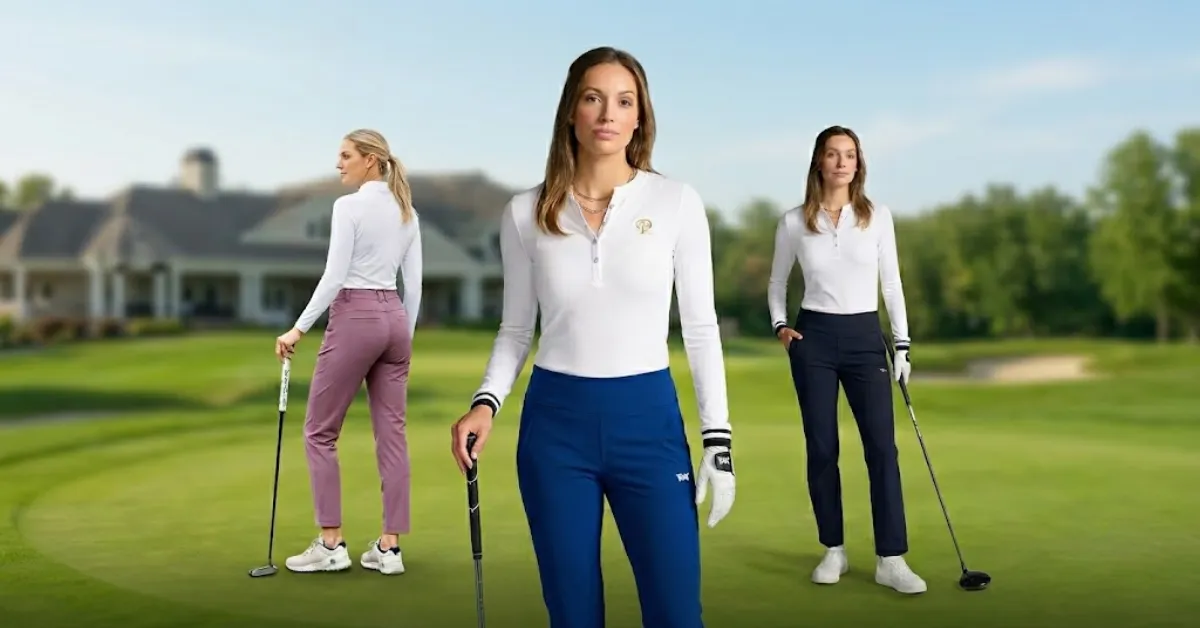
Quick Answer: The best golf pants for women in 2026 run $85–$165 depending on brand, with four-way stretch, an ankle-length hem, and a non-cargo cut being the three things that matter most. Pair them with a polo or quarter-zip and you’re dress-code safe at almost every club – denim and full leggings are the two things that still get rejected most often.
Golf pants get treated like an afterthought until you’re three holes in and the waistband won’t stop folding over every time you bend down to tee up. I’ve played in cheap stretch-woven pants that bagged out by the back nine, and I’ve played in pairs that still look sharp after two full seasons of weekly rounds. The difference usually isn’t the price tag it’s the fabric blend and the cut.
This guide skips the generic “wear something breathable” advice and focuses on real golf outfits for women built specifically around pants. You’ll get 12 outfit formulas, a real price comparison across four brands, plus-size fit notes most guides skip entirely, and a season-by-season breakdown that actually accounts for what happens to fabric in August humidity versus a January cold-weather round.
What Actually Makes Golf Pants Different From Regular Pants
Not much separates a good pair of golf pants from a good pair of travel pants both rely on the same handful of features. That’s worth knowing, because it means you don’t need to overpay for a “golf” label if the fabric does the same job.
Fabric and Stretch
Four-way stretch is the one spec worth checking before anything else. It means the fabric moves in both directions — side to side and up and down — instead of just one, which matters the moment you load into your backswing. A 100% cotton pant has almost none of this, which is exactly why cotton chinos feel restrictive on the course even when they fit fine off it.
More brands are blending in recycled viscose or nylon for a softer hand-feel than straight polyester, and it photographs better too — flat, matte fabric holds up under Pinterest lighting in a way that shiny athletic poly doesn’t. UPF ratings show up on most performance pants now; UPF 50 blocks roughly 98% of UV rays, which is worth checking if you’re walking 18 holes in direct June sun.
Rise, Length, and Pockets
Ankle-length is the standard silhouette for a reason anything that breaks over the shoe catches on spikes and looks sloppy by hole 4. Most brands offer a regular and a petite or “short” inseam, and the difference (usually 2-3 inches) matters more than people expect. A pull-on waistband with a wide, structured band sits flatter under a tucked polo than a traditional belted style, though most courses still expect belt loops even if you skip the belt.
Pocket depth is an underrated detail. A scorecard or phone needs somewhere to live that isn’t bouncing out on the cart path, and the cheapest pants in any lineup are usually the ones that skimp here first.
Are Jeans, Leggings, or Joggers Allowed on the Golf Course?
Short answer: jeans almost never, leggings depends entirely on the club, and joggers are a coin flip.
Denim is the one item that gets rejected at more private and semi-private clubs than anything else on this list. Municipal and public courses are far more relaxed about it, but if you’re playing somewhere with a clubhouse dress code posted online, assume denim is out before you even check.
Leggings sit in a genuine gray area. Plenty of modern resort and public courses treat them like any other stretch pant, but traditional private clubs often still file them under “gym wear” and will turn you away or ask you to throw a skort over them. If you only own one pair of golf pants, I’d skip leggings entirely and go with a tailored ankle pant instead. It gets you into every dress code without a phone call to the pro shop first.
Joggers have come a long way from sweatpants. A tapered, ankle-zip jogger in a technical fabric reads as polished on plenty of modern courses now the line is whether it looks like performance wear or loungewear, and that comes down to fit, not the word “jogger” itself.
The one honest exception to all of this: always call ahead if you’re playing somewhere new. Course-specific rules vary enough that no single guide including this one can promise you’ll be fine everywhere.
12 Golf Outfit Formulas Built Around Pants
This is the part most golf outfit guides skip entirely. Real golf outfits for women start with the pants, not the polo a great pair is only half the look, and here’s how to build the other half, organized by the vibe you’re going for.
1. The Casual Weekend Formula
Stone or khaki straight-leg pants, a relaxed-fit polo in white or sage, white leather sneakers instead of traditional spikes, and a soft-structure visor. This is the easiest formula to repeat because nothing in it is trying too hard.
2. The Polo Classic Formula
Navy ankle pants, a fitted collared polo in a contrasting color (think coral or kelly green), a slim leather belt, and a low ponytail or visor. This is the formula every club photo from the last 40 years is built on, and it still works because it’s never wrong.
3. The Quiet-Luxury Aesthetic Formula
Ivory or sand pleated trousers, a cream quarter-zip layered over a white tank, gold minimal jewelry, and a structured leather belt. Skip anything with a visible logo the whole point of this look is that the fabric and fit are doing the talking, not the branding.
4. The Bold Color Statement Formula
Hot pink or cobalt printed ankle pants, a solid white or black top to balance the print, and white shoes to keep the eye moving down. Save the loudest piece for your pants, not your top it’s easier to build a whole wardrobe around one statement bottom than one statement shirt.
5. The Plus-Size-Friendly Formula
A true plus-cut straight-leg pant in a structured fabric (not a sized-up slim pattern), a relaxed sleeveless top with a built-in shelf bra, and a wide belt that sits at the natural waist rather than the hip. More on fit specifics below.
6. The Athleisure Crossover Formula
Technical joggers in heather gray, a fitted performance tank, an open zip-front layer, and spikeless training shoes. This is the formula for a casual nine with friends where you want to go straight from the course to errands without changing.
7. The Tournament-Ready Formula
Solid black or navy tailored pants, a crisp white polo, a structured belt, and a low bucket hat. Tournament dress codes tend to ban patterns and logos beyond a small chest mark, so solids and clean lines are the safe play.
8. The Rainy Day Formula
Water-repellent twill pants, a quarter-zip rain shell layered over a base polo, and a wide-brim waterproof hat. The pants matter more than people think here cotton-blend pants soak through and double in weight by hole 9.
9. The Twilight League Formula
Charcoal or olive ankle pants, a long-sleeve sun shirt swapped for a lightweight pullover as the temperature drops, and a packable vest tied around the bag for the walk back in. Built for the 4 p.m. tee time when the first nine is warm and the back nine isn’t.
10. The Golf Vacation Formula
Lightweight white or pastel crop pants, a sleeveless polo, oversized sunglasses, and a straw visor. This formula photographs the best of any on this list it’s the one built for the Pinterest board, not just the round.
11. The Golf-to-Brunch Formula
Tailored navy or black trousers (not technical fabric, more dressy-casual), a silk-blend sleeveless top instead of a polo, and a structured tote swapped in for the golf bag once you’re off the course. Works because the pants are smart enough to not look out of place at a table.
12. The Cold-Weather Layered Formula
Fleece-lined or thermal-backed pants, a base layer top, a mid-weight quarter-zip, and an outer wind shell. Layering up top while keeping the pants as a single warm piece (rather than leggings-under-pants) keeps your swing from feeling bulky.
Blue & Black Golf Pants – The Two Colors That Work With Everything
Navy and black cover more outfit combinations than every other color on this list combined, but they’re not interchangeable. And navy is the blue you’ll see most often on the course, though a handful of brands also carry a true blue or cobalt pant for golfers who want more pop than navy gives them.
Navy is the safer all-day choice. It hides grass and dirt marks better than almost any other color, pairs with literally any top color without clashing, and reads as “put-together” rather than “trying hard” in club photos. It’s also the color I’d pick first for a single do-everything pair if you’re only buying one.
Black runs warmer in direct sun than navy does, worth knowing if you’re walking in July heat, since darker fabric absorbs more heat regardless of the technical wicking claims on the tag. It also shows chalk and dust more visibly than navy, which matters if your course has dry, dusty cart paths. Where black wins is the slimming effect and the way it reads instantly “dressed up” next to almost any top, which makes it the better pick for the tournament or golf-to-brunch formulas above.
If you’re building a two-pant wardrobe, navy for daily play and black for anything dressier covers nearly every outfit on this list.
Plus-Size Golf Pants: What Actually Fits Well
This is the section most competitor pages skip entirely — they’ll link you to a “plus” collection and call it done, without explaining what actually makes a plus-size golf pant fit well versus just being a scaled-up version of the straight-size pattern.
The biggest tell is the waistband. A true plus-cut pant uses a wider, more structured waistband panel rather than just adding fabric to a straight pattern — the difference shows up by hole 6, when a poorly cut waistband starts rolling or digging rather than sitting flat. Look for a stretch percentage in the high range (the fabric should have real two-way give, not just a slight forgiving stretch) and a rise that sits at the natural waist instead of low — a low rise on a plus-size cut tends to create the gap-and-pull look at the back that nobody wants mid-swing.
Length options matter more here too. Several major retailers, including the multi-brand shops in this category, carry dedicated plus-size lines that offer the same length choices (regular, petite, tall) that straight sizes get – worth checking before you buy, since plenty of plus-size activewear historically only came in one length and expected you to hem it yourself.
Honest limitation: not every brand that carries a plus-size line cuts it from a true plus pattern – some are genuinely just graded-up straight sizes. If a pair feels tight specifically at the lower hip and loose at the waist, that’s usually the tell that you’re in a graded pattern rather than a true plus cut, and it’s worth trying a different brand rather than sizing up again.
Seasonal Golf Pants Guide: Summer, Spring, Cold Weather & Winter
Golf Monthly’s review splits pants into just summer and winter. That misses two seasons where the right fabric weight actually changes – here’s the fuller breakdown.
| Season | Fabric weight | What to prioritize | Typical price range |
|---|---|---|---|
| Summer | Lightweight stretch-woven, UPF-rated | Light colors, breathability, quick-dry | $85–$130 |
| Spring | Mid-weight with a water-repellent finish | Versatility for sudden showers and wind | $90–$140 |
| Cold weather (fall rounds) | Brushed-back or fleece-lined stretch | Warmth without bulk at the waist for swing room | $100–$150 |
| Winter | Thermal-lined, often with a single dark color option | Maximum warmth, layering room in the rise | $110–$165 |
A pattern worth knowing: winter pants are consistently the most expensive tier across every brand I checked, and they’re also usually the most limited on color – expect black or navy only once you’re shopping the thermal-lined category. If you only buy one cold-weather pair, prioritize the rise fitting comfortably over a base layer rather than buying a size up, which throws off the waistband fit everywhere else.
What Women’s Golf Pants Actually Cost in 2026
None of the brand sites show you this side by side – each one only shows its own prices, so here’s the real spread based on current listings.
| Brand | Price Range | Style Focus | Notes |
|---|---|---|---|
| Golftini | $88–$164 | Bold prints and color, ankle-length stretch pants | Frequent sales bring top-end pieces to $100–$125 |
| Macade Golf | $85–$125 | Minimalist, Scandinavian-influenced trousers and joggers | Strongest jogger and pleated-trouser selection of the four |
| Callaway | ~$90 retail | Solid-color performance pants with shaping panels | TrueSculpt line frequently discounts to around $70 |
| Multi-brand retailers (Golf Apparel Shop and similar) | Wide range, sale pieces from the low $40s | Largest overall selection across many brands | Best for comparison shopping, since one site carries multiple price tiers |
If budget is the deciding factor, multi-brand retailers are genuinely the better starting point — not because any single pair is better, but because you can compare three or four brands’ fits without re-entering your size on four different sites. Building solid golf outfits for women doesn’t require buying the most expensive pair on the rack; fit beats price tag every time. If you’re also shopping budget-friendly gear elsewhere in your bag, our Aspire golf clubs review covers the same low-cost-without-sacrificing-function logic for clubs.
Frequently Asked Questions
It depends entirely on the course. Municipal and public courses generally allow leggings, especially under a skort, while many private and semi-private clubs still classify them as athletic wear and will ask you to change. If you’re playing somewhere new, a tailored ankle pant is the safer default.
Most public courses tolerate denim more than private clubs do, but it’s still not the best choice — heavier fabric holds moisture, restricts the swing, and many public courses are tightening denim rules as dress codes modernize. Private clubs almost universally ban it.
Yes – pants are one of the most common bottoms in women’s golf, alongside skirts, skorts, and shorts. The main things to avoid are cargo pockets and overly tight, leggings-style cuts, both of which fall outside most traditional dress codes even though pants themselves are always fine.
A collared or mock-collared top (sleeveless is fine at most courses), tailored pants, shorts, or a skirt/skort of appropriate length, and golf-specific or spikeless athletic shoes. Avoid denim, cargo pockets, tank tops without a collar, and anything overly casual like sweatpants.
A growing number of modern public and resort courses accept tapered, technical-fabric joggers, but traditional private clubs are more likely to treat them like sweatpants and turn you away. Check the specific course’s dress code if joggers are your go-to.
The Bottom Line
The best golf outfits for women almost always start with the pants, not the top — it’s the piece that decides whether your whole look reads as put-together or thrown-together, and whether you get waved through the pro shop without a second look. Start with fabric and fit before color or print, build out from one of the 12 formulas above, and keep navy as your fallback if you’re only buying one pair. For more on what’s actually worth spending money on versus skipping, our breakdown of budget-friendly golf gear tackles the same question for the rest of your bag.