
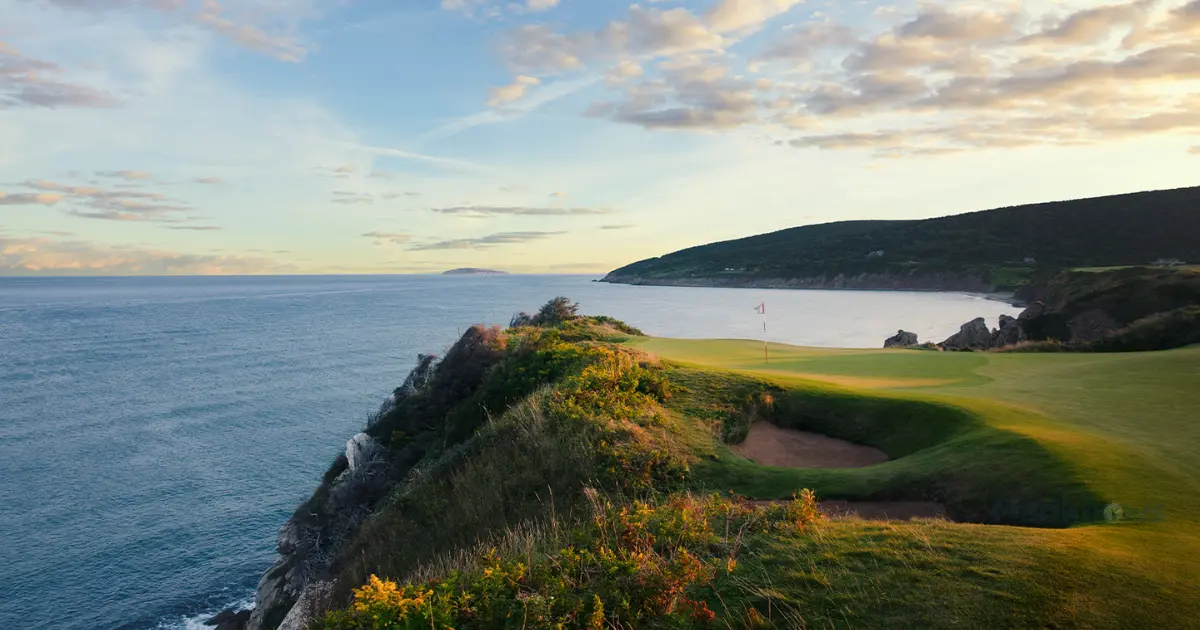
Golfweek’s new ranking of Canada’s top 25 modern golf courses brings attention to a generation of layouts that have transformed the country’s golf landscape, from the rugged coast of Nova Scotia to the dramatic terrain of British Columbia.
Canada’s reputation for exceptional golf has traditionally been built around historic courses designed by architects such as Stanley Thompson and Harry Colt. But over the past several decades, a different generation of courses has helped establish the country as an international destination for modern golf architecture.
Golfweek’s 2026 ranking of Canada’s top 25 modern layouts highlights this distinct category, which includes courses originally built in or after 1960.
Among the country’s most celebrated examples are Cabot Cliffs and Cabot Links in Nova Scotia, Devil’s Paintbrush in Ontario and Tobiano in British Columbia.
These courses demonstrate how modern architects have adapted traditional design principles to dramatically different landscapes.
Cabot Cliffs Helped Redefine Canadian Destination Golf
Few Canadian courses have attracted as much international attention as Cabot Cliffs in Inverness, Nova Scotia.
Designed by Bill Coore and Ben Crenshaw, the course opened in 2015 and quickly established itself among the world’s highly regarded modern layouts.
Its location above the Gulf of St. Lawrence gives golfers an unusual combination of dramatic coastal scenery and strategic shot-making opportunities.
The routing moves through natural dunes, rolling ground and elevated cliffs, with the landscape influencing how individual holes play.
One of its most recognizable features is the par-three 16th hole, where the green sits dramatically above the coastline.
However, Cabot Cliffs is more than a collection of spectacular views.
Its design encourages golfers to consider angles, ground contours and changing wind conditions rather than relying exclusively on distance.
The course previously held the No. 1 position in Golfweek’s modern Canadian rankings and remains internationally recognized in other contemporary golf-course assessments.
Cabot Links Offers a Different Interpretation of Coastal Golf
Located nearby in Inverness, Cabot Links provides a contrasting experience.
Designed by Canadian architect Rod Whitman and opened in 2012, the course occupies coastal land between the town and the Gulf of St. Lawrence.
Unlike the dramatic elevation changes found at Cabot Cliffs, Cabot Links emphasizes firm playing surfaces, rolling terrain and traditional links-style shot-making.
Golfers must frequently account for wind and the direction in which the ball will run after landing.
The course incorporates the coastal landscape throughout its design, with all 18 holes offering ocean views and five positioned directly alongside the beach.
Its opening helped establish the Cabot Cape Breton destination, which subsequently expanded with Cabot Cliffs.
Together, the two courses have become internationally recognized examples of Canadian golf development in the 21st century.
Devil’s Paintbrush Brings Links-Style Golf to Ontario
Not all of Canada’s notable modern courses are located beside the ocean.
Devil’s Paintbrush in Caledon, Ontario, demonstrates how traditional links characteristics can be incorporated into an inland setting.
Designed by Michael Hurdzan and Dana Fry, the private course opened in 1992.
The layout features fine-fescue fairways, dramatic contours, large greens and strategically positioned bunkers.
Its architecture takes advantage of naturally rolling terrain shaped by glacial activity.
The designers sought to create playing conditions reminiscent of classic seaside golf without depending on a coastal location.
Devil’s Paintbrush has received recognition in Canadian and international course rankings, including holding the top position in earlier Golfweek modern-course lists.
Its private status, however, means ordinary public tee-time access is not available in the same way as at destination resorts.
That distinction is important for golfers using ranking lists to plan potential trips.
Tobiano Showcases British Columbia’s Dramatic Landscape
Tobiano Golf Course near Kamloops offers another distinctive interpretation of modern Canadian golf.
Designed by Thomas McBroom and opened in 2007, the course occupies an elevated site overlooking Kamloops Lake.
Unlike Cabot’s coastal setting or Devil’s Paintbrush’s inland links character, Tobiano is defined by dry, rugged terrain, substantial elevation changes and spectacular lake views.
The layout incorporates ravines and natural contours that challenge golfers to select careful lines from the tee.
Although wide fairways provide opportunities for different abilities, approach shots can require precise distance control.
Tobiano has repeatedly received recognition for its architecture and scenic setting.
Its public-access model also makes it relevant to golfers considering a British Columbia vacation.
Why Golfweek Separates Modern and Classic Courses
Golfweek’s approach recognizes that course architecture has evolved considerably over time.
The publication places courses built before 1960 in its classic category, while layouts constructed in or after that year compete in the modern category.
This separation allows newer designs to be evaluated alongside courses created during a similar period rather than exclusively against historic venues.
Golfweek’s evaluation system considers multiple elements of golf-course design, with panelists assigning overall ratings.
The rankings concentrate on the quality of the courses themselves rather than measuring resort luxury or hotel amenities.
For readers, that makes the lists particularly useful for discovering architectural styles and identifying respected courses across different regions.
However, rankings represent the assessments of a particular panel. They are not objective guarantees that one golfer will enjoy a higher-ranked course more than another.
What Canadian Golfers Can Take From the New Rankings
Canada’s modern golf landscape offers substantially more variety than one architectural style or destination.
The coastal terrain of Nova Scotia, the inland contours of Ontario and the mountainous scenery of British Columbia create different challenges for architects and players.
For golf travelers, access is another important consideration.
Cabot Cliffs, Cabot Links and Tobiano offer public booking options, subject to reservations and seasonal operations. Devil’s Paintbrush, by comparison, is a private course.
That means a course’s position in a ranking may be less important to some travelers than whether they can realistically secure a round.
Golfweek’s new top-25 list provides another opportunity to explore Canada’s modern course-design achievements.
For golfers planning future trips, the most useful approach is to combine architectural reputation with verified booking availability, course conditions and personal preferences.
Canada’s leading modern courses are worth exploring not simply because they appear on a ranking, but because they demonstrate the remarkable variety of golf experiences available across the country.