
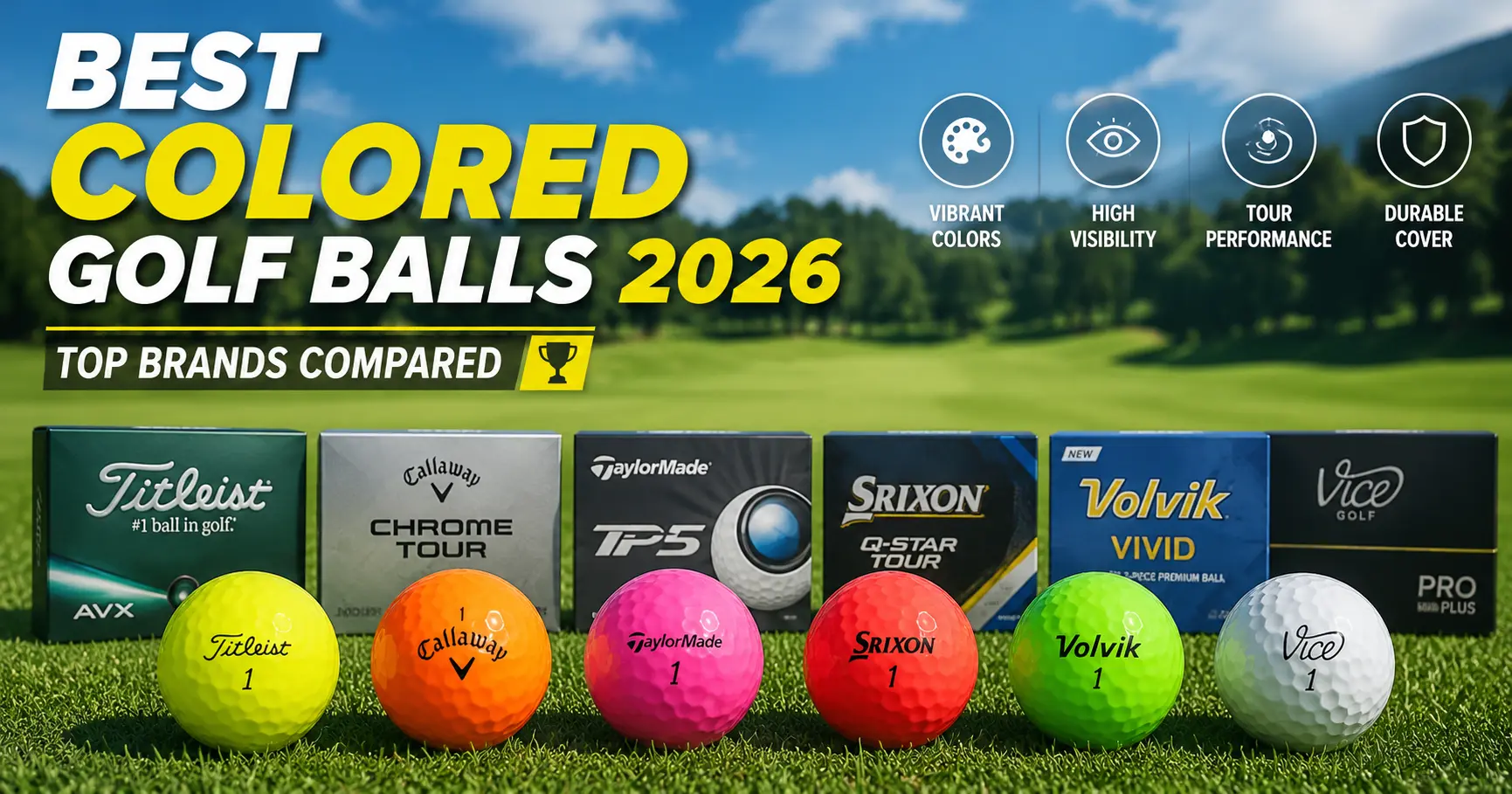
Walk into any pro shop in 2026 and the ball wall looks different than it did ten years ago. Yellow, matte orange, and two-tone pink sit right next to the white boxes now. Titleist and Callaway both sell colored versions of their actual tour ball, not some downgraded novelty line. This guide breaks down what colored balls cost across every major brand, whether color changes performance, and the one USGA rule that catches golfers off guard.
Are Colored Balls Legal to Play? The Rule Nobody Explains
Yes, and nothing in the Rules of Golf restricts ball color at all. The USGA and The R&A only require that a ball appear on the List of Conforming Golf Balls, a test that checks size, weight, and performance limits, never color. A neon pink Vice ball and a plain white Pro V1 face the exact same test.
The only real restriction comes from something called the One Ball Condition, a Local Rule most professional tours adopt for competition. Under it, a player has to use the same brand and model for the entire round, and since color is part of what defines a model on the Conforming List, a player who tees off with a yellow ball can’t switch to white on the back nine. Recreational rounds carry no such restriction. Carry three colors in your bag and switch on every hole if you want to.
Colored Golf Balls vs. White: Does Color Change Performance?
Performance comes from the core, the mantle layers, and the cover chemistry, not the pigment sprayed into that cover. A yellow Pro V1 shares the same 388-dimple pattern, casing layer, and urethane cover as the white version sitting next to it on the shelf. Titleist says as much directly on its own product page: the yellow model delivers identical performance to white, just with a different finish on top.
Visibility is where color earns its keep, and the data on that goes back further than most golfers realize. General Electric ran a fairway test in 1965 comparing white, fluorescent yellow-green, and red balls under daylight and mercury-vapor lighting. Golfers in that test picked out the white and yellow-green balls from roughly 500 yards away, while observers didn’t spot the red ball until they closed to within 500 feet. That’s old data, but the physics behind it hasn’t moved. The human eye reads yellow-green wavelengths faster than almost any other color, the same reason tennis ditched white balls decades ago.
More recent testing found players track a colored ball nearly 50 percent better than white on a 200-yard drive, though white still holds a slight edge once the ball sits still against green grass. Orange is the color that undercuts its own selling point. It nearly matches the color of fallen leaves and bare dirt, exactly why orange balls faded off pro shop shelves after their brief run in the early 1980s.
Do Any Pros Actually Play Colored Balls?
Wayne Levi is the trivia answer golfers love: he won the 1982 Hawaiian Open playing an orange ball, the first PGA Tour win with anything other than white. Jerry Pate followed two months later, winning The Players Championship with an orange ball and celebrating with a jump into the water at TPC Sawgrass. Those two wins are still the only colored-ball victories in PGA Tour history, more than 40 years on.
Modern usage skews yellow. Titleist released Pro V1 and Pro V1x in High Optic Yellow in 2019, and Bubba Watson put it in play immediately, saying he could see it better off the tee. Kirk Triplett won the PGA Tour Champions’ Hoag Classic that same year playing the yellow Pro V1x. Eight-time PGA Tour winner KJ Choi is one of the few current-era pros who plays yellow full time, alongside a handful of Champions Tour regulars.
Full white still dominates actual Tour play, and it’s not really about performance. Toptracer, the system that draws the ball-flight line on broadcast footage, calibrates to a white ball against grass and sky. Sponsors also tie contracts to flagship white models, and most touring pros logged thousands of reps with white before turning pro, so switching now buys a small visibility edge they don’t need.
The Best Colored Golf Balls, Brand by Brand (2026 Pricing)
| Brand & Model | Colors Available | Price (New, Per Dozen) | Tour-Level? | Best For |
|---|---|---|---|---|
| Titleist Pro V1 / Pro V1x | Yellow | $54.99 | Yes | All-around premium colored ball |
| Titleist AVX | Yellow | $64.95 (sale ~$49.95) | Yes | Lower flight, softer feel |
| Titleist Tour Soft | Yellow | $54.95 | No | Mid-handicap softness |
| Titleist Velocity | Orange, Green | $39.95 | No | Budget distance |
| Callaway Chrome Soft | Yellow | $57.99 | Yes | Tour feel with alignment stripes |
| Callaway Supersoft | Red, Orange, Pink, Green, Yellow, Blue | $24.97–$27.99 | No | Cheapest true tour-brand color option |
| TaylorMade TP5 / TP5x | Yellow | $57.99–$58 | Yes | 5-layer tour performance in color |
| TaylorMade Noodle | Yellow, assorted | $13.99–$18.99 | No | Cheapest colored golf balls from a major brand |
| Srixon Q-Star Tour Divide | Yellow/Red, Yellow/Blue, Yellow/Orange | $39.99 (deals ~$32) | Mid | Two-tone spin visibility |
| Vice Pro / Pro Plus / Pro Air | Neon Lime, Neon Pink, Shade Orange/Red, Shade Orange/Yellow | $39.99 | Yes | Tour feel, boldest colors |
| Vice Drive | Blue | $19.99 | No | Budget distance |
| Volvik Vivid | Red, Orange, Yellow, Green, Blue, Purple, Pink, Gray, Black | $17.99–$29.99 | No | Widest color range, matte pioneer |
Titleist Colored Balls: Pro V1, AVX, and Tour Soft in Yellow
Titleist keeps its colored lineup almost entirely in High Optic Yellow, spread across Pro V1, Pro V1x, AVX, and Tour Soft. Colored Pro V1 golf balls are the single most-searched item on this list, and the $54.99 price, identical to white, is a big reason why. Both share the same 2.0 ZG process core that runs through the whole Pro V1 family. AVX Yellow sits at $64.95 new, though prior-generation stock drops to around $49.95 during sales. Velocity Orange and Velocity Green run $39.95 and trade tour-level short-game control for extra carry distance.
Callaway Colored Balls: Chrome Soft and Supersoft
Chrome Soft Yellow is Callaway’s tour answer at $57.99 a dozen. It uses the same Tour Fast Mantle core that Xander Schauffele and Jon Rahm play in white. Supersoft is where Callaway actually wins on color variety: red, orange, pink, matte green, and yellow all sell for $24.97 to $27.99, the cheapest true tour-brand color option on this list. Callaway’s TruVis pattern balls, the soccer-ball-style two-tone design, run closer to $55 and target alignment and putting feedback more than raw visibility.
TaylorMade Colored Balls: TP5, TP5x, and Noodle
TaylorMade priced its 2026 TP5 and TP5x Yellow at $58 a dozen, the same five-layer, microcoated construction Rory McIlroy and Nelly Korda play in white. Noodle Long & Soft colored balls run $13.99 to $18.99 on the budget end, the cheapest colored golf balls from a major brand by a wide margin. TaylorMade also sells Pix, a limited-run novelty print series with themed graphics rather than solid colors, which trades performance data for collector appeal.
Srixon Colored Balls: Q-Star Tour Divide
Q-Star Tour Divide is Srixon’s entire colored lineup, and it’s a genuinely different idea: a 50/50 matte cover split between yellow and either red, blue, or orange. New dozens run $39.99 direct from Srixon, with deal pricing dropping to around $32. This multi colored design isn’t just cosmetic. It makes spin visible during chips and putts, since you can watch the two colors rotate as the ball rolls, and it doubles as an alignment aid on the green.
Vice Color Golf Balls: Neon, Shade, and Drive
Vice built its whole brand identity around color, and Pro, Pro Plus, and Pro Air all sell their neon lime, neon pink, and orange-and-red “Shade” finishes for $39.99 a dozen, tour-level construction included. The Vice Drive, the budget two-piece option, runs $19.99 in solid blue. Vice Tour, a firmer mid-tier ball, sells for $27.99 in gray, a color almost nobody else offers.
Volvik: The Color Specialist
Volvik claims the title of first matte-finish golf ball manufacturer, and Vivid still offers the widest color range on this list: red, orange, yellow, green, blue, purple, pink, gray, and black. Bright colored golf balls are Volvik’s whole identity, and direct from Volvik, Vivid runs $17.99 to $19.99 a dozen, the most affordable way to get nine different colors from one manufacturer. It’s a three-piece, 85-compression ball that suits mid to slower swing speeds best, so faster swingers chasing Pro V1-level short-game spin should look at Titleist or Callaway instead.
A Note on Nike
One brand you won’t find live in this table: Nike. Nike exited the golf ball business in 2016, so there’s no current lineup of colored Nike golf balls to buy new. Used and vintage colored Nike balls, mostly Mojo and PD Long models from the 2000s and early 2010s, still turn up on resale sites for collectors, but they’re closeout stock, not an active product line.
Matte vs. Gloss: Which Finish Actually Helps You See the Ball
Matte finishes reduce glare, and that matters more than the color choice itself in bright, direct sun. A glossy cover reflects light back at the same angle it hits, which can wash out the ball’s color against a bright sky. Matte covers scatter that light instead, so the pigment underneath stays visible even when the sun sits behind you. Volvik pioneered matte on the Vivid line specifically to solve this, and Vice, Srixon’s Q-Star Divide, and Callaway’s Supersoft Matte have all followed with their own versions. If you specifically want matte colored golf balls, those three brands are your best starting point. Glossy colored balls, like the standard Titleist and Callaway tour offerings, still track well in flight. The gloss finish just gives up a little of that glare-reduction edge on the ground under a midday sun.
Used Colored Golf Balls: Grading, Pricing, and Whether They’re Worth It
| Grade | Condition | Example: Used Titleist Pro V1 Yellow | Example: Used Callaway Chrome Soft Truvis |
|---|---|---|---|
| Mint (5A) | No visible wear, original color and sheen | ~$17/dozen | $33–$34/dozen |
| Near Mint (4A) | Small blemishes, no flight impact | ~$14/dozen | $22–$27/dozen |
| Good (3A) | Visible scuffs, playable | $11–$13/dozen | $17–$18/dozen |
Grading runs on a letter-and-number scale that every used-ball retailer applies with small variations. Mint balls cost close enough to new pricing that buying used only makes sense if you want a discontinued colorway. Good (3A) is where the real savings show up: a used Titleist Pro V1 Yellow in 3A condition runs $11 to $13 a dozen against $54.99 new, and a used Volvik Vivid mix can drop under $9.
Colored used golf balls hold value differently than white ones for one practical reason: color hides scuffing less than white does. A scratched white ball still looks presentable in a bucket, while a scuffed matte orange ball shows every mark. That’s worth knowing if you’re buying cheap colored golf balls specifically to look sharp on the tee, not just to save money.
Where to Buy Colored Golf Balls: Amazon, Walmart, and Near You
Amazon and Walmart both carry mainstream colored golf balls for sale from Callaway, TaylorMade, and Titleist, usually at or close to retail price. Amazon is stronger for used and refinished bulk lots, and Walmart carries the deepest in-store stock of Callaway Supersoft and Volvik colors. Big-box chains like Dick’s Sporting Goods, Golf Galaxy, and PGA Tour Superstore stock the full tour-level colored lineup and let you check real-time local inventory online before you drive over, which beats guessing whether your local shop has yellow Pro V1s on the shelf.
For colored golf balls near you specifically, three moves beat a blind trip: check the retailer’s own store locator and inventory tool first, call the pro shop at your home course since many stock colored balls seasonally for fall visibility, and check specialty used-ball retailers like Lost Golf Balls and Found Golf Balls, which ship fast enough that “nearby” often loses to “two days away and half the price.”
Colored Mini and Plastic Golf Balls: A Different Product Entirely
Search engines lump “colored mini golf balls” and “colored plastic golf balls” into the same results as real course balls, but they’re not the same product. Miniature golf, the putt-putt course kind, uses hard plastic balls built for that specific game, not for USGA conformance, and they aren’t legal or functional for real course play. Party and novelty colored plastic golf balls sold for backyard practice or gag gifts are usually hollow and underweight, built to travel short distances safely near a house rather than hit the 1.620-ounce weight standard real balls carry.
TaylorMade’s Noodle line causes a different kind of confusion. It’s a real, USGA-conforming golf ball, not a foam pool toy, despite the name. Colored Noodle golf balls play on a real course and show up on the Conforming List like any Titleist or Callaway model. If you’re shopping for a colored ball to actually play golf with, stick to the brands in the pricing table above and skip anything marketed for mini-golf or backyard games.
What Golfers Actually Say About Colored Balls: The Reddit Debate
Search Reddit’s golf communities and the debate splits pretty evenly. One camp swears by yellow or lime for finding drives in the rough, and they lose fewer balls to prove it. Another camp points out that orange and red blend into fall foliage and bare dirt exactly when visibility matters most, echoing the same problem that killed off 1980s orange balls. A smaller, mostly older thread of opinion treats colored balls as less serious than white, a stigma that’s fading fast now that tour-level Chrome Soft, Pro V1, and TP5 all ship in yellow.
The honest take: if you play courses with tight tree lines or deep rough, a colored ball will save you strokes and time searching, full stop. If you play open, well-maintained courses where you rarely lose a ball anyway, color is a style choice more than a performance one, and there’s nothing wrong with picking it purely because you like how it looks on the tee.
Frequently Asked Questions
Do any pros use colored golf balls?
Yes, though rarely on the full PGA Tour. Wayne Levi and Jerry Pate both won PGA Tour events with orange balls in 1982, and modern players like Bubba Watson, Kirk Triplett, and KJ Choi have played yellow. Most current Tour pros still choose white because of Toptracer calibration, sponsor obligations, and simple habit built over a career of reps.
Do colored golf balls make a difference?
Not in flight, distance, or spin, since color only affects the cover pigment, not the core or construction. The real difference is visibility. Colored balls, especially yellow and lime, are measurably easier to track in the air and find on the ground than white ones, based on both a 1965 General Electric study and modern visibility testing.
What is the best color golf ball to use?
Yellow and lime-green test best across the board because the human eye reads yellow-green wavelengths faster than almost any other color, the same reason tennis balls and safety vests use that hue. Orange looks striking on the tee but blends into fallen leaves and dirt, making it the weakest choice for golfers who play tree-lined courses in autumn.
What’s the rarest color golf ball?
There’s no single “rarest” color in current production, since most major brands cluster around yellow, orange, pink, red, and green. Gray and black sit at the rare end of today’s mainstream lineup. Volvik and Vice are the only two brands that offer them. Among collectible vintage balls, rarity comes down to specific limited runs rather than raw hue: certain Ping Eye2 color combinations sell for up to $2,800, and Titleist’s 1996 Limited Edition silver model, capped at 1,500 units, remains one of the most sought-after modern collector balls.
The Bottom Line
Color doesn’t change how a golf ball flies, spins, or feels off the clubface. It changes how fast you find it, and for most golfers who lose two or three balls a round, that’s worth more than the extra few dollars a colored dozen sometimes costs. Start with yellow if visibility is the goal, treat orange as a warm-weather-only choice, and check your tournament’s Local Rules before you tee off with anything other than white if the One Ball Condition is in play. For more on picking the right construction for your swing, our golf ball compression chart breaks down which build actually fits your speed.