

Ever finished nine holes and felt like you just played inside a sauna? Summer golf punishes bad fabric choices, and the right golf outfits women summer wardrobes rely on can change your whole round. What you wear affects your swing, your sweat, your sun exposure, and honestly, your confidence walking up to the first tee.
I wrote this for weekend players, league regulars, and anyone who joined a scramble on Friday and panicked about the dress code. You’ll get 25 complete looks, the styling logic behind each one, fabric advice that actually matters in July, and pro tips I learned the sweaty way.
Here’s the formula I follow every single time: pick one moisture-wicking base layer, add a bottom with four-way stretch, then layer sun protection on top instead of under. It works because heat management happens at the fabric level first and the styling level second. Nail the fabric, and any color combination you choose still looks sharp at hole 18.
1. Sleeveless Polo and a Crisp White Skort

This is the workhorse of ladies golf attire, and it earns that spot. A sleeveless collared polo keeps you inside almost every country club dress code while freeing your shoulders through the backswing. Pair it with a white performance skort and you look put together without thinking hard at 6 a.m.
Tuck the polo fully for a clean waistline, then add a thin braided belt in tan or white. This works because the vertical line of a tucked top makes your legs look longer, and sleeveless cuts stop the fabric bunching that plagues short sleeves during rotation.
Pro Tips:
- Buy white skorts with a built-in compression liner so nothing shows through in bright sun.
- Size up half a size in polos if you have broader shoulders; tight armholes kill your turn.
- Keep a spare polo in the trunk. Summer humidity is undefeated.
2. The One-and-Done Golf Dress

Some mornings I have zero decision-making energy, and the golf dress saves me. One piece, zero coordination, instant polish. Modern versions use lightweight knit with four-way stretch and a built-in short, so you get coverage plus airflow in a single layer.
Choose a collared version if your club leans traditional, and keep the hem at mid-thigh or longer. It works because a single garment eliminates the waistband gap that makes tops ride up, and the A-line shape lets hot air escape instead of trapping it.
Pro Tips:
- Check the built-in short length before buying. Two inches is the sweet spot.
- Darker dresses hide sweat marks better than heather gray. Trust me on this one.
- Add a thin belt loop version if you want a defined waist.
3. Mock Neck Tank with a Pleated Skort
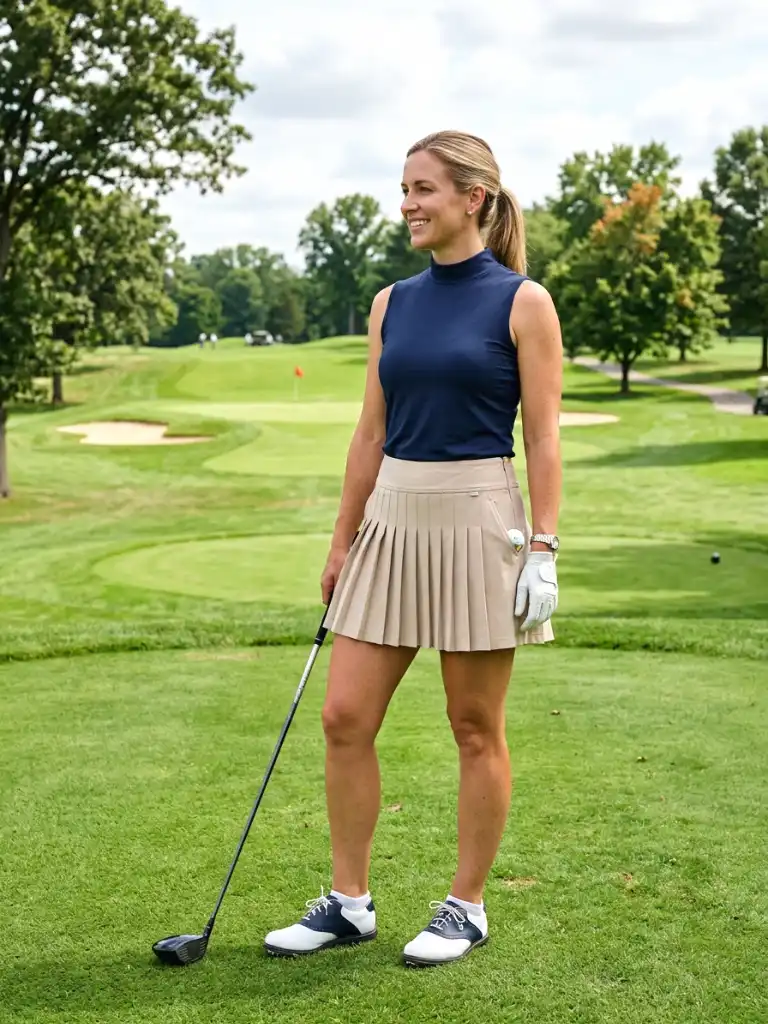
The mock neck reads modern and slightly sporty, which is why you see it all over the LPGA now. It gives your neck a little extra sun coverage without a collar flapping in the wind. Pair it with a pleated skort for movement and a bit of swish.
Keep the tank fitted, not clingy, and let the pleats do the visual work. This works because the vertical pleat lines balance a simple top, and mock necks flatter longer necklines while also sparing you one more strip of sunscreen application.
Pro Tips:
- Pick a mock neck in UPF-rated fabric for extra sun protection.
- Avoid heavy pleats in humidity; lightweight polyester holds shape better.
- Match your shoe color to the skort for a longer leg line.
4. Pastel Polo with a Patterned Skort
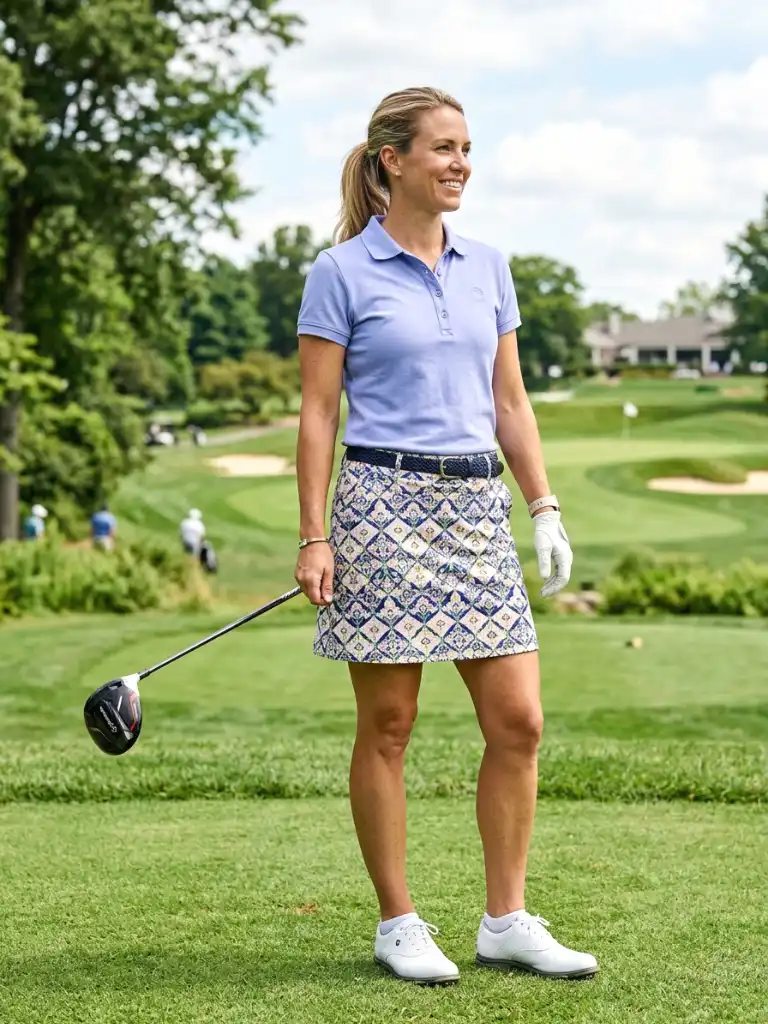
Pastels bounce heat instead of absorbing it, which matters more than people admit on a 95-degree Tuesday. Soft mint, powder blue, or blush up top with a printed skort below creates instant summer energy without looking like a costume.
Pull one color from the skort pattern and match your polo to it exactly. It works because repeating a single hue ties a loud print to a quiet top, and lighter colors reflect sunlight so your core temperature stays lower through the back nine.
Pro Tips:
- Keep the pattern on the bottom and the solid on top, never both loud.
- Pastel polos show sunscreen stains, so apply lotion before dressing.
- Neutral shoes keep the focus on the print.
5. Striped Polo and Navy Bermuda Shorts

Not everyone wants a skort, and shorts deserve more love in women’s golf apparel. Bermuda-length golf shorts hit just above the knee, meet strict dress codes easily, and give you real pocket space for tees, a ball marker, and your phone.
Choose thin horizontal stripes and keep the shorts solid navy or khaki. This works because a striped top draws the eye upward and balances a longer short, and navy hides grass stains far better than lighter neutrals.
Pro Tips:
- Look for shorts with a flat-front waistband to avoid bulk under a tucked polo.
- Stripes under half an inch wide photograph best.
- Roll the hem once if the length sits awkwardly.
6. UPF 50+ Long Sleeve Sun Shirt and Skort
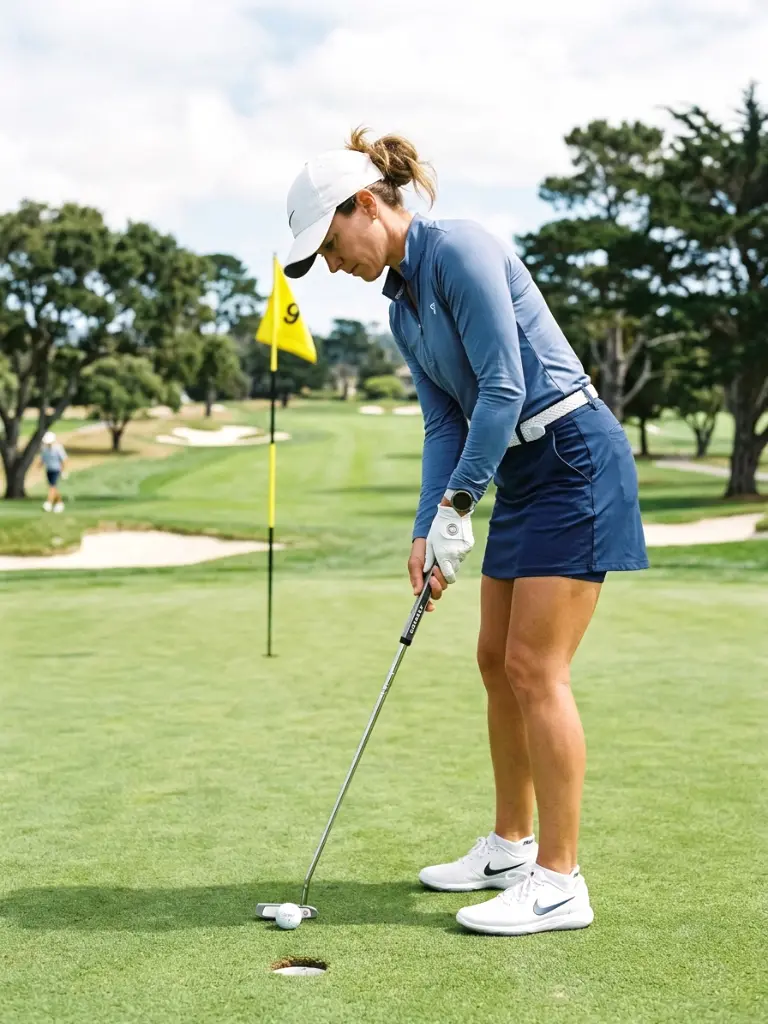
Long sleeves in summer sound backwards until you try them. A UPF 50+ sun shirt in a cooling knit actually feels cooler than bare skin in direct sunlight because it blocks radiation and wicks sweat off your arms at the same time.
Wear it as your base layer, tuck the front, and pair with a mid-tone skort. It works because covered skin stops absorbing UV, and dermatologists rank fabric coverage above sunscreen for reliability. Anyone with fair skin or a history of burns should own two of these.
Pro Tips:
- Choose shirts with thumbholes to protect the back of your hands.
- Light colors outperform dark ones in sun shirts, unlike regular polos.
- Rinse after every round; salt breaks down UPF finishes over time.
7. Monochrome White on White

White on white looks expensive and takes almost no styling skill. A white polo with a white skort reads clean, classic, and slightly LPGA-coded, especially with tan or metallic accessories. Yes, it stains. Yes, it is worth it.
Break up the white with a tan belt, a woven visor, or a colored ball marker. This works because a single-color outfit creates an unbroken vertical line, and white reflects the most sunlight of any color you can wear on a treeless course.
Pro Tips:
- Buy opaque, double-layered white bottoms only. Thin white fabric betrays you.
- Carry a stain pen in your bag for clubhouse lunch emergencies.
- Wash whites separately with an oxygen brightener, never chlorine bleach.
8. Cropped Polo with a High-Waisted Skort
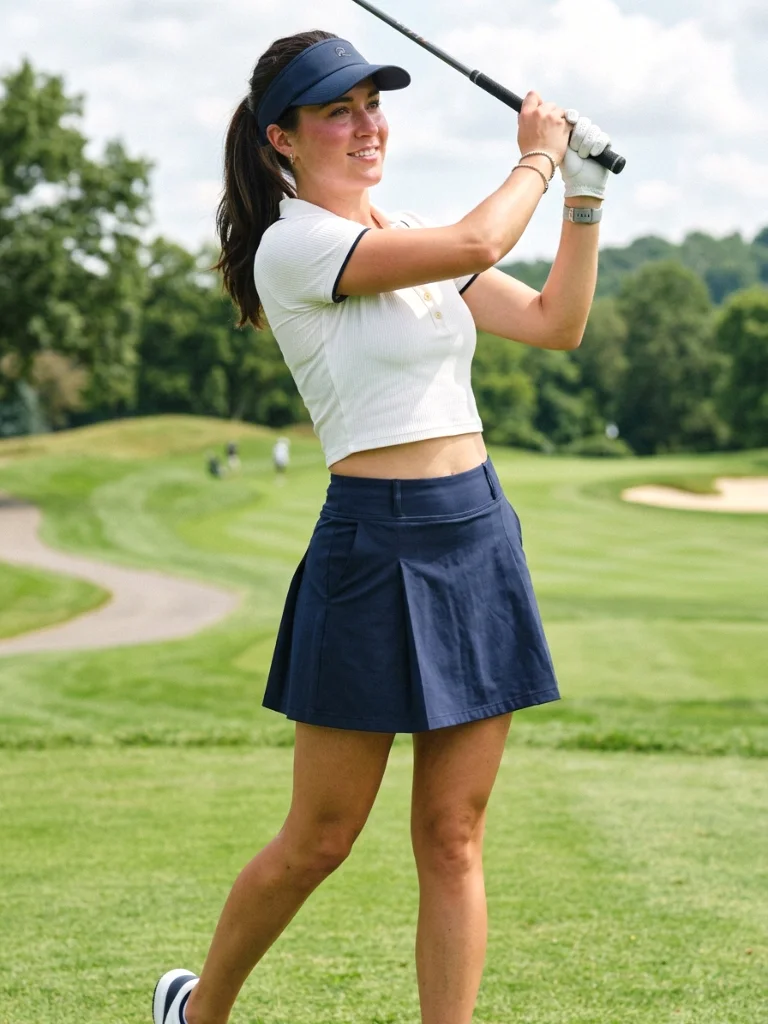
Younger players brought this one into golf, and modern courses have mostly caught up. A slightly cropped polo paired with a high-waisted skort keeps everything covered while adding a defined waist and a more current silhouette than a boxy tuck.
Make sure the skort waistband sits at your natural waist so no skin shows when you bend for your ball. It works because the high rise elongates your legs, and the shorter top removes bulk around your midsection during the swing.
Pro Tips:
- Test the bend-over check in the fitting room, not on the first tee.
- Look for wide waistbands of at least three inches for comfort.
- Check your club’s policy first; some traditional courses still say no.
9. The Golf Romper
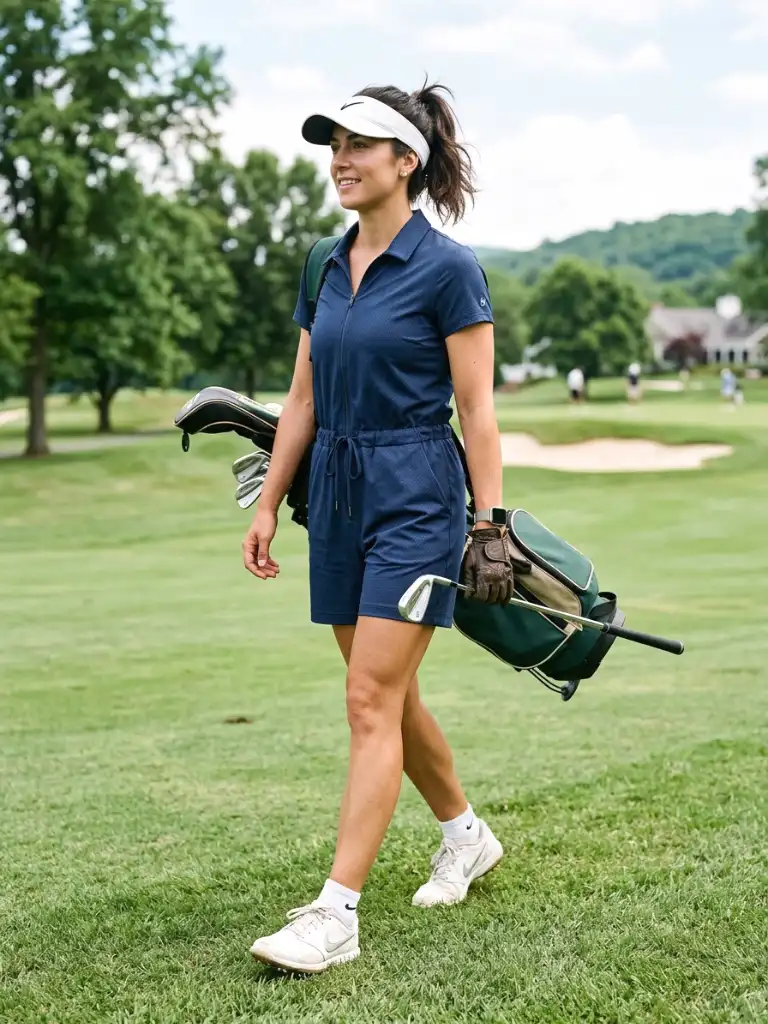
The romper is the golf dress’s more playful cousin. You get shorts coverage with one-piece simplicity, plus a collar and often a quarter-zip neckline that keeps it firmly within golf territory rather than brunch territory.
Choose one with a drop-tail hem or a longer torso so it does not pull when you reach. It works because the connected top and bottom never separate mid-swing, and the shorts underneath handle cart seats better than a skirt does on a humid day.
Pro Tips:
- Torso length matters more than your usual size. Check the measurement chart.
- Pick zip-front styles for easy bathroom logistics on the turn.
- Solid colors age better than trendy prints here.
10. Floral Print Golf Dress

A floral golf dress handles the “member guest day” assignment with zero effort. Small-scale prints in tonal colors look refined, while tropical large-scale florals bring vacation energy to a resort round in Florida or Arizona.
Keep accessories completely neutral and let the dress carry the outfit. It works because a busy print already provides all the visual interest your eye needs, and tonal florals flatter every body type by breaking up solid blocks of color.
Pro Tips:
- Small prints suit petite frames; large prints suit taller players.
- Match your visor to the background color, not the flowers.
- Avoid white-background florals if you sweat heavily.
11. Color-Blocked Quarter Zip and Solid Skort

A sleeveless quarter zip in color-blocked panels adds structure to a simple outfit. The zip gives you ventilation control, which sounds minor until the temperature jumps fifteen degrees between your tee time and the turn.
Zip it halfway for a relaxed neckline, and match the skort to the darker block. This works because color blocking creates contouring lines that define your shape, and the adjustable zip lets you dump heat without changing clothes.
Pro Tips:
- Choose vertical color blocks over horizontal ones for a leaner line.
- Look for mesh side panels under the arms.
- Two-color blocking beats three. Three starts looking like a jersey.
12. Tennis-Inspired Pleated Skirt and Fitted Tee
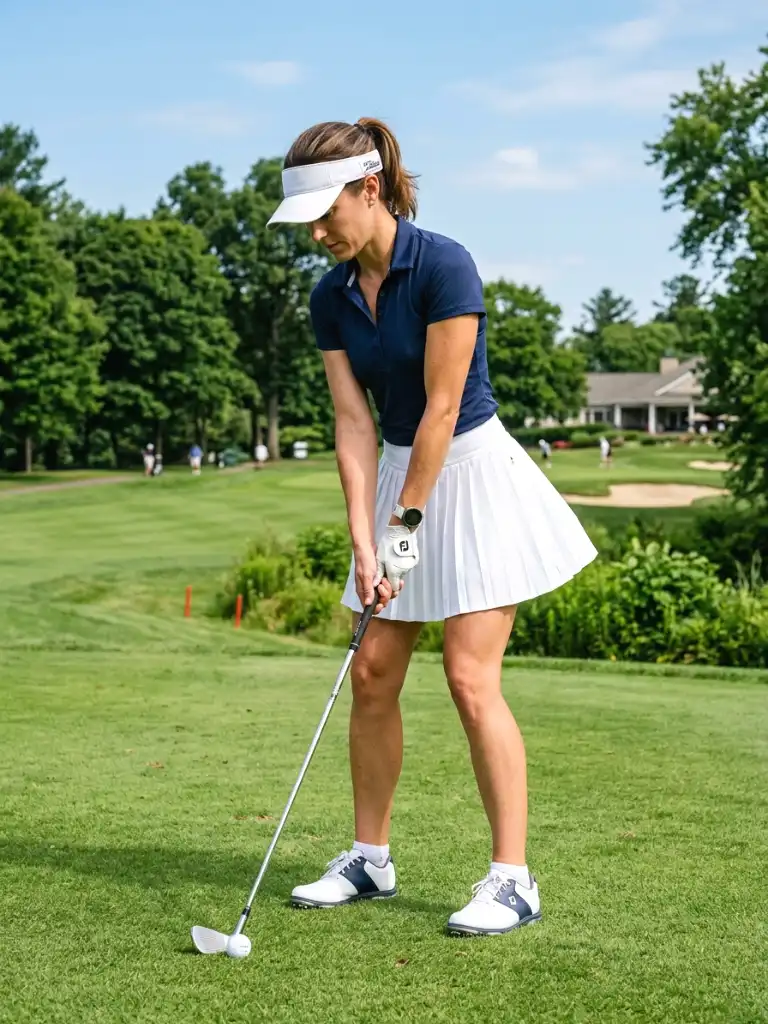
Tennis and golf borrowed from each other for decades, so why fight it? A pleated tennis-style skirt with a fitted performance tee gives you a sporty, youthful look that still passes most dress codes when the tee has a collar or mock neck.
Keep the tee fitted through the torso and tuck the front only. It works because a half tuck defines your waist while leaving room to move, and pleated skirts release air with every step you take between shots.
Pro Tips:
- Confirm your course allows collarless tops before committing.
- Pleated skirts need built-in shorties with a phone pocket.
- Pastel skirts pair best with white or heather gray tops.
13. Neon Accent on a Black Base

Black in summer gets a bad reputation, though it works fine in lightweight knits during early or late tee times. Add one neon piece, a lime visor or a coral belt, and the whole outfit shifts from funeral to fashion instantly.
Keep the neon to exactly one item, maybe two at most. It works because a single bright accent against a dark base creates a focal point, and black bottoms handle cart grease and mud without showing a thing.
Pro Tips:
- Reserve full black for rounds before 9 a.m. or after 5 p.m.
- Match neon to your golf ball color for a subtle flex.
- Black performance fabric fades fast; wash it inside out.
14. Earth-Tone Neutrals
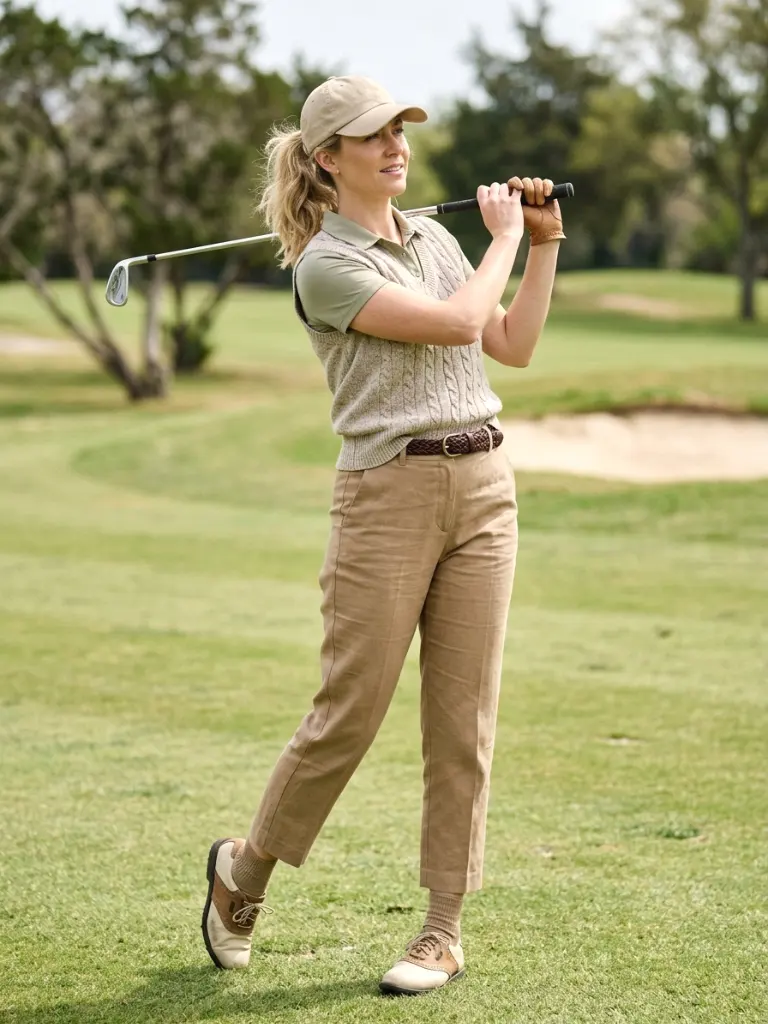
Sand, olive, clay, and oat make a quietly expensive-looking palette that photographs beautifully against green fairways. This is my personal favorite for casual rounds because nothing clashes and everything mixes with everything else.
Stack two or three neutrals in slightly different tones rather than matching exactly. It works because tonal dressing creates depth without contrast, and muted colors flatter every skin tone while hiding the dust that coats you on a dry summer course.
Pro Tips:
- Build around one neutral bottom you love, then buy three tops to match.
- Add texture, like a ribbed collar, so the look does not go flat.
- Brown leather accessories beat black with earth tones every time.
15. Lightweight Wide-Leg Golf Pants

Full-length pants in summer? Absolutely, if they are the right ones. Wide-leg pants in a paper-thin woven fabric create constant airflow around your legs while giving you total sun protection, which is why desert players wear them in July.
Pair them with a fitted sleeveless top to balance the volume. It works because the contrast between a slim top and flowing bottom reads intentional, and wide legs let breeze circulate where skinny fits trap heat against your skin.
Pro Tips:
- Look for ripstop or lightweight nylon, never cotton twill.
- Hem them to hit the top of your shoe, not the ground.
- Light colors are non-negotiable here.
16. Golf Joggers for Cool Mornings

Joggers hit that sweet spot between comfort and coverage for 7 a.m. tee times when the dew is still down. The tapered ankle keeps fabric off wet grass, and the stretch waistband beats a stiff button on a long round.
Pair them with a tucked polo so the silhouette stays sharp instead of sloppy. It works because tapering at the ankle balances a relaxed thigh, and the tucked top prevents the whole outfit from reading as loungewear.
Pro Tips:
- Confirm your club allows joggers. Policies vary wildly.
- Choose ankle zips so you can vent as the day warms up.
- Avoid heavy French terry. You want woven stretch.
17. Argyle Preppy Revival
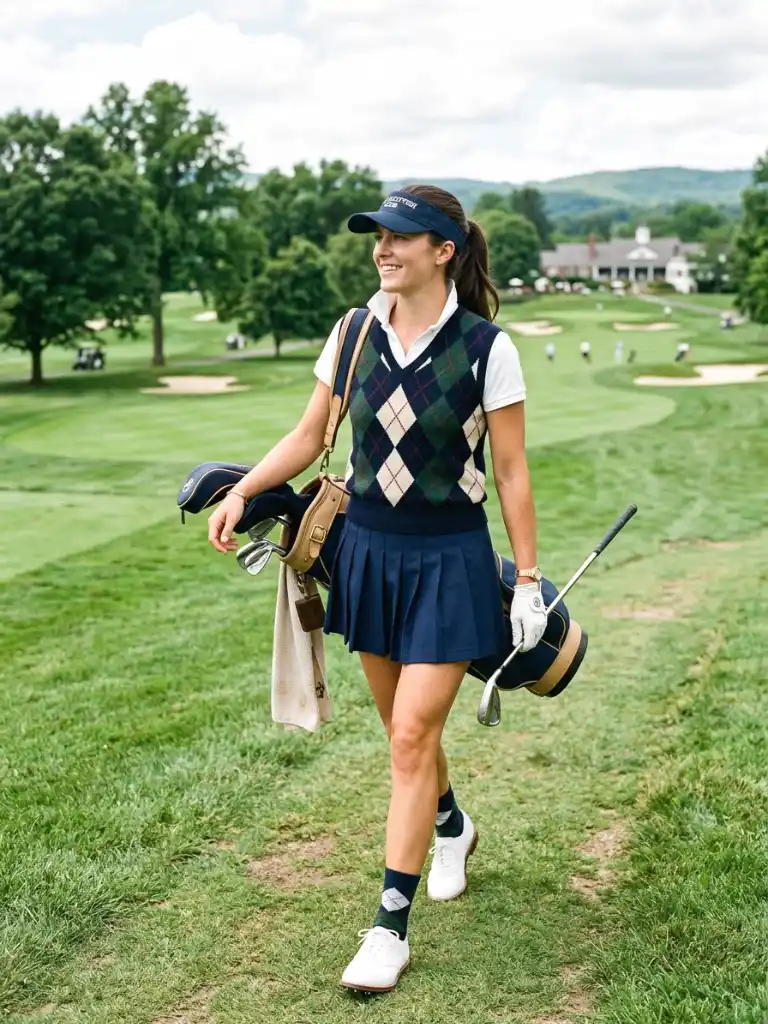
Argyle came back, and I am not mad about it. A subtle argyle polo or a tonal argyle skort adds heritage golf character without the full 1985 costume commitment. It signals that you actually know the game’s history.
Wear one argyle piece with everything else solid, ideally in colors pulled from the pattern. It works because heritage patterns need modern restraint, and small-scale argyle reads as texture from a distance rather than as a statement print.
Pro Tips:
- Tonal argyle, where all colors sit in the same family, looks the most current.
- Skip argyle socks with an argyle top. That is a lot.
- Pair with a structured cap rather than a floppy hat.
18. Sleeveless Vest Layer for Early Tee Times
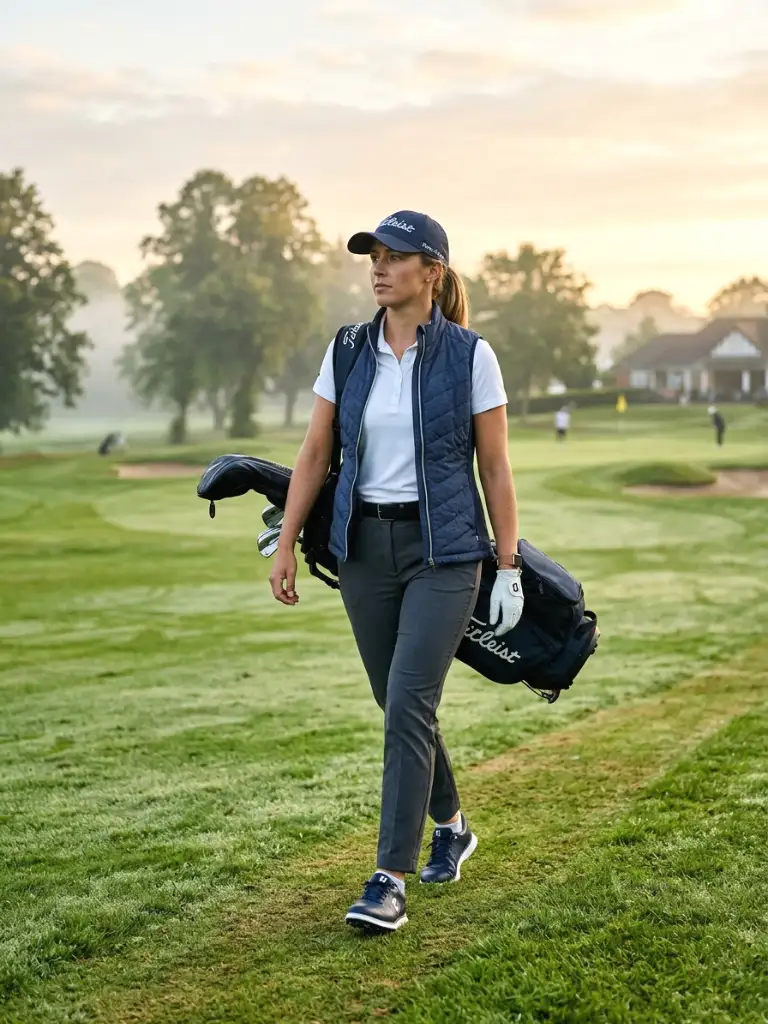
A thin quilted or knit vest handles that weird 60-degree morning that becomes an 88-degree afternoon. You stay warm through the first three holes, then stuff it in your bag and forget it exists.
Wear it over a sleeveless polo so your arms stay free, and keep it unzipped. It works because core warmth regulates your whole body temperature, and a vest never restricts your shoulder turn the way a jacket sleeve does.
Pro Tips:
- Choose a packable vest that folds into its own pocket.
- Fitted beats oversized for swing clearance.
- Wind-resistant fronts with knit backs give you the best of both.
19. Cooling Arm Sleeves with a Sleeveless Polo
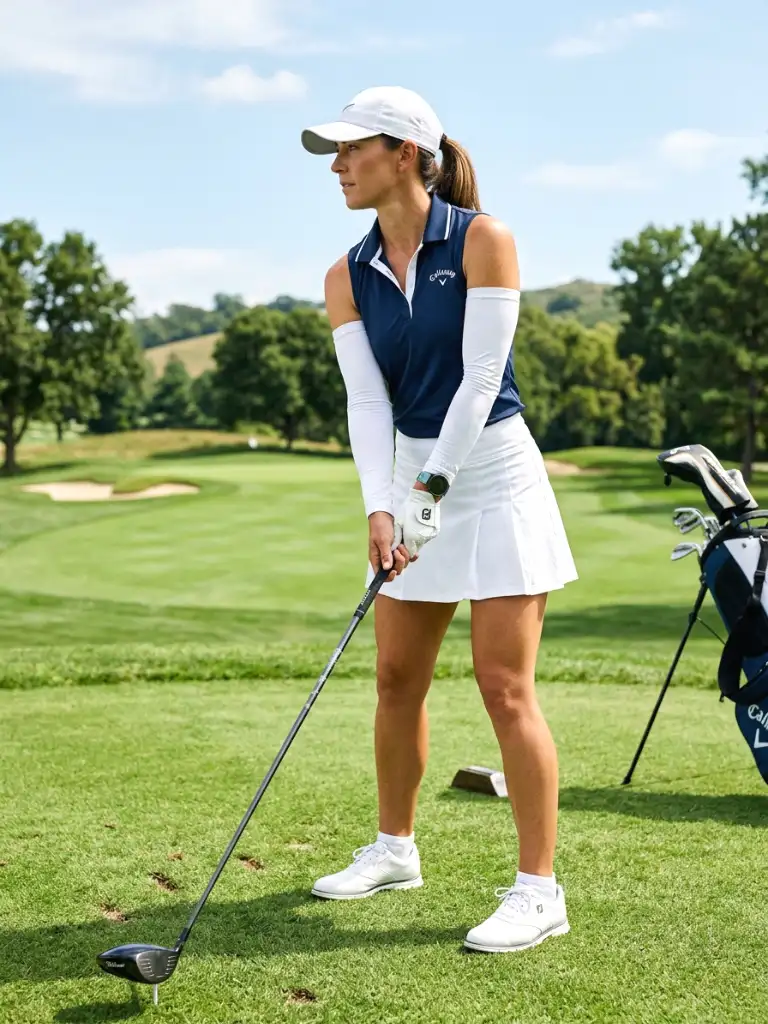
This combo is the smartest hack in hot weather golf clothes, FYI. You get the shoulder freedom of sleeveless plus full arm sun coverage, and cooling sleeves use evaporative fabric that genuinely feels cold when damp.
Pull the sleeves on after you warm up, and match them to your polo or go pure white. It works because you can remove sun protection instantly when you reach a shaded hole, and separate sleeves wash more easily than a full shirt.
Pro Tips:
- Wet the sleeves at the water cooler on the turn for a real cooling hit.
- Buy silicone-gripped tops so they stay up through your swing.
- White and light gray outperform black for heat reflection.
20. Denim-Look Skort and a Plain Tee
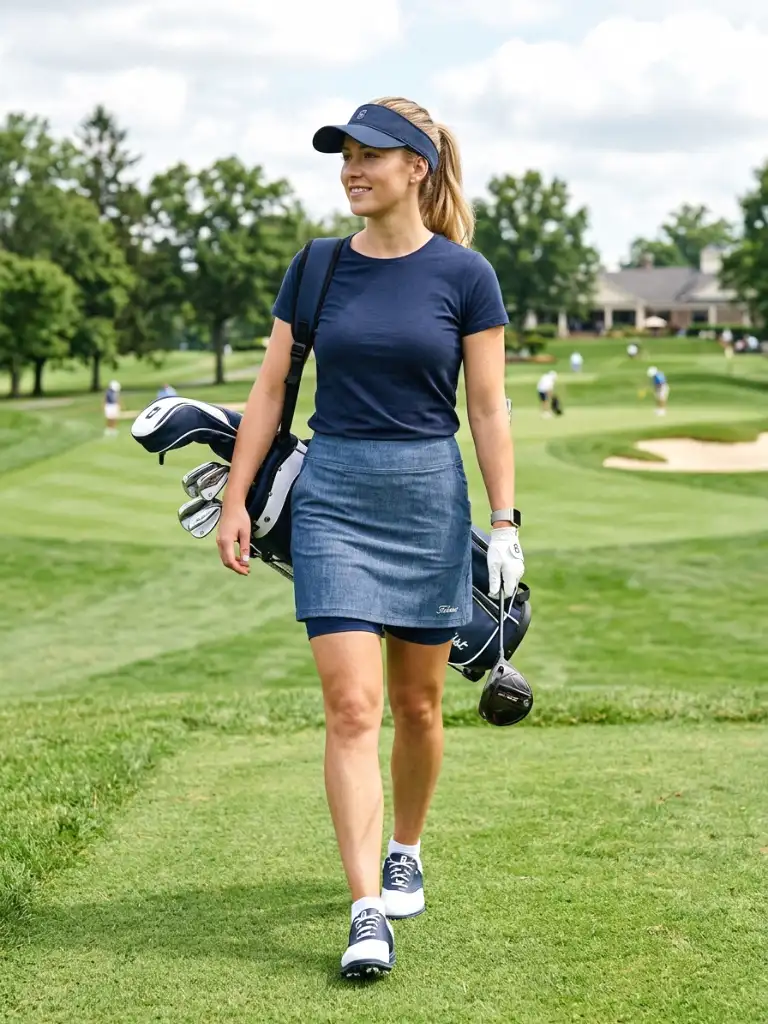
Real denim on a course is a crime against comfort, but denim-look performance skorts solved that problem. They give you the casual visual of jeans with stretch knit construction and moisture management underneath.
Keep the top simple: a plain white or striped collared tee, nothing busy. It works because the faux-denim texture already provides visual interest, and this look transitions straight to a patio lunch without you changing a thing.
Pro Tips:
- Check that the “denim” has at least 10% spandex.
- Avoid heavy stitching details; they add bulk and heat.
- Confirm your club allows denim-look fabrics. Some still say no.
21. Polo Dress with Built-In Shorts

The polo dress splits the difference between a traditional dress and full sportswear. You get a real collar for dress code safety, a relaxed shift shape for airflow, and built-in shorts that make cart rides and bunker shots a non-issue.
Add a belt if the shape runs boxy, and keep the hem two inches above the knee. It works because a collar instantly formalizes any silhouette, and the loose cut avoids clinging when humidity climbs past 70%.
Pro Tips:
- Look for side seam pockets deep enough for a scorecard.
- Belted versions suit curvier frames; shift cuts suit straighter ones.
- Navy and forest green hide sweat the best.
22. The Visor-Forward Look
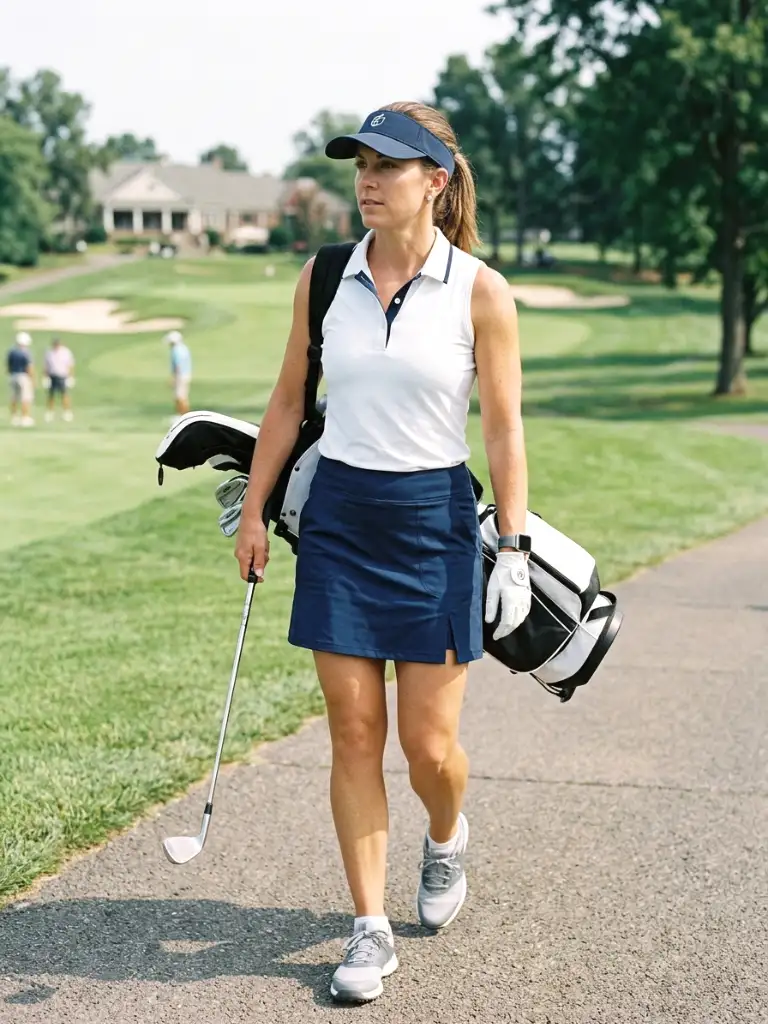
A visor is the most underrated styling tool in women’s golf. It shades your eyes, keeps your ponytail free, and lets heat escape through the top of your head, which a full cap traps. Build the outfit around it.
Match your visor to one color already in your outfit, never introduce a fourth. It works because a repeated color makes an accessory look intentional, and open-top designs drop your head temperature noticeably on windless days.
Pro Tips:
- Choose wide-brim visors of at least three inches for nose coverage.
- Sweat-wicking inner bands prevent forehead breakouts.
- Keep two in rotation so one always dries fully.
23. Bucket Hat and Relaxed Fit
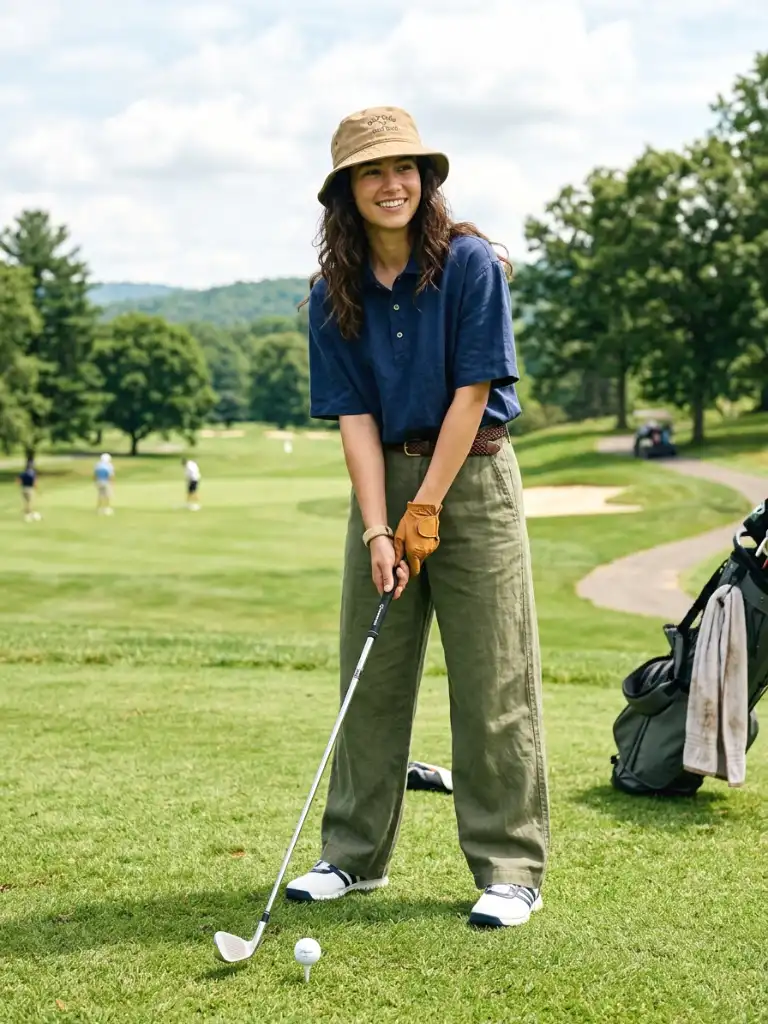
The bucket hat went from ironic to essential, and on a treeless course in August it earns every inch of brim. Pair it with a relaxed polo and a loose skort for a laid-back look that still respects the dress code.
Keep the rest of the outfit tonal so the hat stays the focal point. It works because 360-degree brim coverage protects your ears and neck, which is where most golfers actually get burned and where skin cancers commonly appear.
Pro Tips:
- Pick a crushable, packable bucket hat for bag storage.
- Chin cords save you on windy days. Yes, really.
- Neutral hats work with more outfits than printed ones.
24. Clubhouse-to-Course Linen Blend
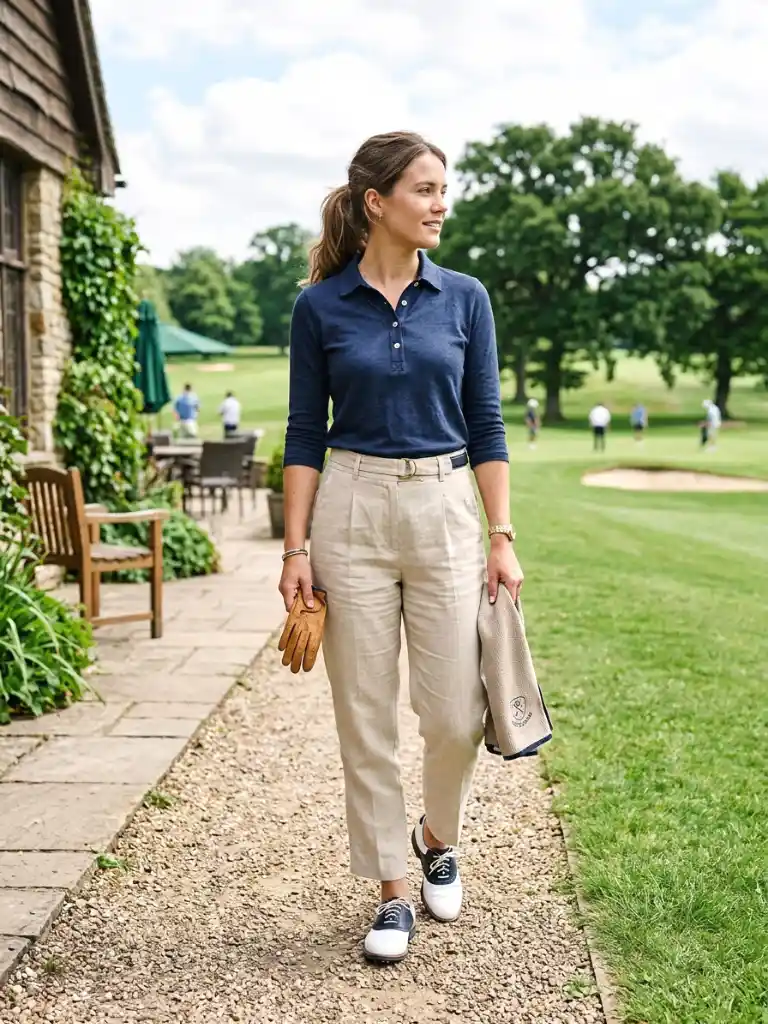
Linen-blend performance pieces read like resort wear but perform like golf gear. A linen-look camp collar top with a clean skort takes you from a member lunch to a twilight nine without a wardrobe change.
Choose blends, not pure linen, so you avoid the wrinkle disaster. It works because textured fabric looks dressier than smooth polyester, and blended weaves keep stretch and wicking while borrowing linen’s breathability and casual elegance.
Pro Tips:
- Look for linen blended with polyester or Tencel for shape retention.
- Steam, do not iron, to preserve the finish.
- Sand, white, and pale blue photograph best in this fabric.
25. Spikeless Sneakers and Statement Socks

Your shoes finish the outfit, and spikeless golf shoes now look close enough to sneakers that you can wear them to the parking lot, the range, and dinner. Add a patterned no-show sock and you have a small personality detail that costs almost nothing.
Match your shoe color to your top, not your bottom, for a balanced look. It works because repeating a color at the top and bottom of your body frames the whole outfit, and spikeless outsoles stay comfortable across 18 holes of hot pavement and turf.
Pro Tips:
- Choose tab-back no-show socks so they never slip down.
- Rotate two pairs of shoes so the foam recovers between rounds.
- White sneakers with a colored midsole tie into any palette.
My Personal Experience with Summer Golf Apparel
I learned the fabric lesson the hard way during a July league night in a cotton-blend polo. By hole six the shirt had turned into a wet towel stuck to my back, my swing felt restricted, and I shot my worst nine of the season. That round cost me nothing but pride, though it changed how I shop permanently.
Since then I’ve tested roughly a dozen setups across brands like Nike, Adidas, Under Armour, Puma, and Callaway, plus a few budget options from Amazon. Here’s my honest comparison: premium brands win on fabric recovery and seam quality, while budget pieces perform nearly identically for the first 20 washes and then start pilling. If you play weekly, buy two expensive polos rather than six cheap ones. If you play monthly, the budget route makes more sense.
The single biggest upgrade was not a garment at all. It was switching to a UPF sun shirt. My arms stopped burning, I stopped reapplying sunscreen every three holes, and the shirt paid for itself in aloe vera savings alone. IMO that is the best $40 in golf.
Maintenance: Keeping Your Golf Clothes Alive
Performance fabric dies from bad laundry habits, not from playing golf. Follow this and your gear lasts years instead of one season.
Step-by-step washing routine:
- Rinse immediately after your round, or at minimum hang the piece to dry rather than balling it in your bag. Trapped sweat breeds odor bacteria within hours.
- Wash in cold water on a gentle cycle. Hot water destroys elastane and flattens the wicking finish.
- Skip fabric softener entirely. It coats the fibers and blocks moisture transfer, which is the whole reason you bought the shirt.
- Use a sport-specific detergent or add half a cup of white vinegar to break down body oils that regular detergent leaves behind.
- Air dry flat or hang. Dryer heat is the number one killer of stretch and UPF coatings.
- Store folded, not crammed. Hanging heavy knits stretches the shoulders over time.
Stain fixes that actually work:
- Grass stains: dab with rubbing alcohol before washing, never rub.
- Sunscreen marks on white: soak in oxygen bleach for two hours.
- Deodorant buildup: scrub with a paste of baking soda and water.
The result? My three-year-old white skort still looks tournament-ready, while a friend who tumble dries everything replaces her gear annually. Same clothes, different habits, very different wallets.
My Honest Recommendations by Budget
If you’re buying your first summer golf kit ($100 or less): get one sleeveless polo, one navy skort with a liner, and a visor. That combination covers every dress code and every weather scenario. Skip the dress until you know what you like.
If you play weekly ($250 to $400): invest in two UPF sun shirts, two quality skorts in navy and white, one golf dress, and proper spikeless shoes. This rotation handles a full summer without repeating an outfit in the same week.
If you play in extreme heat (Arizona, Texas, Florida): prioritize sun coverage over everything. Wide-leg lightweight pants, long sleeve UPF tops, cooling arm sleeves, and a bucket hat will keep you playing when others quit at the turn. 🌞
Skip these: heavy cotton anything, unlined white bottoms, tight armholes, and shoes you have not walked 18 holes in before a tournament.
Conclusion
Summer golf does not have to mean suffering in the wrong fabric. These 25 looks cover every scenario you’ll face, from a strict country club dress code to a casual resort round, and each one rests on the same simple logic: breathable fabric first, sun protection second, styling third. Start with two or three outfits you genuinely love, wear them until you know exactly what works for your body and your climate, then build out from there.
Try mixing pieces across these ideas instead of copying one exactly. Swap the skort from number four into the look from number 19, or take the visor styling from number 22 and apply it anywhere. That’s where your personal style shows up. Save this post, pin your three favorite ideas, or send it to the friend who still plays in cotton. Then go book a tee time and find out which outfit actually holds up at hole 18.
FAQs
What should a woman wear to golf in summer?
Wear a collared or mock neck moisture-wicking top with a skort, golf shorts, or a golf dress. Add a visor or wide-brim hat, UPF protection, and spikeless shoes. Most clubs require a collar and prohibit denim, tank tops without collars, and athletic shorts.
Are leggings allowed on a golf course in summer?
It depends entirely on the club. Many public and resort courses allow leggings, while traditional private clubs do not. Call the pro shop before you drive over. Skorts with built-in liners satisfy every dress code I have encountered.
What fabric is best for hot weather golf clothes?
Polyester and nylon blends with spandex outperform everything else. Look for moisture-wicking finishes, four-way stretch, and a UPF 50+ rating. Avoid cotton, which absorbs sweat, holds it against your skin, and loses shape when wet.
How long should a women’s golf skort be?
Most clubs require the hem to sit no more than four inches above the knee, and many specify mid-thigh as the minimum. A 17 to 19 inch skort works for most heights. Always check the built-in short length too.
Do I need golf-specific clothes to play?
No, but the dress code still applies. You can play in any collared moisture-wicking top and appropriate shorts or skirt from a general athletic brand. Golf-specific pieces mainly add pockets, swing-friendly cuts, and dress-code-safe designs.