Keeping your length does not mean keeping the same haircut forever. Long layered haircuts with bangs are popular for a simple reason: the layers bring movement, shape and lightness to long hair, while the fringe changes the whole frame of your face — and neither asks you to give up the length you have spent years growing. The forty combinations below cover the full range, from barely-there layers with a whisper of fringe to dramatic butterfly cuts and textured shags. Some suit fine hair that needs the illusion of fullness, others are built for thick hair that needs weight removed, and there are options here for straight, wavy and curly textures alike. Read with your own hair in mind: the right pairing of layering and bangs should flatter your face shape, fit the styling time you honestly have, and make your hair easier to enjoy, not harder.
Idea 01
Cut at an Angle: The Fringe That Refuses to Be Symmetrical
Most fringes are cut level; this one is deliberately not. One side is left longer than the other, so the bangs sit at a slant and give the front of the haircut an unmistakable point of view. The long layers underneath do the balancing work, flowing evenly so the angled front reads as a design choice rather than a mistake. It shows best on straight and lightly wavy hair, where the diagonal line stays visible, and it pairs naturally with a deep side part if you want to push the drama further.
Pro Tips
- Style the fringe with a smoothing product and direct it towards the longer side, so the angle holds its shape through the day.
- Keep the layers soft and blended — harsh layering plus an angled fringe can tip the whole cut from modern into severe.
Idea 02
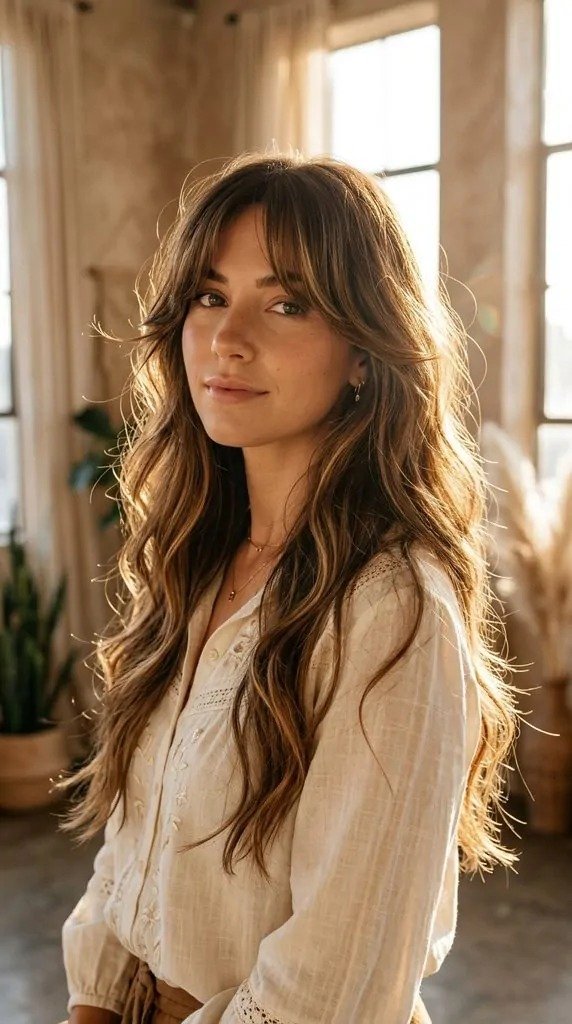
Waves With a Centre-Parted Fringe That Falls Like Curtains
This is the romantic end of the layered family. The layers are placed to distribute volume through the length so natural waves fall in a defined, flowing shape instead of one heavy mass, and the fringe parts in the middle and sweeps to both sides like curtains, melting into the front layers. On naturally wavy hair it looks almost effortless, because the texture does the styling; on straight hair, a wand or heatless waves will get you the same softness. It dresses up easily but never looks overdone.
Pro Tips
- Work a lightweight mousse or wave cream into damp hair, scrunch, and dry with a diffuser or naturally — heavy products flatten the very movement this cut is about.
- Style the curtain fringe separately with a round brush, sweeping it away from the face, or it will fall flat against your forehead by midday.
Idea 03
Vintage Bardot Energy, Softened for Real Life
Inspired by Brigitte Bardot’s famous fringe, this version keeps the romance and drops the difficulty. The bangs are fuller at the centre of the forehead, part slightly, and lengthen gradually towards the cheekbones, where they blend into long, flowing layers. With a voluminous blowout or loose waves, the effect is unmistakably glamorous but still wearable — vintage in spirit, modern in execution. It flatters medium to thick hair best, though a lighter version can be cut for finer textures.
Pro Tips
- Lift the fringe at the roots with a round brush and direct it away from the face; Bardot bangs live or die on that root volume.
- Large rollers while the hair cools will hold the soft, bouncy shape far longer than a brush alone.
Idea 04
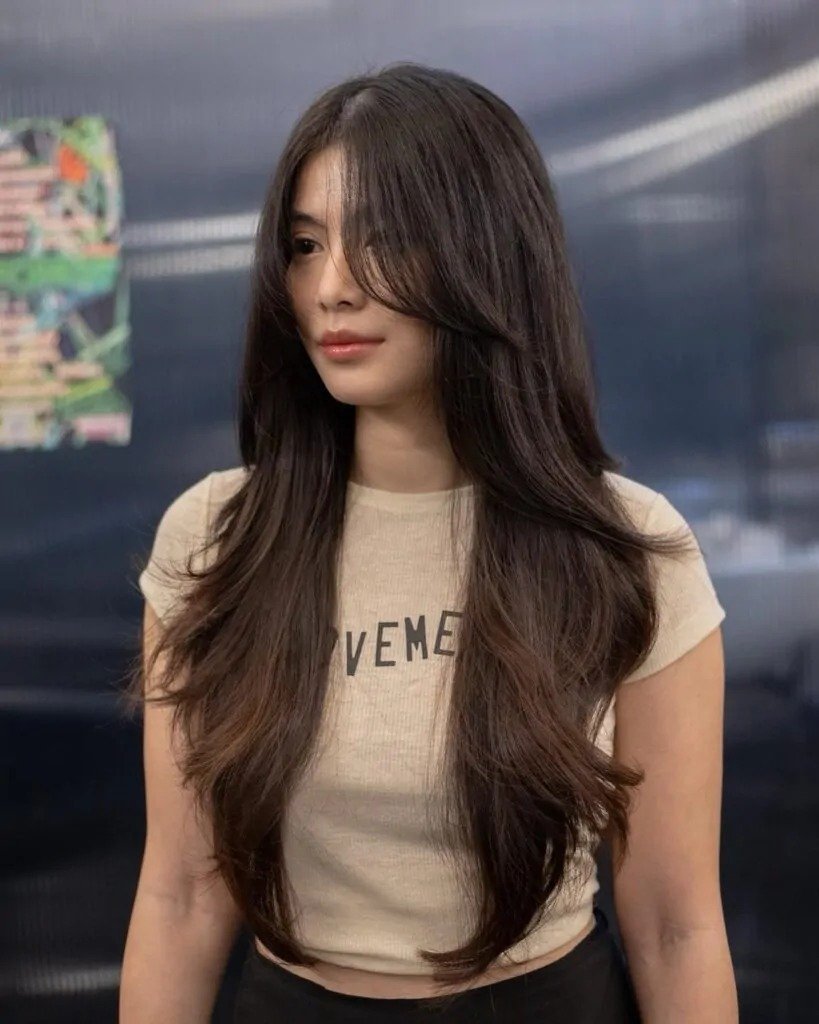
image via coachthanakrit95
A Crescent Curve: Shorter in the Middle, Longer at the Sides
Instead of a straight line, this fringe follows a shallow crescent: shortest at the centre of the forehead, easing longer towards the edges until it dissolves into the long layers. That curve is what makes it feel so balanced — it frames the eyes without walling off the forehead, and it softens the transition between fringe and length better than almost any other bang shape. It is a particularly kind choice for oval and heart-shaped faces, and it keeps a sophisticated, polished character.
Pro Tips
- Ask your stylist to cut the crescent dry or nearly dry if your hair shrinks as it dries, so the centre does not end up shorter than planned.
- Blow-dry the fringe with a small round brush following its curve — brushing it straight down first will fight the shape.
Idea 05
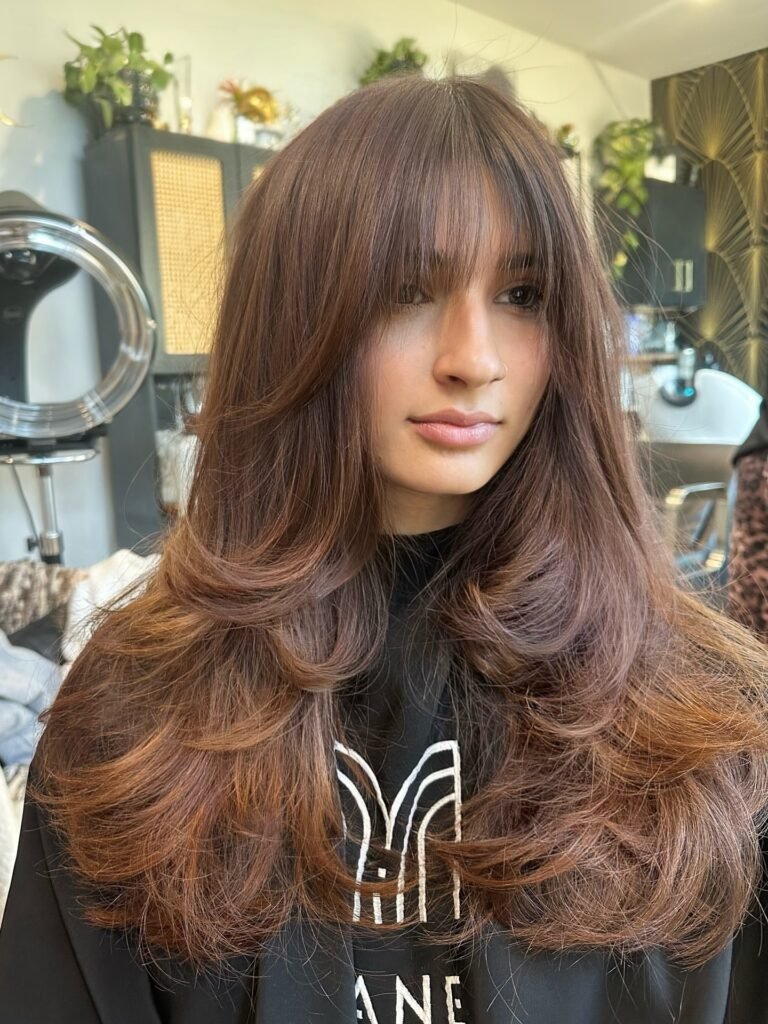
image via kaylasstyles
Rounded Layers and a Fringe That Stops at the Brows
Rounded layering shapes the hair into a smooth, continuous silhouette — no sharp steps, no jagged ends — and a brow-length fringe adds gentle definition right where it draws attention to the eyes. Together they create a balanced, classic haircut that enhances natural volume instead of chasing it with products. It is an especially good friend to thinner hair, because the rounded shape keeps the outline looking full. Feminine, tidy and easy to wear every day.
Pro Tips
- Keep the fringe at true brow length rather than longer; on this cut, even half a centimetre changes it from defined to curtain-like.
- A round-brush blowout that curves the ends under slightly will show off the rounded layering at its best.
Idea 06
Side Bangs With a Bend in Them
Most side bangs are styled smooth; these keep a gentle wave. The fringe is blended into cheekbone-length layers and left with a soft bend that follows the natural direction of wavy hair, so the whole front of the haircut moves as one piece. On naturally wavy hair it looks genuinely effortless. Straighter hair can copy it with a quick pass of a wand or a round brush. If your taste runs relaxed and romantic rather than polished, this is one of the easiest wins on the list.
Pro Tips
- Apply a light wave cream and let the front pieces air-dry with the rest; over-styling the bangs makes them clash with the natural texture.
- Shape the fringe separately only if it dries unruly — a ten-second round-brush pass is usually enough.
Idea 07
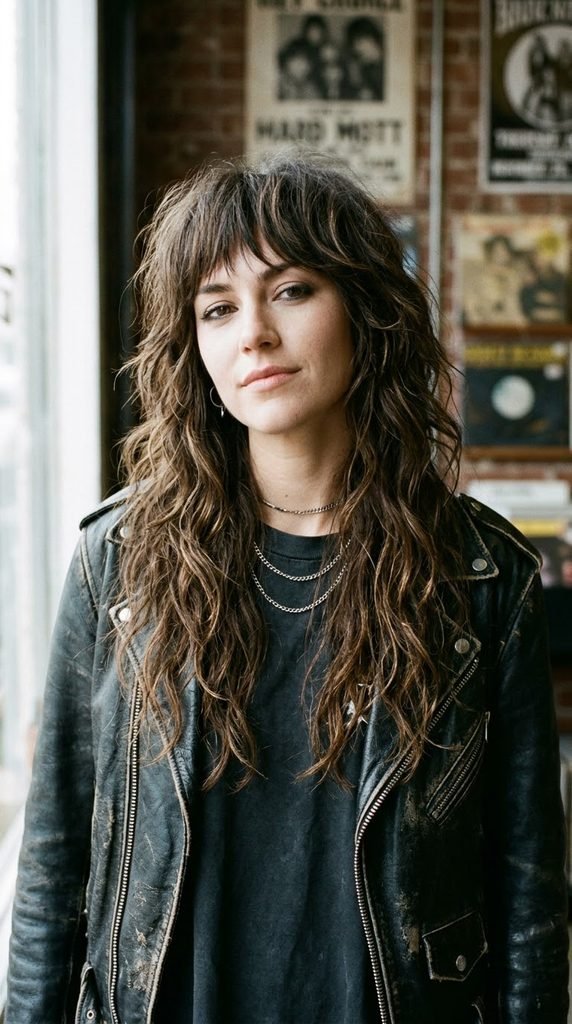
The Choppy Shag for Anyone Bored of Polished Hair
The shag is the layered cut with the volume turned up and the perfection turned off. Layering is concentrated around the crown and sides, creating separation, movement and a slightly messy silhouette, and the fringe is cut choppy — intentionally uneven — to match. Naturally wavy hair makes this cut look like it styled itself. Straight hair gets there with texturising spray or a light mousse worked through with the fingers. If smooth, sleek hair bores you, start here.
Pro Tips
- Resist smoothing it: the shag’s charm is imperfection, so finish with fingers, not a brush, and leave a few bends undone on purpose.
- A salt or texture spray on dry hair revives second-day shag layers better than re-washing.
Idea 08
A Deep Side Sweep With Real Drama
A fringe that starts from a deep side part and sweeps diagonally across the forehead changes long layered hair completely — it adds an angled frame, a sense of movement, and a little glamour without any extra length or colour. Because it blends gradually into the face-framing layers, the whole haircut looks connected rather than assembled. It suits anyone who already lives in a side part, and it has the bonus of making roots look fuller. Worn with a blowout, it is quietly dramatic.
Pro Tips
- Blow-dry the fringe in the opposite direction to where it will sit, then sweep it over — this old trick is what creates the lift at the root.
- If the sweep keeps falling into your eyes, the part is not deep enough; moving it a centimetre further changes everything.
Idea 09
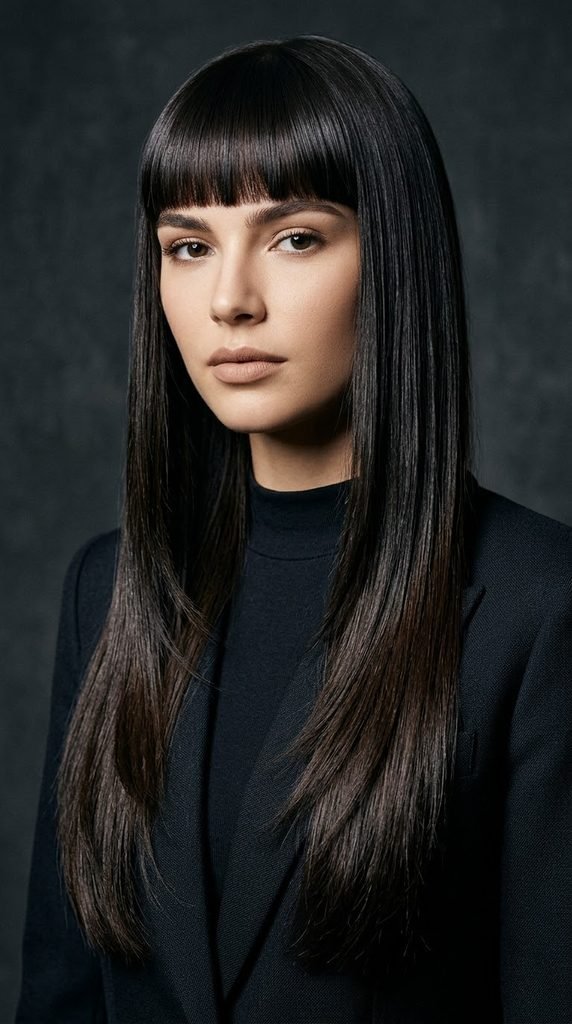
Glass-Smooth Lengths Against a Bold Straight Fringe
Contrast is the whole point here: long, smooth, minimally layered lengths set against a fringe cut straight across in one confident line. The layers stay subtle so the length remains full and sleek, while the blunt bangs do all the talking, framing the eyes and the upper face. It is at its best on naturally straight hair, which holds both shapes without argument. Wavy hair can wear it too, but expect to smooth the fringe daily. Eyebrow length keeps it classic; a touch longer feels softer.
Pro Tips
- On fine hair, keep layering truly minimal — too much will thin the ends and spoil the full, smooth outline this style depends on.
- Heat protectant before straightening, then a lightweight serum only on the ends; serum on the fringe will make it separate and greasy.
Idea 10
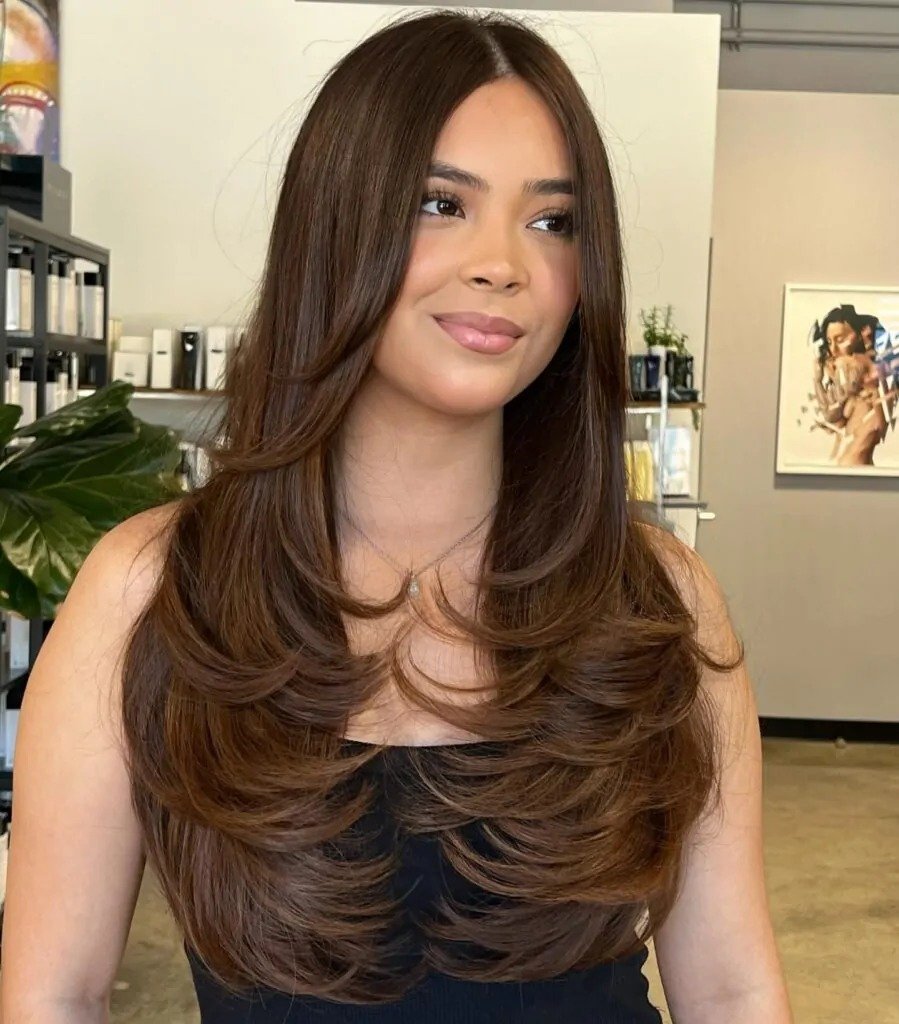
image via hair__mariss
Layers Nobody Can See, Volume Everybody Notices
Invisible layers are cut inside the haircut, where they remove hidden weight and create lift without touching the outline — so the ends stay full and the surface looks unlayered. Paired with long bangs that melt into the front layers, the result is light, polished and quietly expensive-looking. It is one of the smartest options for fine hair, which gets movement and body without the see-through ends that visible layering can cause.
Pro Tips
- Tell your stylist explicitly that the ends must stay dense; invisible layering only works when the perimeter is protected.
- Because the surface is smooth, this cut shows oil sooner — a dry shampoo at the roots on day two keeps the lift.
Idea 11
Tiny Fringe, Long Hair: The Boldest Contrast Here
Micro bangs sit noticeably above the eyebrows, and against long, flowing layers that short fringe becomes a genuine statement — edgy, fashion-forward, and impossible to ignore. The softness of the length keeps the look feminine, so the contrast feels playful rather than harsh. You can wear the micro fringe blunt and straight, or slightly textured for a gentler edge. Be honest with yourself before committing: this is the least forgiving fringe on the list to grow out.
Pro Tips
- Discuss the exact length with your stylist while looking at your hairline and texture together — a few millimetres decide whether micro looks chic or accidental.
- Budget for frequent trims; micro bangs change shape faster with growth than any other fringe, so they need attention every few weeks.
Idea 12
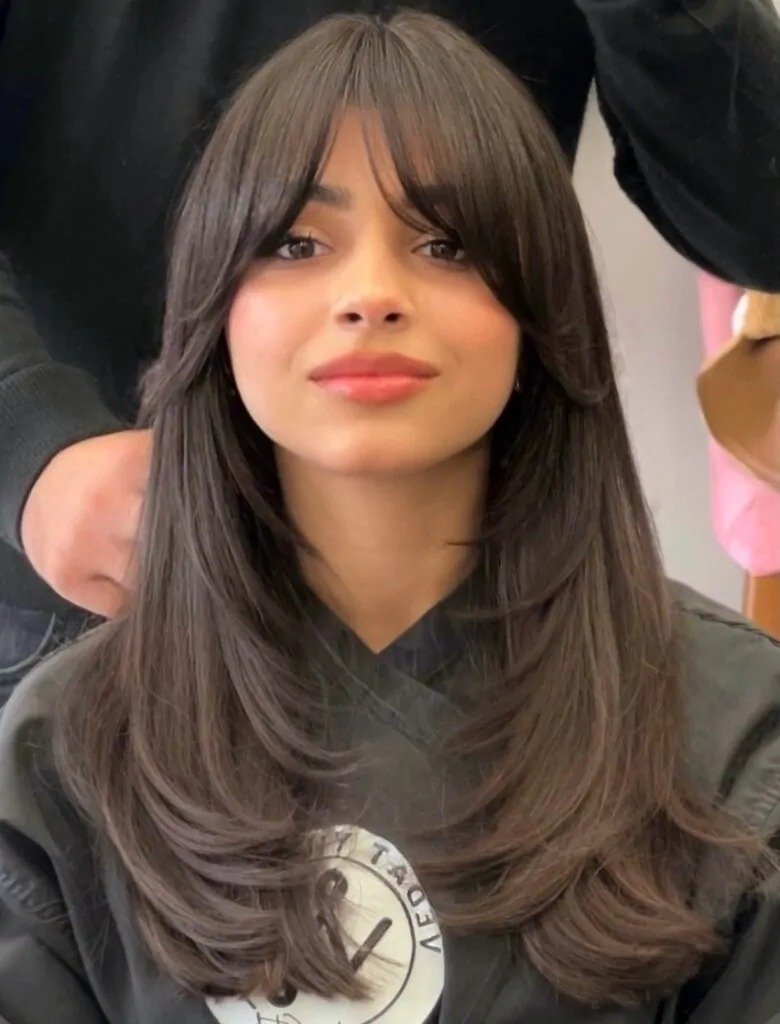
image via vedatyildirimhair
A Fringe So Soft It Brushes Your Lashes
An eyelash-grazing fringe is the romantic extreme of bang lengths: long enough to just touch the lashes, soft enough to feel like part of the haircut rather than an addition to it. Long layers through the rest of the hair add body and movement, and the whole effect is feminine and effortless. Because the fringe is long, it is also forgiving — it can be swept aside, parted, or grown out without an awkward stage. Perfect if you want a natural, undone finish.
Pro Tips
- Keep a small round brush in your routine: thirty seconds of drying downwards stops lash-length fringe from splitting into curtains unintentionally.
- If it starts irritating your eyes, it is half a centimetre too long — that is your trim signal, not a styling problem.
Idea 13

image via hair__mariss
Stepped Layers With a Fringe That Sweeps Aside
Step layers are cut in visible stages, which gives long hair clear dimension and movement instead of one flat sheet — and unlike heavy layering, the stepped shape does not make finer hair look thin or flat. The side-swept fringe is the natural partner: it blends straight into the first step of layers, so the front and back of the cut feel like one idea. Stylish, versatile and genuinely easy to wear daily.
Pro Tips
- Ask for the steps to start below the chin if your hair is fine; steps that start too high can exaggerate thinness at the ends.
- Blow-dry the side fringe across the forehead and let it fall into the first layer — forcing it flat against the head kills the blend.
Idea 14
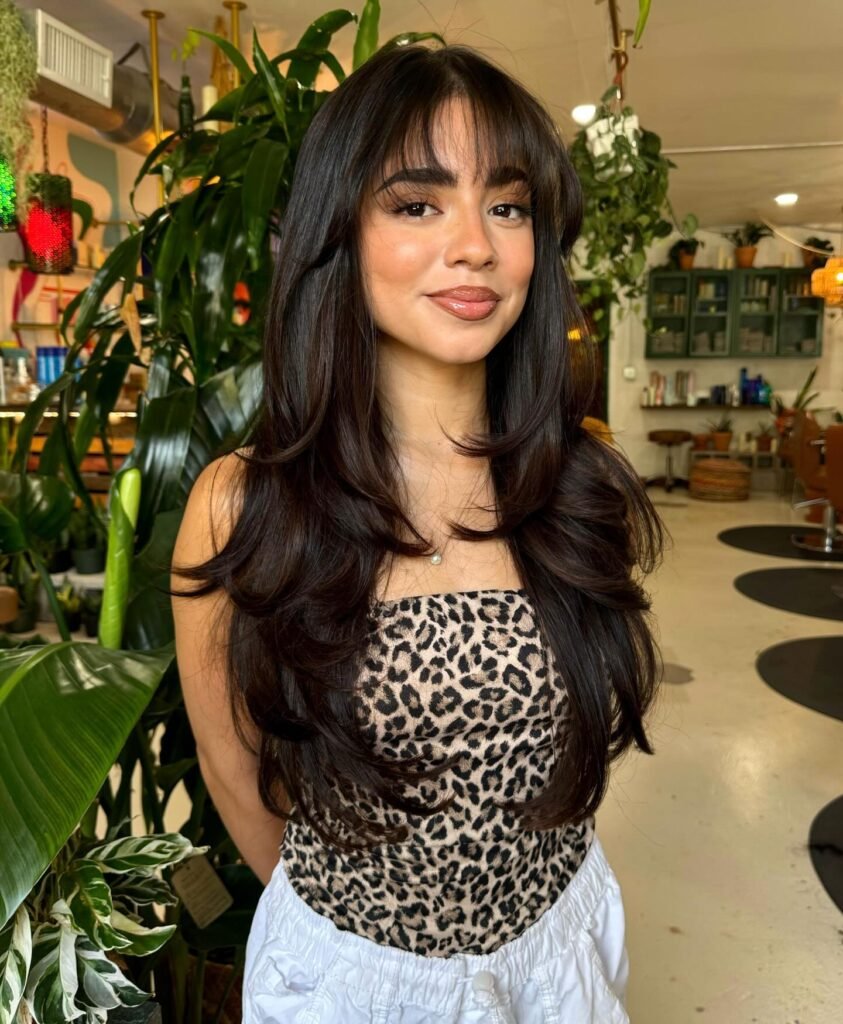
image via styled_by_selena
Feather-Light Fringe, Worn Off to One Side
A wispy fringe swept to the side is the gentlest way to wear bangs: fine, separated strands drift across the forehead while long layers create soft movement everywhere else. The lightness is the point — it helps finer hair look fuller rather than weighed down, and it never commits you to a strong fringe line. Delicate, effortless and very forgiving of skipped styling days, it suits everyday wear better than almost anything here.
Pro Tips
- Keep products away from this fringe except the lightest mist of spray; wispy bangs go stringy the moment they are overloaded.
- If the fringe separates too much by afternoon, a quick blast of cool air from the dryer resets it better than brushing.
Idea 15
The Korean-Style Airy Fringe, Explained Simply
Popularised by Korean beauty styling, airy bangs use a narrow, delicate section of fringe that lets the forehead show through, with longer pieces at the sides blending into the layers. Against long hair the effect is soft, youthful and polished without ever looking heavy — a frame, not a curtain. The layers can be worn smooth and flowing or with soft curls, and a gentle blowout gives the whole cut its characteristic lightness. Ideal if you want a subtle change rather than a dramatic one.
Pro Tips
- Shape this fringe with a small round brush and almost no product — the goal is light and movable, and product is what ruins that.
- Because the section is narrow, ask your stylist to start thinner than you think; you can always take more hair into the fringe at the next appointment.
Idea 16
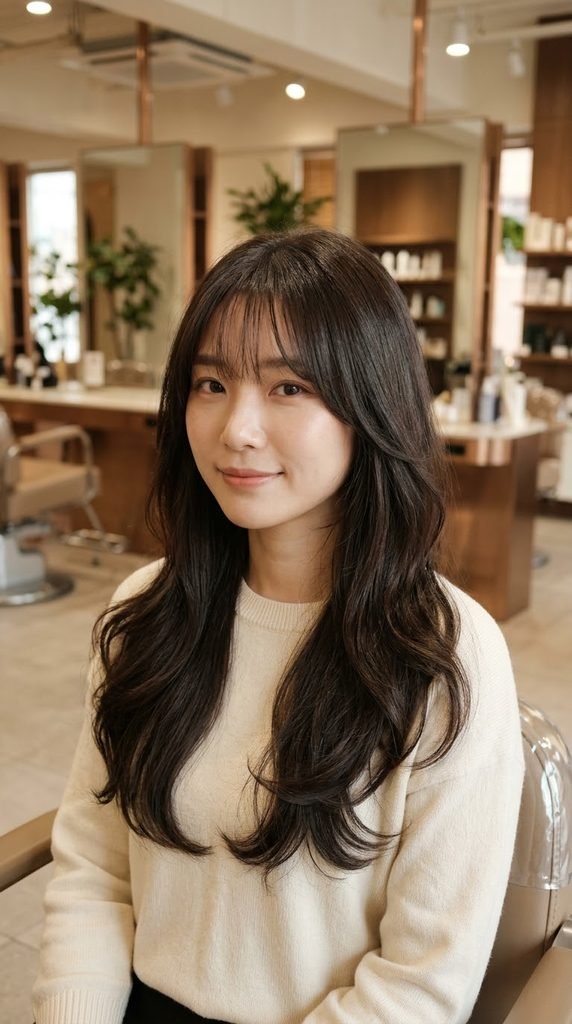
Barely-There Bangs You Can Still See Your Forehead Through
See-through bangs take the airy idea further: thin, spaced sections of hair cross the forehead so it remains partially visible underneath. With long layers, the result is youthful, relaxed and light — a fringe that makes a real difference to your face without covering it. Keep the back layers subtle and let the front sections frame the cheeks. It photographs beautifully on straight and softly waved hair, and it is a kind first fringe because the commitment is so low.
Pro Tips
- Fine hair needs careful handling here — ask your stylist to match the fringe’s thickness to your natural density so it never looks sparse.
- A light hand with a small round brush is the whole styling routine; anything heavier collapses the see-through effect.
Idea 17
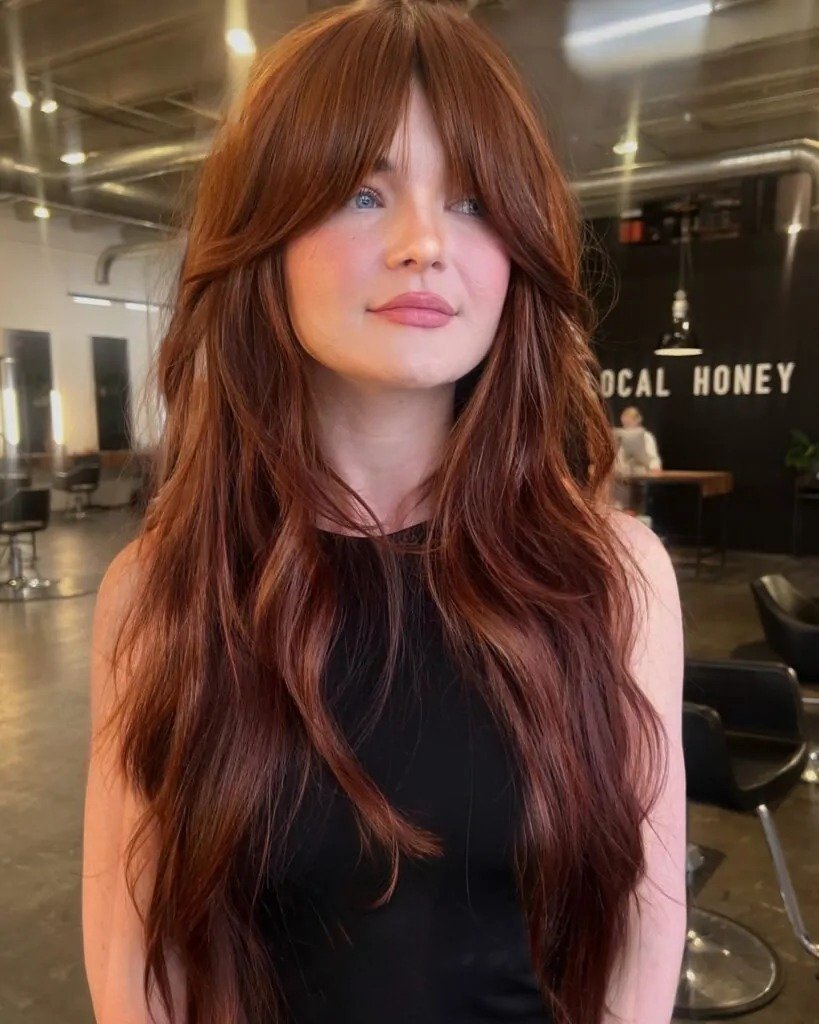
image via grayellen_hair
A Feathered Fringe That Drifts Into the Layers
Feathering means the ends are shaped to flick and blend rather than sit in a block, and a feathered side fringe uses that softness right around the face. It creates airy movement at the front while the long layers add texture through the rest of the hair, and the combined effect makes the whole head of hair look fuller than it is. Graceful, modern and easy to wear every day, it suits anyone who finds blunt fringe too strong.
Pro Tips
- Feathered ends show best when styled with the fingers and a light texturising product — a brush can iron out the flick you paid for.
- This fringe grows out gracefully into face-framing layers, so it is a low-risk choice if you are fringe-curious.
Idea 18
Cheekbone-Length Bangs for People Who Hate Trims
Grown-out bangs are cut around the cheekbones or jawline and blended straight into the layers, so you get the face-framing benefit of a fringe with almost none of the maintenance. They can be worn down, tucked behind the ears, or swept into a half-up style, and they work with straight hair, loose waves and big blowouts alike. They are also the perfect landing spot if you are growing out a shorter fringe and want the in-between stage to look intentional.
Pro Tips
- Curve the front sections away from the face with a round brush; that outward flick is what makes grown-out bangs read as a style rather than an accident.
- Add loose bends through the front so the transition between bangs and layers disappears completely.
Idea 19
Shag Layers Finished With an Open, Parted Fringe
Take the shag’s textured, layered shape — fullness around the crown and sides, softer movement through the length — and finish it with curtain bangs that part in the middle and blend into the shortest layers. The result is a modern, personality-filled haircut that looks best slightly imperfect. Naturally wavy hair is its natural home, since the texture animates every layer without heat; straight hair joins in with texturising spray and loose wand bends pulled apart with the fingers.
Pro Tips
- Air-dry with a little mousse scrunched in — this cut genuinely looks better with natural imperfection than with a polished blow-dry.
- Keep the curtain fringe cheekbone-length or longer so it melts into the shag layers instead of sitting on top of them.
Idea 20
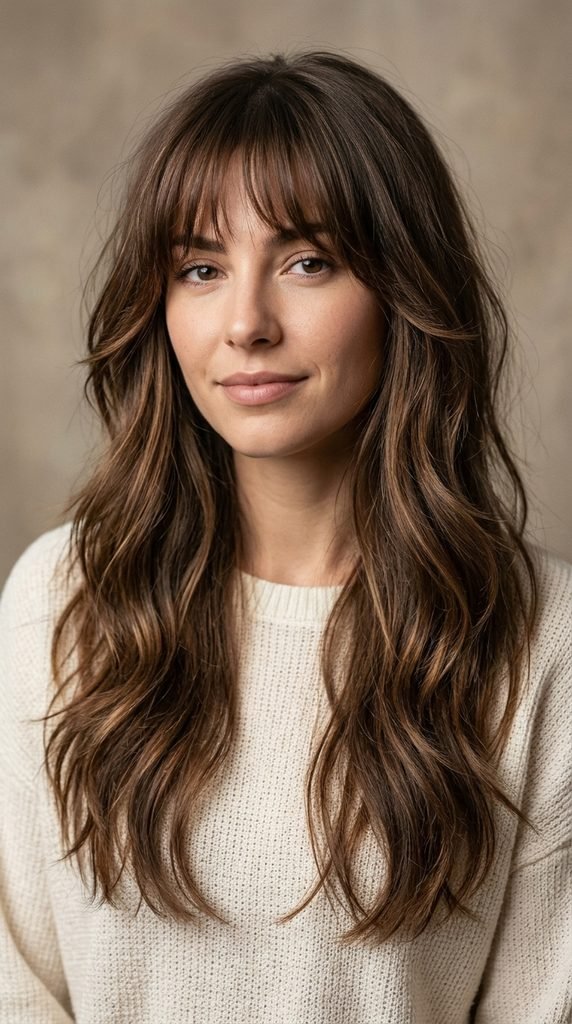
Delicate Wispy Bangs for a First Fringe
Wispy bangs are lighter and less dense than a classic fringe — small sections of forehead stay visible through them, which keeps the whole haircut airy. Cut around eyebrow length or a touch longer, they soften the face while long layers from the shoulders down add gentle movement. It is a subtle change rather than a transformation, which is exactly why it is the recommended starting point for anyone trying bangs for the first time: pretty, low-risk, and easy to grow out.
Pro Tips
- A lightweight blow-dry cream and a small round brush are all the fringe needs; the lengths can stay natural or take loose waves.
- Book trims little and often — wispy bangs only need tiny adjustments, but skipping them entirely lets the shape dissolve.
Idea 21
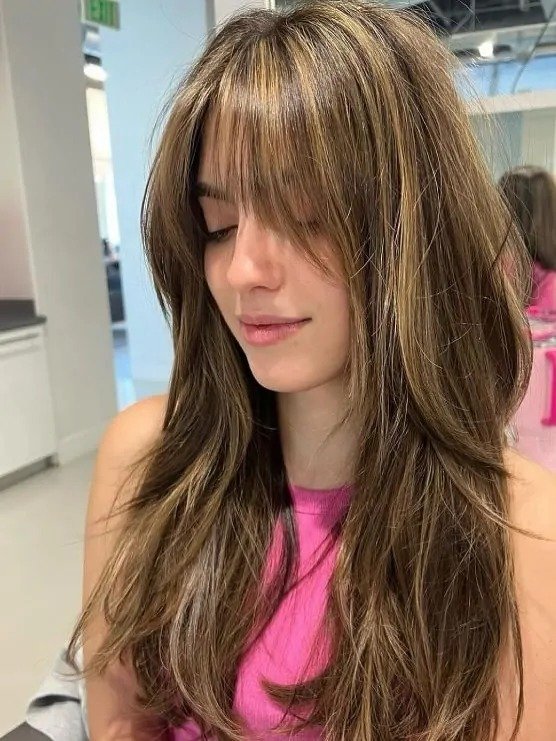
image via dirtyblondesalonatboca
A Pointed V at the Back, Softness at the Front
The V-cut shapes the back of the hair into a gentle point, longest at the centre, while the layers through the body keep the hair flowing instead of stiff. At the front, a soft side fringe undoes any severity, framing the face in the most flattering, low-effort way. It is a graceful combination for everyday wear: interesting from behind, gentle from the front, and it keeps long hair feeling full rather than stringy.
Pro Tips
- The V only reads if the ends are healthy — split ends blur the point, so keep up with small trims.
- Wear it straight or with the ends flicked under to show the silhouette; heavy curls hide the shape you chose it for.
Idea 22
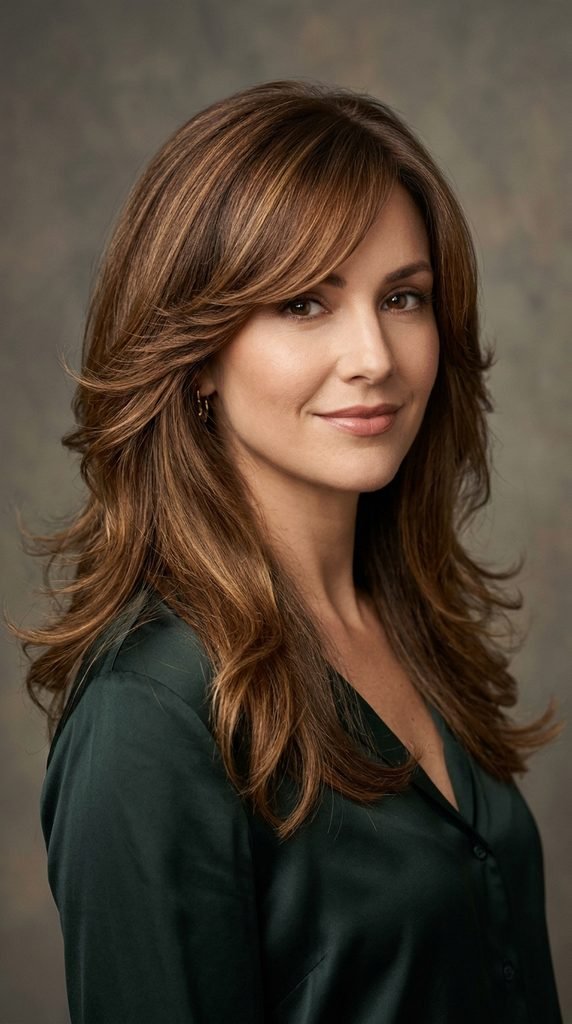
Ends That Flick Outwards Like Feathers
Feathered layering shapes every end to curve gently away from the face, so the hair seems to float rather than hang. Side-swept bangs follow the same outward direction and blend seamlessly into the front sections, making the whole haircut feel like one continuous movement. It is a classic for straight and slightly wavy hair, and on thick hair it removes weight while keeping the luxurious fullness. If you love a shaped, finished look that still moves, this is your cut.
Pro Tips
- A round brush is the tool for this style: direct the front sections away from the face and curve the ends outward as you dry.
- Large rollers set while the hair cools will exaggerate the feathered flick and add volume at the crown.
Idea 23
A Gentle Curve Across the Forehead
Soft curved bangs follow the natural arc of the forehead, gradually lengthening towards the sides until they become part of the front layers. Nothing about the shape is blunt or structured, which is why it feels timeless and romantic — the fringe frames the face the way a frame should, quietly. The layers can be kept subtle for a classic finish or made more noticeable if your hair is dense and you want movement. It looks as right with everyday clothes as with a formal dress.
Pro Tips
- Keep the ends smooth and give the fringe its curve with a round brush; the shape is in the drying, not the cutting alone.
- For a more romantic finish, add loose waves through the length and let the curved fringe sit naturally on top.
Idea 24
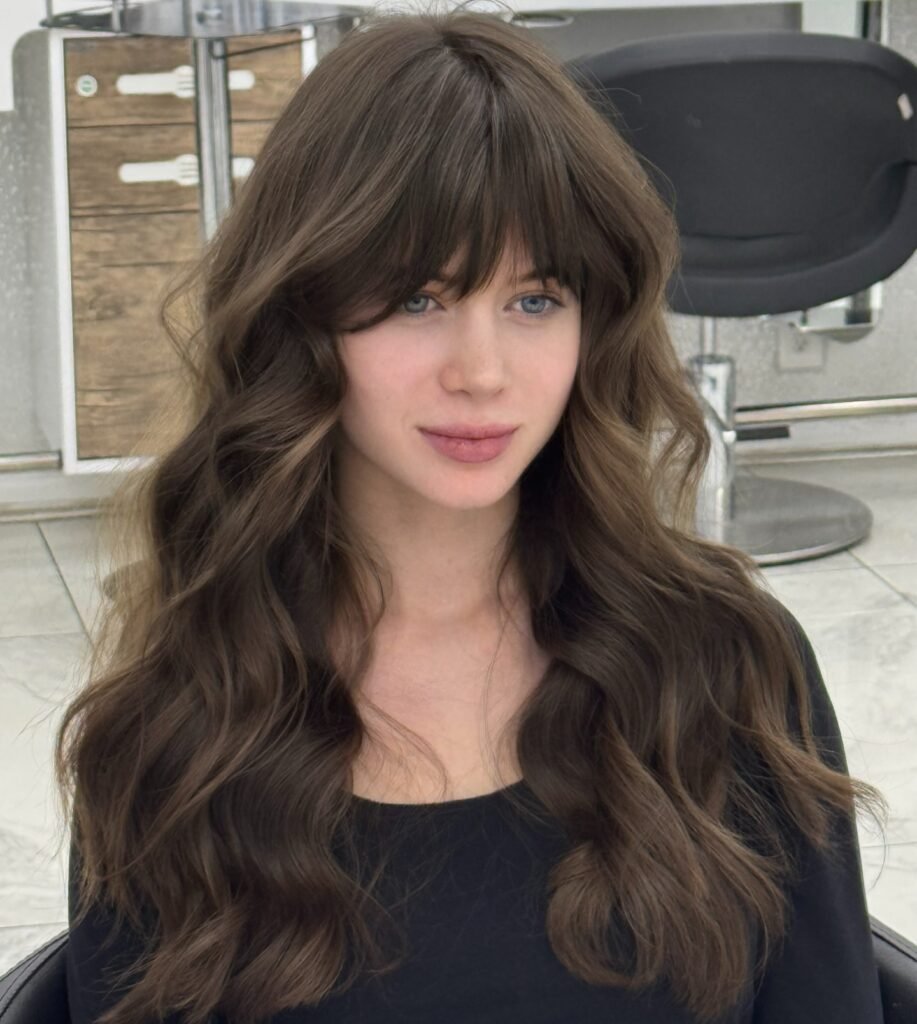
image via bybarisuysal
Cut for the Blowout: Cascading Layers, Longer Fringe
Some haircuts only make sense once the dryer has done its work, and this is proudly one of them. The layers are cut to cascade, and the fringe is left long so it sweeps seamlessly into the sides; add heat and a round brush and the whole thing becomes volume, bounce and polish. It is the glamorous choice — the one for occasions, photographs and anyone who simply loves how a salon blowout feels. On medium to thick hair, it is hard to beat.
Pro Tips
- Dry in sections, lifting at the root and rolling the brush through the ends; a blowout cut rewards the full routine, not a quick blast.
- Let each section cool on the brush for a few seconds before releasing — that pause is what sets the bounce.
Idea 25
Curly on Curly: Layers That Let Texture Lead
Long curly layers with curly bangs celebrate texture instead of managing it. The layers distribute volume through the length so the hair does not form one heavy triangle, and the curly fringe frames the forehead and blends straight into the surrounding curls. Everything depends on the cut respecting your pattern: curl type, density and shrinkage all change where the fringe actually lands when dry. Done well, it is confident, natural and completely individual — no two heads wear it the same.
Pro Tips
- Never let anyone cut your curly fringe to its final length while wet without a shrinkage conversation — curls can spring up several centimetres.
- Style on damp hair with leave-in conditioner and curl cream, scrunch, and diffuse or air-dry; never brush it dry if you want the definition to survive.
Idea 26
Big, Lifted Fringe for Maximum Front Volume
Where wispy bangs whisper, this fringe speaks up. It is cut and styled for lift and fullness at the front — parted slightly in the middle or swept to one side, and shaped with a round brush into a soft, high curve. The long layers earn their place by adding movement everywhere else, so the haircut never looks top-heavy. With a full blowout it is pure glamour; with loose curls through the length it turns dramatic. If you love big, bouncy hair, this is the front to match it.
Pro Tips
- Fine hair should use a lightweight root-lifting product only — heavy creams will collapse a voluminous fringe faster than anything.
- Thick hair may need the fringe’s weight thinned carefully, or the lift becomes bulk; raise this with your stylist at the cutting stage.
Idea 27
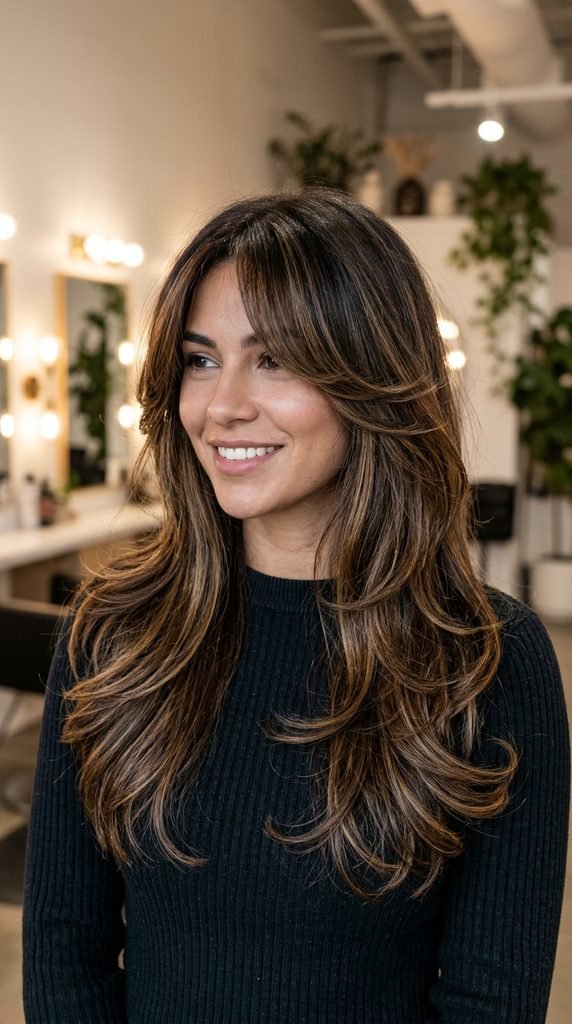
Winged Layers With a Parted Fringe
The butterfly cut earns its name from the way its shorter front layers wing out around the face while the back stays long and full. Shorter pieces begin around the cheekbones or chin and blend down into the length, and curtain bangs complete the shape by parting in the middle and framing both sides of the forehead. The movement is the magic: instead of falling in one heavy sheet, the hair lifts, separates and flows. Medium to thick hair wears it best, especially with a bouncy blowout.
Pro Tips
- Use a round brush to lift the roots and curve the front pieces away from the face — that outward wing is the signature of the cut.
- A large-barrel curling iron through the mid-lengths enhances the layered movement on days a blowout is too much work.
Idea 28
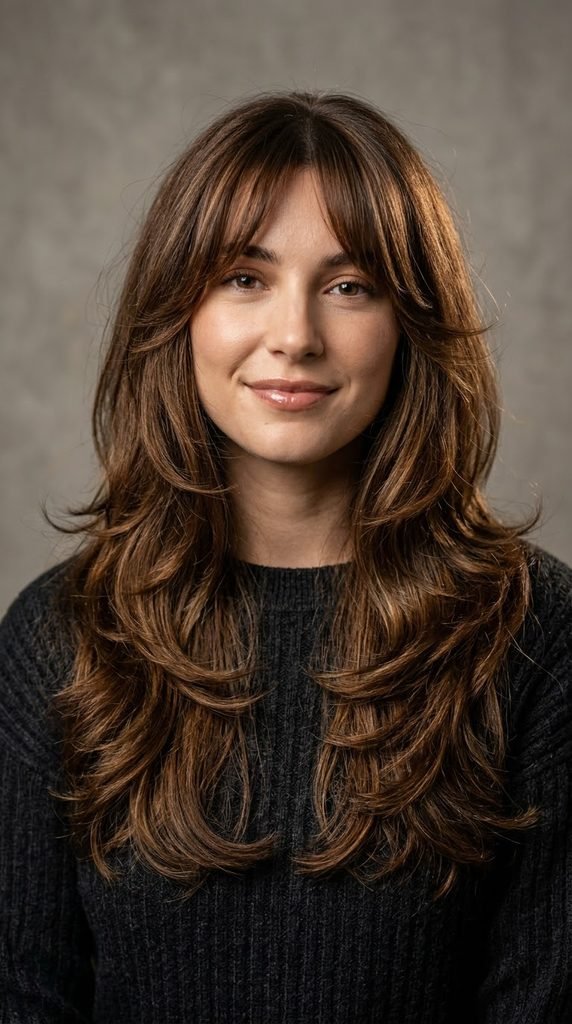
Winged Layers Meet the Bottleneck Shape
Bottleneck bangs are narrow at the centre of the forehead and widen gradually towards the temples, and pairing them with a butterfly cut gives you the most customised front on this list. The fringe creates a soft frame around the eyes and cheekbones, then transitions into the shorter face-framing layers, which flow into the long back sections. It offers the softness of curtain bangs with a more defined fringe at the centre — the best of both, finished with a blowout’s movement.
Pro Tips
- Shape the bottleneck fringe outwards with a round brush, following its widening curve, so it opens up the face instead of closing it.
- The amount of hair taken into this fringe can be adjusted to your density — ask for less at the first cut; it is easily increased later.
Idea 29
Separated, Piecey Texture From Fringe to Ends
Piecey styling separates the hair into defined strands instead of one smooth surface, and here it runs through the whole haircut: textured layers cut throughout the length, and a fringe that falls in individual pieces rather than a solid line. The result is modern, casual and full of movement — a slightly messy finish worn on purpose. It works across straight, wavy and lightly curled hair, and loose waves only make the separation more visible.
Pro Tips
- Work a lightweight texturising product through with your fingers and separate the bangs piece by piece; brushes undo the effect.
- Go easy on serum — heavy shine products make piecey fringe look flat and greasy instead of textured.
Idea 30
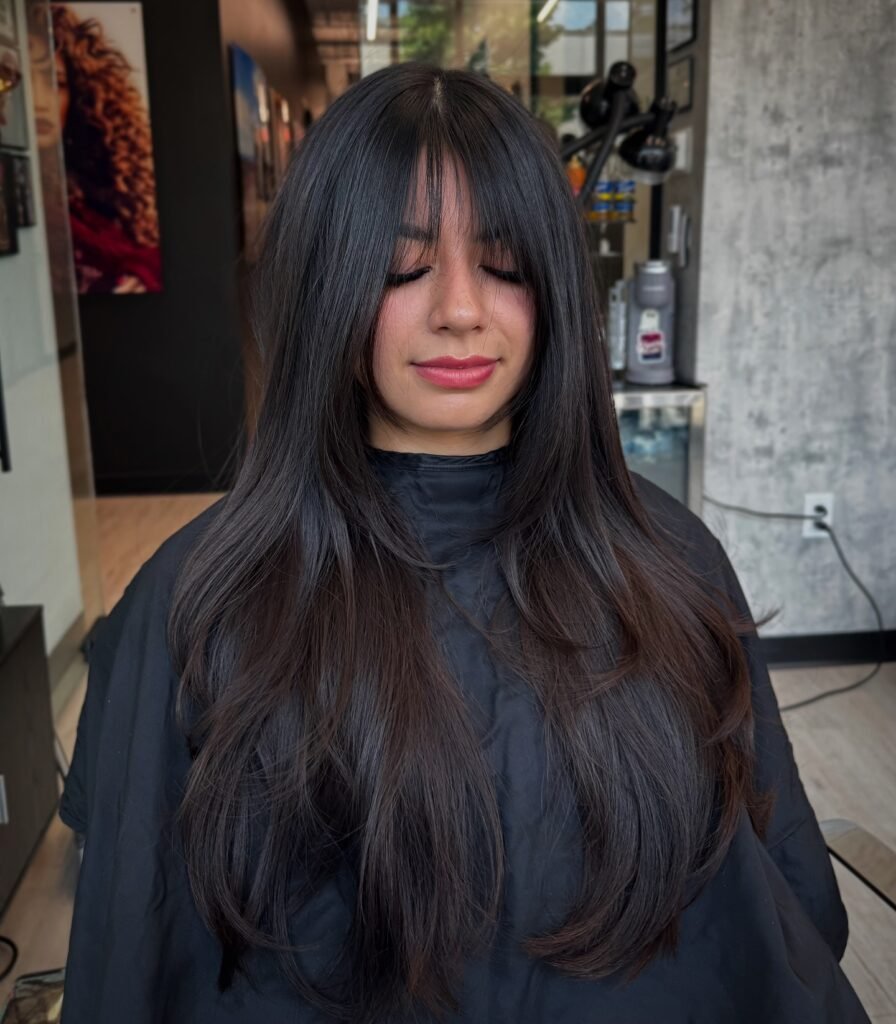
image via hairxomar
The Quiet Classic: Soft Fringe Blended Into Long Layers
Not every great haircut announces itself. A soft side fringe that blends invisibly into long layers gives you a seamless, timeless result: movement through the length, healthy-looking ends, and a front that simply looks like your hair, but better. It asks almost nothing in daily styling, which is why it suits anyone whose priority is looking polished without a routine. Elegant in the least demanding way.
Pro Tips
- This is the low-maintenance pick — a quick round-brush pass on the fringe is the entire morning routine.
- Because the blend is seamless, grow-out is painless; you can stretch salon visits longer than with a defined fringe.
Idea 31
Curtain Bangs, But Rounded and Fuller
Traditional curtain bangs separate into a fairly sharp parting; this rounded version curves gently around the forehead and temples instead, giving a softer and fuller frame. Styled with a round-brush blowout, the front pieces lift away from the face and flatter the cheekbones, yet the bangs also sit happily with loose waves or a simple straight finish. The fullness is adjustable — a lighter version looks natural on fine hair, while thicker hair can carry the defined shape.
Pro Tips
- Blow-dry the fringe forwards first, then sweep it into its rounded sides; drying it straight into place makes it fall flat.
- Tell your stylist your density honestly — rounded curtain bangs are cut very differently for fine hair than for thick.
Idea 32
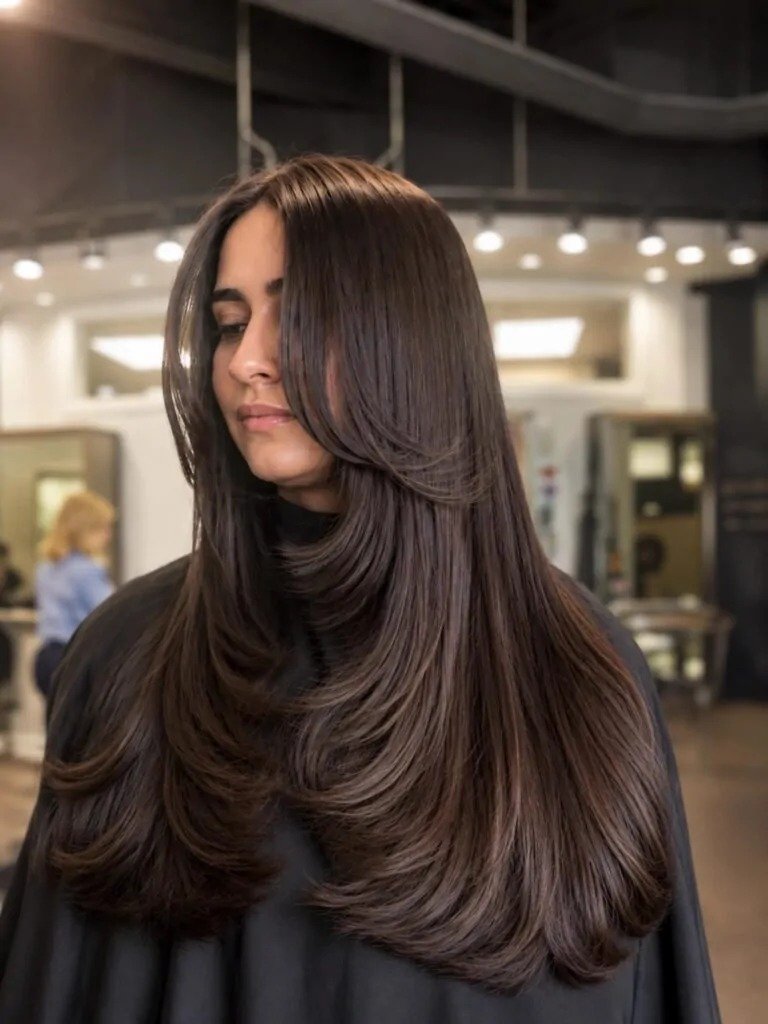
image via hairbyathraa.surrey
Weightless Layers With a Brow-Skimming Finish
Airy layering removes weight from top to bottom so long hair moves like it is half its actual density, and brow-skimming bangs finish the job by drawing the eye to your eyes. The combination is a gift for thinner hair, which gains a fuller, more voluminous appearance from the lightness rather than despite it. Fresh, stylish and effortlessly elegant, it is the cut for anyone whose long hair currently feels like it is wearing them.
Pro Tips
- Volumising mousse at the roots, lengths left light — heavy conditioners and oils will undo the airy effect by lunchtime.
- Keep the bangs skimming, not covering, the brows; that precise length is what keeps the look light.
Idea 33
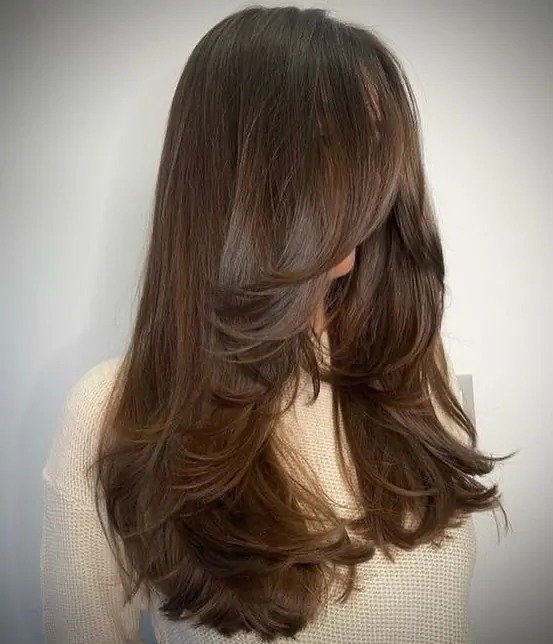
image via mustafaserdarbekereci
Separated Strands Across the Forehead
A piecey fringe is cut and styled so the strands sit lightly separated, creating texture across the forehead instead of a solid band. Long layers keep the rest of the hair lightweight while preserving fullness through the ends, and together they make a haircut that feels relaxed and modern. It is a particularly good match for fine hair, which often looks thicker when the fringe is broken up rather than dense.
Pro Tips
- Separate the strands with your fingertips once the fringe is dry — that manual spacing is the entire piecey effect.
- A pinch of dry texturising powder at the fringe roots keeps the separation from clumping together during the day.
Idea 34
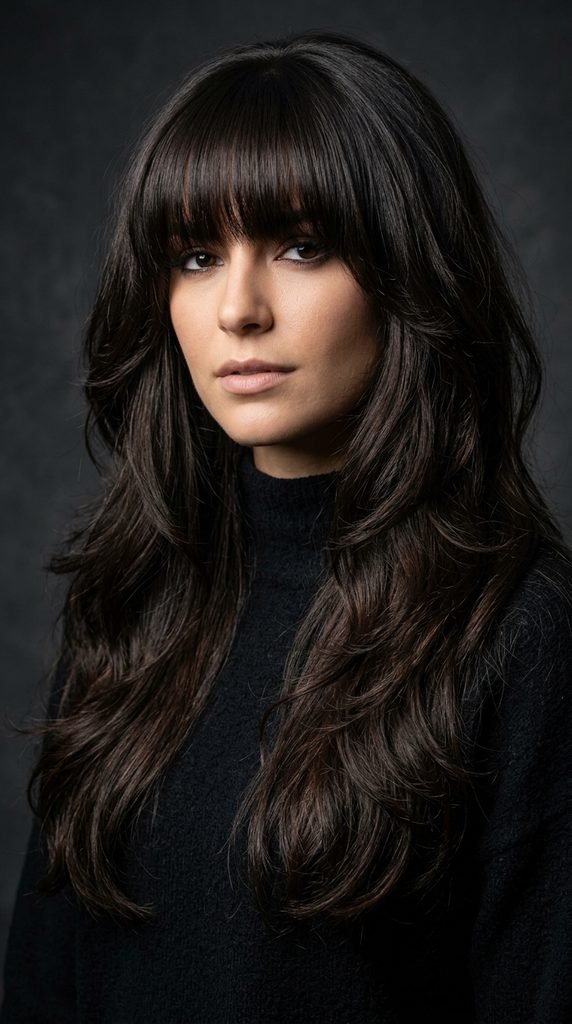
A Heavy, Full Fringe Balanced by Flowing Layers
Full bangs cover more of the forehead and build a strong frame around the eyes — cut straight across for a classic read, or rounded slightly at the sides to melt into the front layers. The long layers are not decoration here; they balance the heavier front by adding movement through the rest of the hair, so the cut never looks like one solid block. It thrives on thick, straight or slightly wavy hair, and the finished impression is confident and striking.
Pro Tips
- If your fringe separates or has a cowlick, blow-dry it side to side first, then into shape — fighting it directly rarely wins.
- Fine hair can try a softer version, but your stylist should take less hair into the fringe, or the lengths will look robbed.
Idea 35
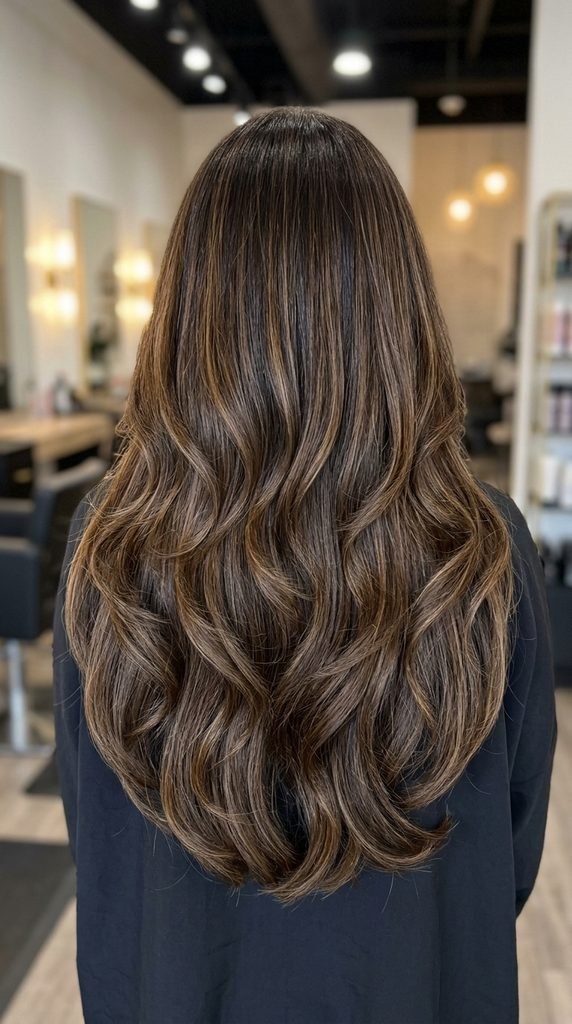
A Rounded U Outline That Keeps the Ends Thick
The U-shape curves the back of the hair into a gentle arc, the centre a little longer than the sides, so the outline looks full and natural rather than chopped straight. Curtain bangs modernise it, their front pieces blending into the U’s layers so the whole haircut feels connected. Its great virtue is preservation: unlike heavily layered cuts, the U keeps thickness around the ends while still giving movement. Beautiful straight, waved or curled — and it survives ponytails and braids without losing its shape.
Pro Tips
- Shape the front layers with a round brush and a smoothing product; the U looks its best when the front is as polished as the back.
- If fullness at the ends is your priority, say so before the first cut — it changes how much layering your stylist will add.
Idea 36
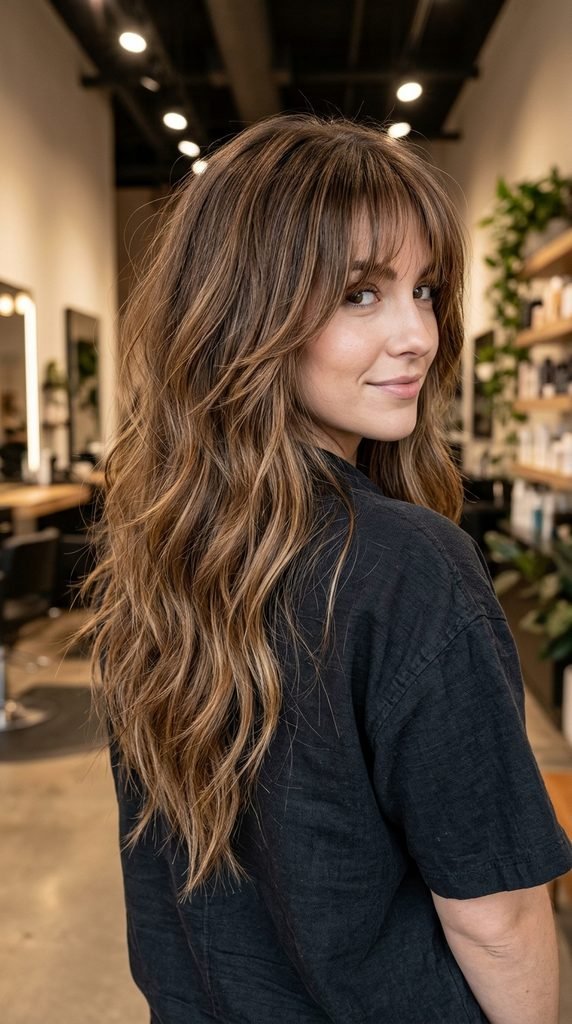
A Sharper V Silhouette Softened by a Light Fringe
Where the U rounds, the V angles: the back comes to a defined point at the centre, giving long hair a distinctive silhouette when worn down. A wispy fringe is the right counterweight — light and delicate at the front, it stops the sharper back from feeling severe, and it can be kept barely-there or made slightly fuller. Thick hair benefits most, since the V-layering sheds excess weight; fine hair should request a softer version so the point does not turn stringy.
Pro Tips
- Loose waves make the different lengths — and therefore the V — more visible; straight styling gives a cleaner, sharper read. Choose per occasion.
- Keep the very ends trimmed and conditioned, because the point of the V is the first place dryness shows.
Idea 37
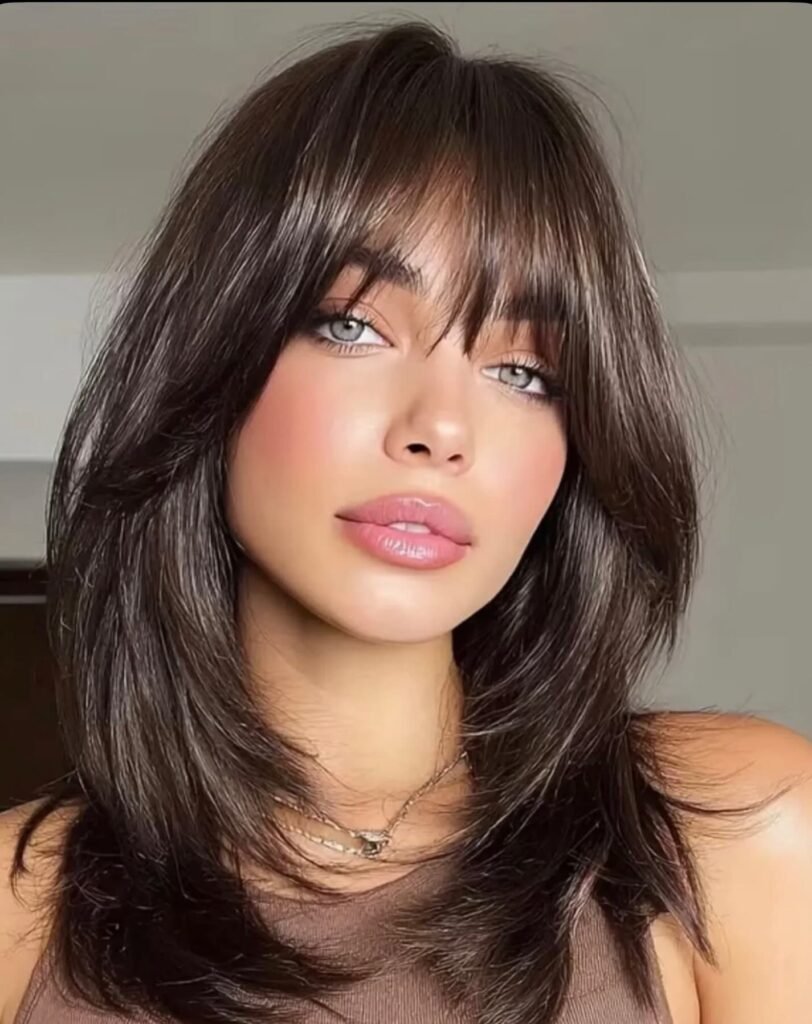
image via alessandro_cabeleireiro002
Classic Brow-Level Fringe With Flowing Layers
Sometimes the original formula is the best one. A fringe resting just above the eyes, blended into long layers that add movement through the length, frames the face softly and never dates. The layering does the quiet work — the hair moves instead of hanging — while the bangs supply the elegance. It is a particularly kind cut for thinner hair, where the fringe adds the impression of density at the front.
Pro Tips
- This fringe sits in the eye-line, so trims matter: a few millimetres too long and it stops looking classic and starts looking overdue.
- Blow-dry the bangs straight down with a paddle brush for the smoothest finish; a round brush adds curve this style does not need.
Idea 38
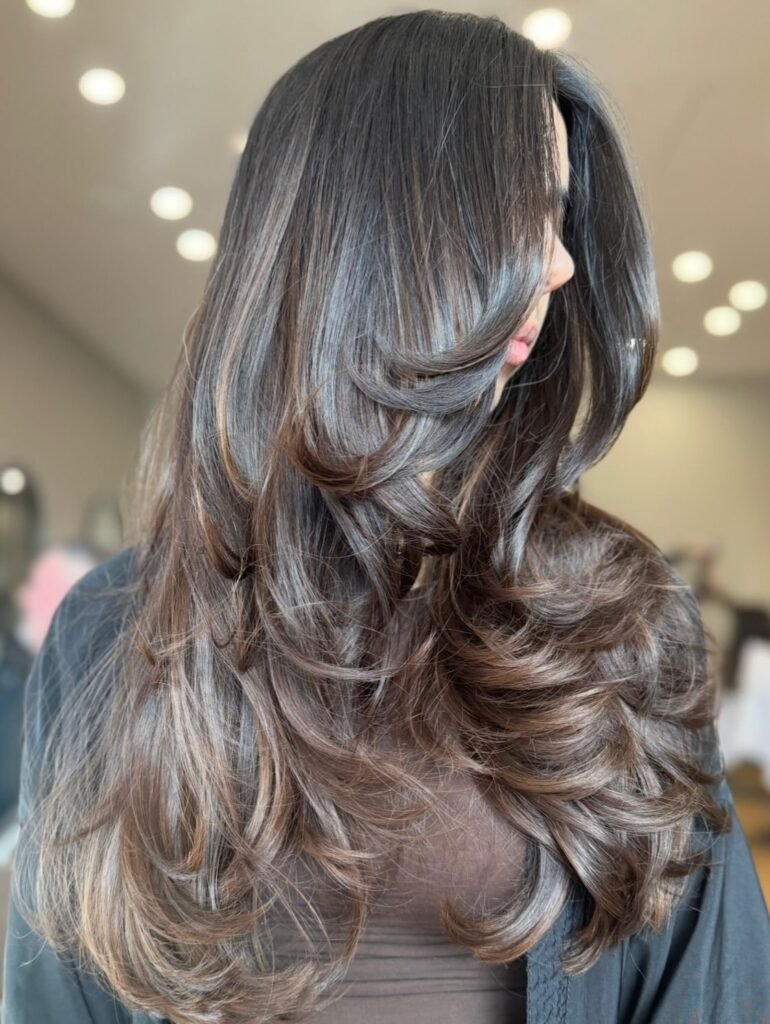
image via hairbybianca_kromasalon
Brow Fringe With Texture, Never a Solid Block
Take the classic brow-length fringe and break up its edge with texture, and the whole haircut modernises. The fringe keeps its definition around the eyes but loses the heaviness, while long layers provide natural volume through the rest of the hair. The effect is fresh, light and quietly chic — a strong choice for medium to fine hair, which can wear a full fringe’s shape without its weight.
Pro Tips
- Ask for the texture to be point-cut into the ends rather than thinned from above; it keeps the fringe’s body while removing the blockiness.
- Style with a small brush and minimal product — textured fringe looks best slightly separated, never lacquered together.
Idea 39
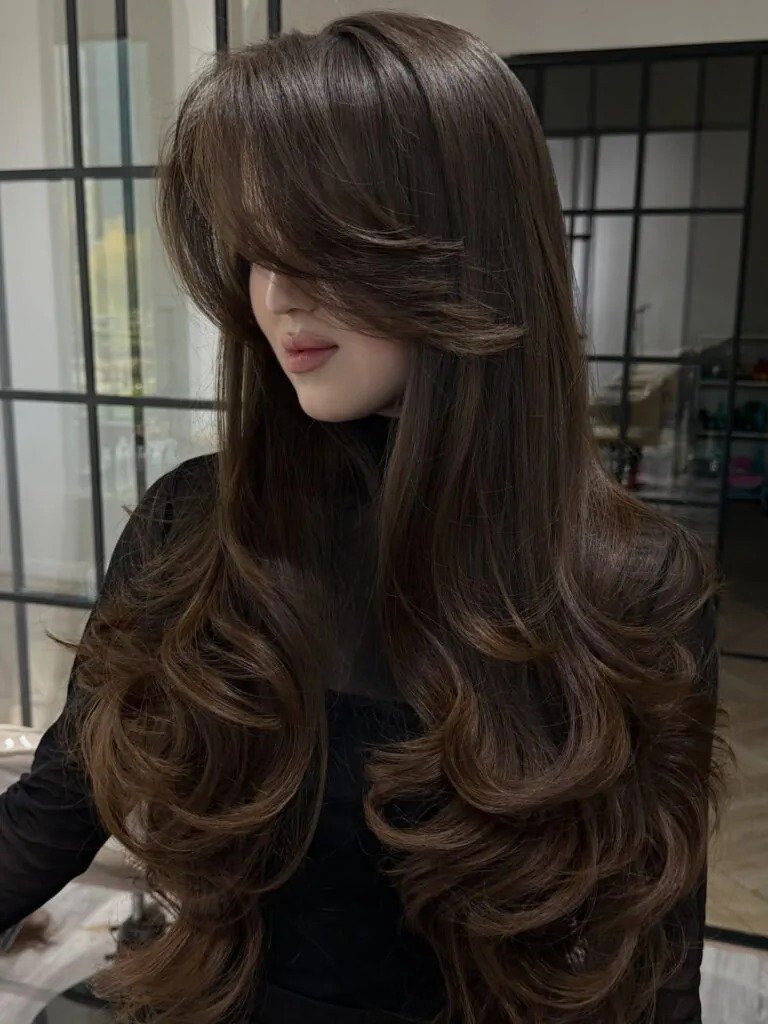
image via level_ladies_center
Layers That Start at the Cheekbones
Face-framing layers are placed to highlight the cheekbones, while side bangs soften the forehead — together they build one of the most universally flattering shapes in this entire list. The flowing layers also create the illusion of fuller hair, because the eye reads movement as volume. Elegant without being formal, it suits virtually every face shape, which is why stylists reach for it so often.
Pro Tips
- The first layer should start at or just below your cheekbones; starting higher can widen the face, starting lower loses the framing effect.
- Curl the front layers away from the face to open it up — curling them inwards closes the frame you just created.
Idea 40
An Arched Fringe for a Softer Kind of Definition
Arched bangs curve across the forehead — shorter at the centre, sweeping longer towards the temples — creating a rounded shape that draws attention to the eyes while the longer pieces soften the sides of the face. With long layers, the result is balanced and polished: defined, but never blunt. Straight and slightly wavy hair maintain the arch most easily. Choose a subtle curve for a natural look, or a more pronounced one for a classic statement.
Pro Tips
- Dry the fringe with a round brush following its curve, centre first, then each side outwards — the arch is set in the drying.
- If you love a defined fringe but find blunt cuts harsh against your features, the arch is the compromise to ask for by name.
Matching the Cut to Your Face Shape
The same haircut lands differently on different faces, because face shape, density and texture all change the result. Think about which features you want to highlight before you choose.
Round Faces
Long layers that create vertical movement help balance the width of the cheeks. Curtain bangs, side-swept fringe and long face-framing layers are all attractive, because they suggest length without hiding the face. Avoid piling volume directly at cheek level if you prefer a narrower-looking silhouette, and let bangs blend below the cheekbones where possible.
Oval Faces
Oval faces carry almost every fringe well — blunt, wispy, curtain and side-swept are all genuinely on the table. You can go dramatic with butterfly layers or keep it simple with a soft U-cut and gentle bangs. With this much freedom, let your hair texture and lifestyle make the final decision.
Square Faces
Softness is the strategy. Curved and feathered layers build a gentle frame around a stronger jaw, and curtain bangs, feathered fringe and side-swept bangs are especially flattering. Loose waves soften the overall silhouette further, and face-framing pieces starting around the cheekbones or jawline help balance the proportions.
Heart-Shaped Faces
Look for bangs that soften the forehead and layers that build movement towards the lower face. Curtain bangs, bottleneck bangs and side-swept fringe all work beautifully, especially with layers that grow gradually fuller towards the ends — that balance stops the style looking top-heavy.
Long Faces
Styles that create width and movement at the sides will suit you best. Full bangs, wispy fringe, curtain bangs and voluminous layers all add that horizontal interest, and soft waves with rounded layers balance the silhouette. A good stylist can fine-tune fringe length and layer placement to your exact features.
Choosing Bangs for Your Hair Type
Fine Hair
Do not let the stylist take too much hair into the fringe — a heavy fringe on fine hair makes everything else look thinner. Wispy bangs, see-through bangs and soft curtain fringe are the safe, flattering options, and the layers should stay subtle to protect fullness at the ends.
Thick Hair
Thick hair can support fuller bangs and more dramatic layering — blunt fringe, butterfly layers, shag-inspired cuts and voluminous curtain bangs are all realistic. Your stylist may need to remove weight from within the fringe so it sits comfortably instead of bulking.
Naturally Wavy Hair
Curtain bangs, side-swept fringe and soft textured bangs all move with wavy hair instead of against it. Work with the wave pattern rather than forcing straightness, and use a lightweight cream to control frizz while keeping the movement.
Curly Hair
Curly bangs are stunning when cut for the natural pattern. Insist that shrinkage is factored into the length before cutting, and consider long curly layers with a curly fringe if you want your texture to remain the main feature.
Straight Hair
Straight hair offers the widest fringe menu — blunt, airy, curtain and arched bangs all behave well. The real question is maintenance: some of these shapes need a quick morning blow-dry to sit properly, so choose with your routine in mind.
Looking After Long Layers and Bangs
Bangs sit in the eye-line, so they show growth sooner than the rest of your hair; expect small trims every few weeks, and ask your stylist to maintain the fringe between full haircuts rather than attempting it yourself.
Always use heat protectant before blow-drying, straightening or curling, and keep temperatures no higher than your hair actually needs — fringe hair is finer and damages faster.
Go easy on products near the bangs: they touch your forehead all day, so they turn oily and flat faster than the lengths. Lightweight products only, and keep serums and conditioners away from the roots.
Learn one quick blow-dry move — drying the fringe side to side first, then into position with a round brush — and most bang styles will behave in under two minutes.
Match the layering to your density: too many layers thin out fine hair, too few leave thick hair heavy. This is a conversation to have at every appointment, not just the first.
Condition the mid-lengths and ends, where long hair is oldest and driest, and keep richer treatments off an oily scalp.
Finally, protect long hair overnight: a loose braid or gentle protective style reduces friction, tangles and the amount of restyling your morning needs.
Questions People Ask Before Cutting Bangs
Are long layers with bangs still in style for 2026?
Yes — the combination stays current because it keeps evolving. Butterfly layers, curtain bangs, wispy fringe, textured shags and face-framing cuts all offer modern ways to wear it while keeping your length.
Which bangs suit long layered hair best?
Curtain bangs are the most versatile, since they blend naturally into long layers. Wispy bangs, side-swept fringe, bottleneck bangs and blunt bangs are all beautiful too — the right one depends on your face shape and texture.
Do layers make long hair look thicker or thinner?
Both are possible, which is why placement matters. Subtle layers add movement while preserving fullness, but too many short layers can make fine hair look thinner. Thick hair usually benefits from more layering to remove weight.
Can fine or thin hair wear this combination?
Yes. Choose light curtain bangs, wispy fringe or subtle face-framing pieces, and keep the ends relatively full — that combination maintains the thickest possible appearance.
How often do bangs need trimming?
Every few weeks for most people, though it depends on your growth rate and how short the fringe is. Micro and blunt styles need the most frequent attention.
Can curly hair have bangs?
Absolutely — curly bangs look beautiful when cut to complement the natural pattern. Discuss shrinkage and styling expectations with your stylist before choosing the length.
Which of these cuts needs the least daily styling?
A long U-shaped cut with subtle layers and long grown-out bangs is among the easiest to maintain. In general, any cut that works with your natural texture instead of against it will cost you the least time.
Long layered haircuts with bangs refresh your hair without surrendering the length you love — that is the whole appeal. Whether you land on the drama of butterfly layers, the ease of a shag, the softness of wispy fringe or the polish of feathered layers, a few thoughtful changes can make familiar hair feel new again. Before you book, weigh up your face shape, texture, density and honest styling routine, and take reference photos to your appointment so your stylist can customise the cut rather than copy it exactly. Sometimes all it takes is a fresh fringe and well-blended layers to fall back in love with your hair.
