Does your hair look amazing for exactly ten minutes after a blow-dry, then go flat before you’ve even left the bathroom? That’s the classic thin, fine hair problem, and no amount of mousse fixes a cut that’s working against you. The right haircuts for thin fine hair solve the problem at the root, literally, before a single product gets involved.
This list is for anyone whose hair thins out by 3pm, whatever your length goal. I’ve got thin, fine hair myself, so every pick here had to pass one test: does it actually hold shape, or just look good in a photo? You’ll find 32 options below, pixie to long.
Here’s every cut in this guide, jump to whichever one catches your eye:
Idea 01
The Blunt Bob
Best for: Oval & round faces, fine strands that need weight
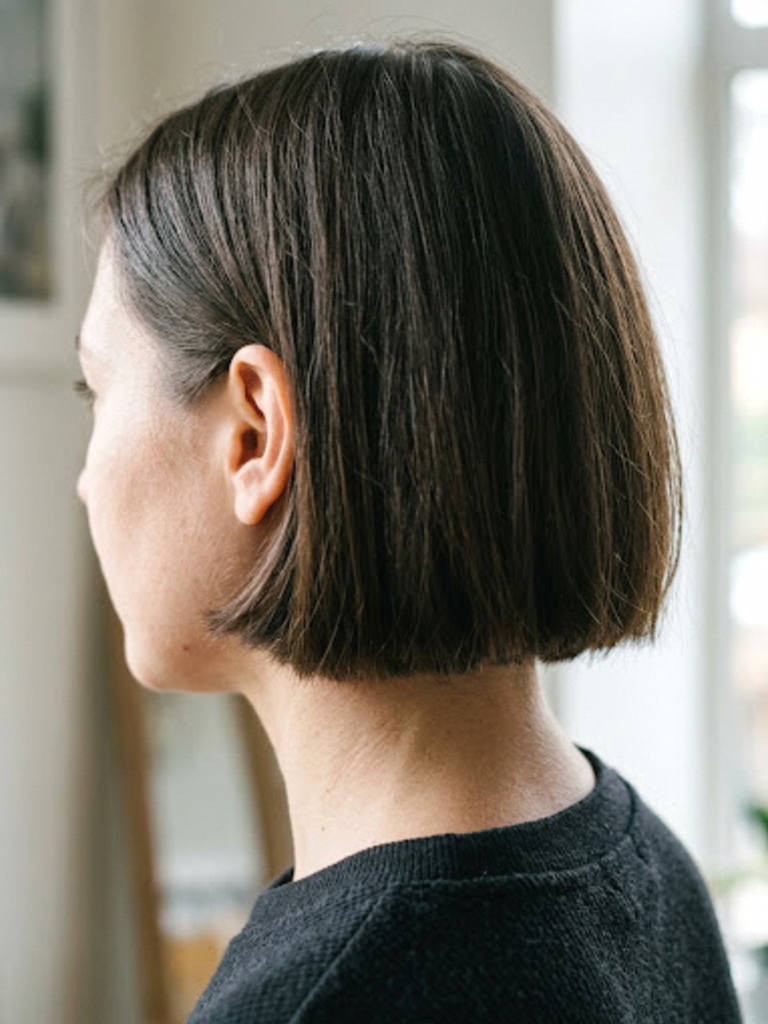
A blunt bob is still the single most reliable haircut for thin fine hair, and there’s a reason stylists keep coming back to it. Cutting every strand to one length stacks the hair’s weight right at the bottom, so the ends look thicker instead of fading into wisps. No layers means no thin spots trying to sneak through.
Ask your stylist for a horizontal, razor-free cut line since razoring thins the ends further. A blunt bob suits straight or slightly wavy hair best, and it hits anywhere from chin to shoulder depending on how much length you want to keep.
Pro Tips
- Blow-dry with a round brush pointing the ends under, not out, for max thickness.
- Skip heavy conditioner past the roots, it weighs fine hair flat fast.
- Ask for the line cut slightly above the jaw if your hair is very fine, shorter reads fuller.
Idea 02
The French Bob
Best for: Round & square faces, fine hair that wants texture
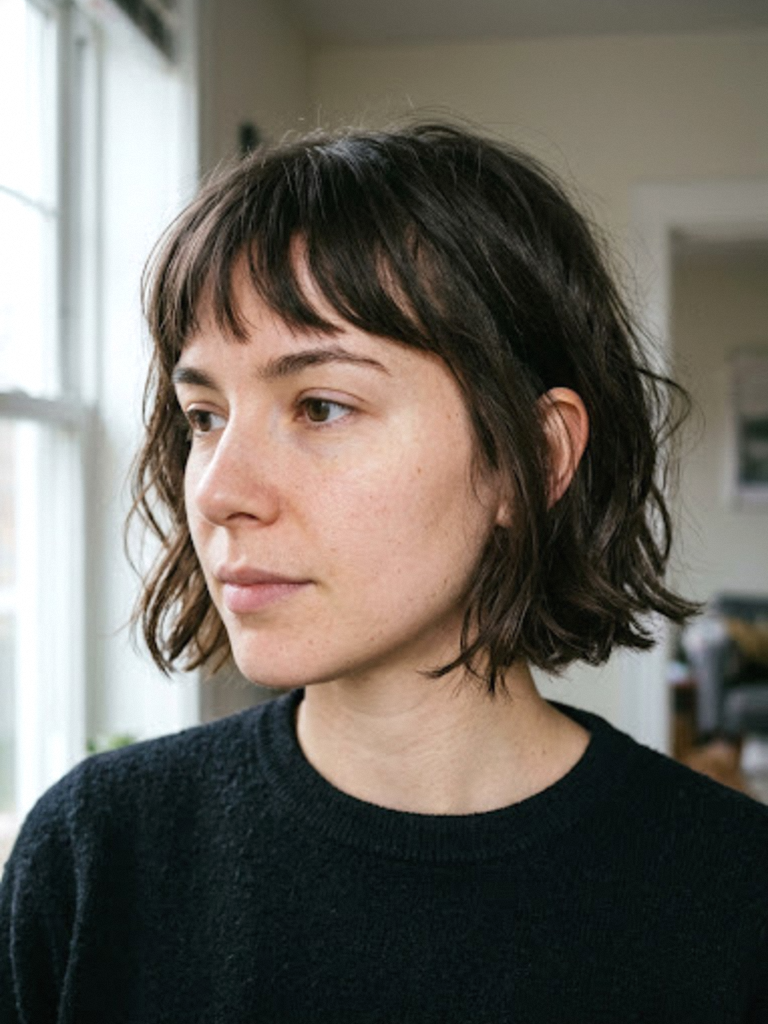
The French bob is a short, chin-grazing cut with a solid, rounded perimeter and soft, curtain-like bangs, and it might be the best haircut for thin hair that still wants a little edge. The compact length means there’s less hair to fall flat, so the whole shape reads thicker.
This cut works best on fine hair with some natural wave, since pin-straight strands can look a touch severe at this length. Ask for the perimeter cut blunt and the bangs cut dry, piece by piece, so they fall exactly where your face needs the extra volume.
Pro Tips
- Dry your bangs first and separately, they set the tone for the whole look.
- A light texturizing spray at the crown beats any mousse for keeping this shape full, not stiff.
- Book a trim every 6 weeks, the blunt line grows out fast and loses its shape.
Idea 03
The Angled Lob
Best for: All face shapes, especially long faces
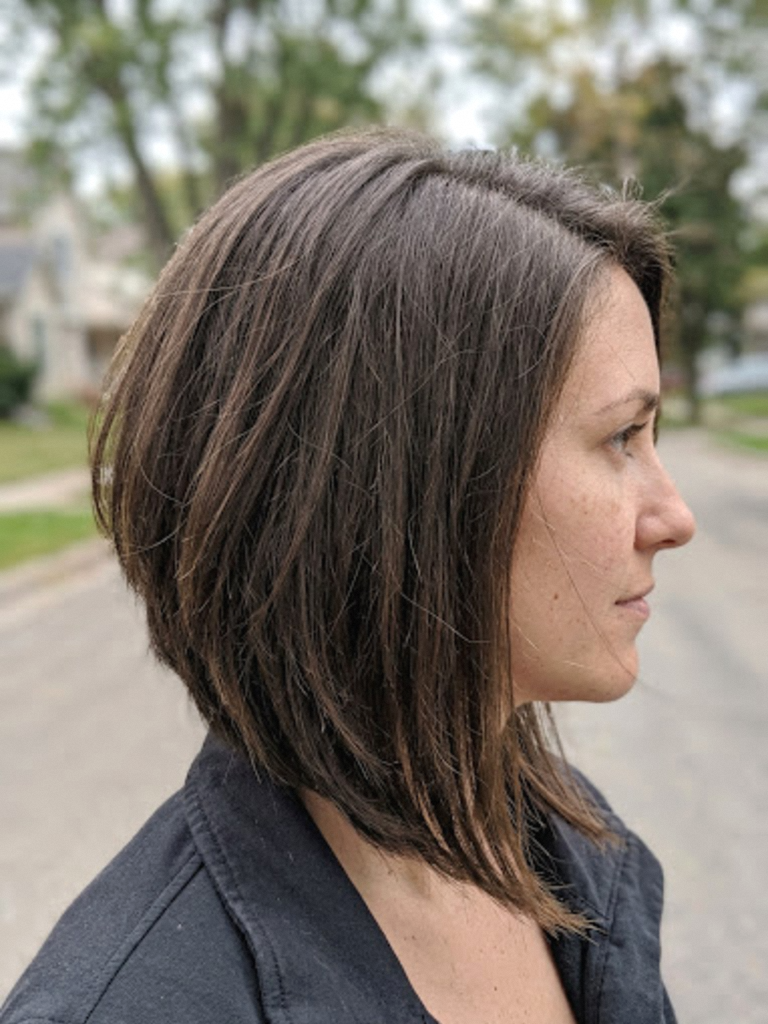
An angled lob is a long bob cut shorter in the back and longer toward the front, and it’s one of the most forgiving haircuts for thin fine hair because the angle itself creates the illusion of layers without actually removing weight. The shorter back piles density where you need it most.
Pair it with a deep side part for an instant root lift, since a center part shows more scalp on fine hair. Most stylists cut the front pieces to graze the collarbone, leaving just enough length for a loose wave.
Pro Tips
- A deep side part does more for perceived volume here than any product.
- Curl just the front pieces with a 1-inch wand to frame your face without weighing down the back.
- Avoid a flat iron on this one, poker-straight strands expose exactly how fine the hair is.
Idea 04
The Soft Textured Pixie
Best for: Oval & heart faces, hair that’s thin all over
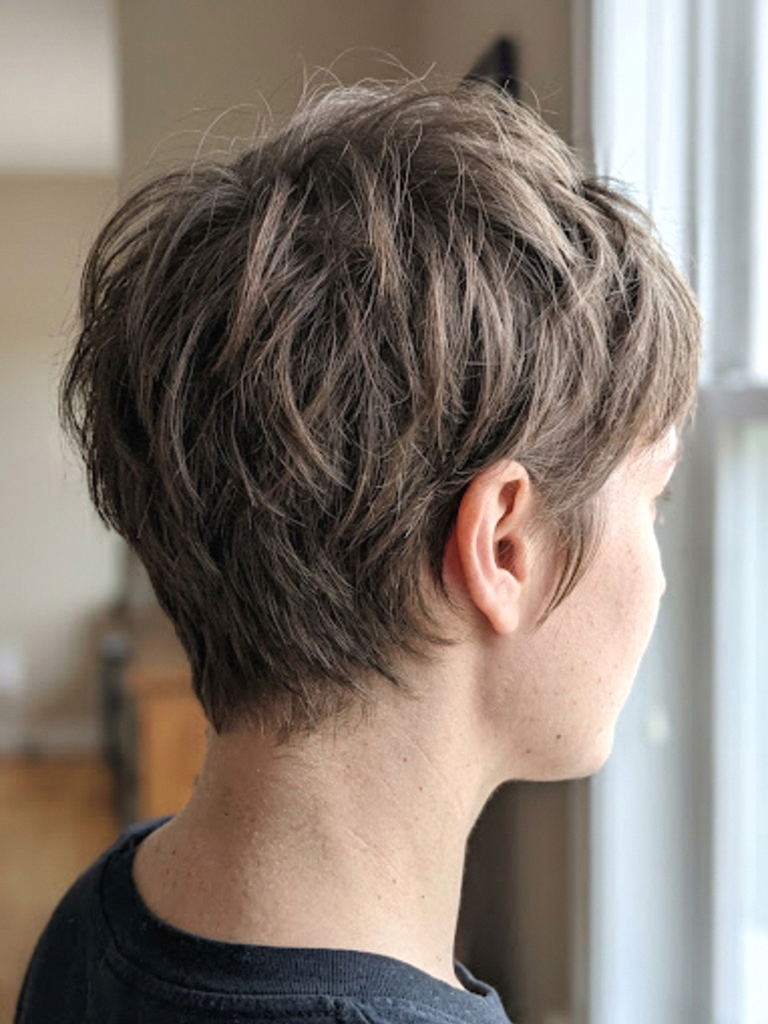
A soft textured pixie keeps a little length on top and tapers close at the sides and back, and for genuinely thin fine hair it’s often the single biggest volume upgrade on this whole list. Shorter hair has less of its own weight pulling it flat, so it stands up on its own.
Point-cutting the top pieces (snipping into the ends at an angle, rather than straight across) adds texture without thinning out density. It suits round, oval, and heart face shapes especially well, and it cuts your morning routine down to almost nothing.
Pro Tips
- Apply a dime-size pomade to dry palms, then scrunch the roots upward, not down.
- A diffuser attachment on your blow dryer keeps the top piece-y instead of smooth and flat.
- Grow-out is forgiving here, but a 4-week trim keeps the taper sharp.
Idea 05
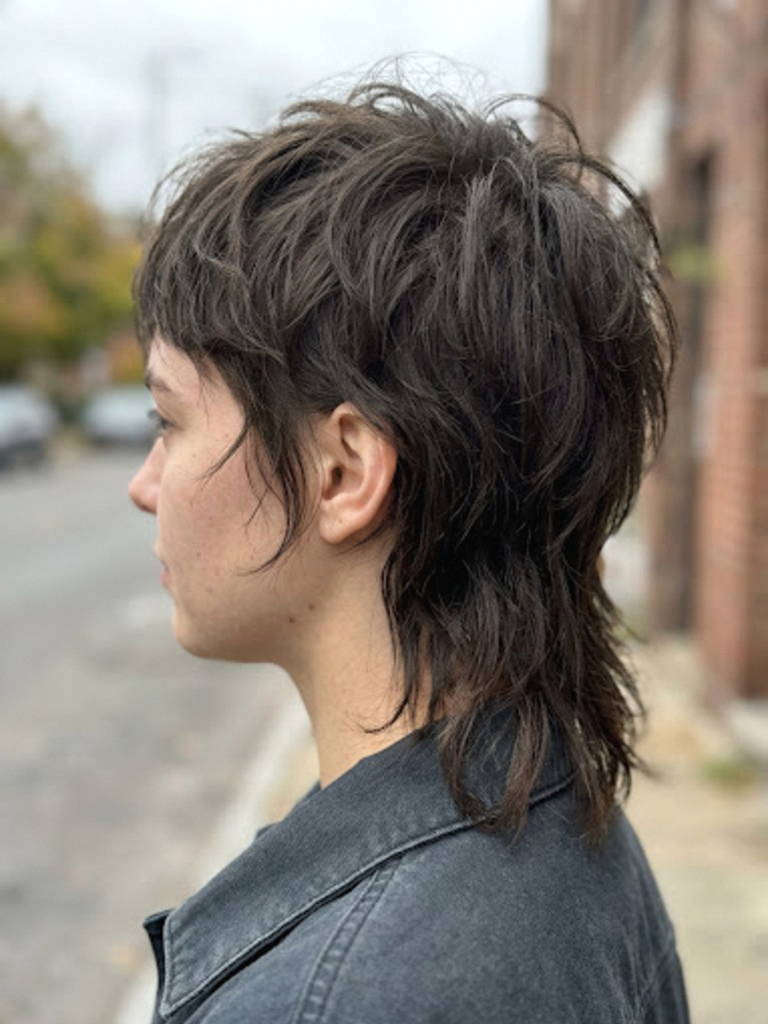
The Pixie Mullet (Bixie)
Best for: Square & oval faces, fine hair that wants an edge
A bixie splits the difference between a pixie and a mullet, short and tapered up top with a few longer, wispy pieces left at the nape. For thin fine hair, that length contrast is the trick, dense short layers up front make the longer back pieces read as extra volume by comparison.
This one needs a stylist comfortable with heavy texturizing shears, not just a trimmer, to keep the shorter pieces from going bulky. It works especially well on square and oval faces, and it holds its shape through humidity better than almost anything longer.
Pro Tips
- Bring reference photos, “bixie” means different things to different stylists.
- A sea-salt spray on damp hair gives the top pieces grip without any heat.
- Expect a reshape every 5-6 weeks since the short layers grow out fastest.
Idea 06
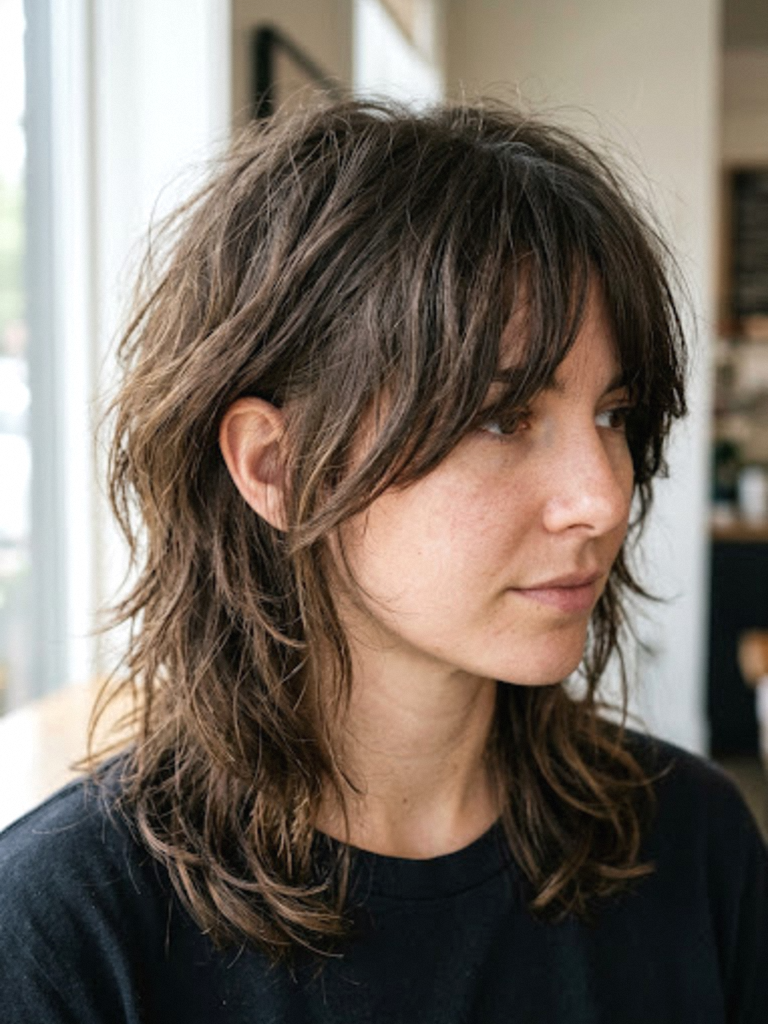
The Modern Shag
Best for: Most face shapes, hair with some natural texture
A modern shag is built from short, feathered layers around the face that blend into longer lengths, and it’s one of the better haircuts for thin fine hair with any kind of wave or bend to it. The layering creates movement, and movement reads as volume even when the hair itself is sparse.
Be careful here though, too many short layers on hair that’s thin and straight can backfire and look stringy instead of full. Ask your stylist to keep the layers longer and fewer than they would for thick hair, and finish with a light wave for texture.
Pro Tips
- Straight, fine hair needs fewer, longer layers than wavy hair does, say this out loud at your consult.
- A 1.25-inch curling iron, used on alternating sections, gives the shag its signature texture without flattening the crown.
- Texturizing spray beats oil-based products every time, oil just makes fine hair look greasier, not fuller.
Idea 07
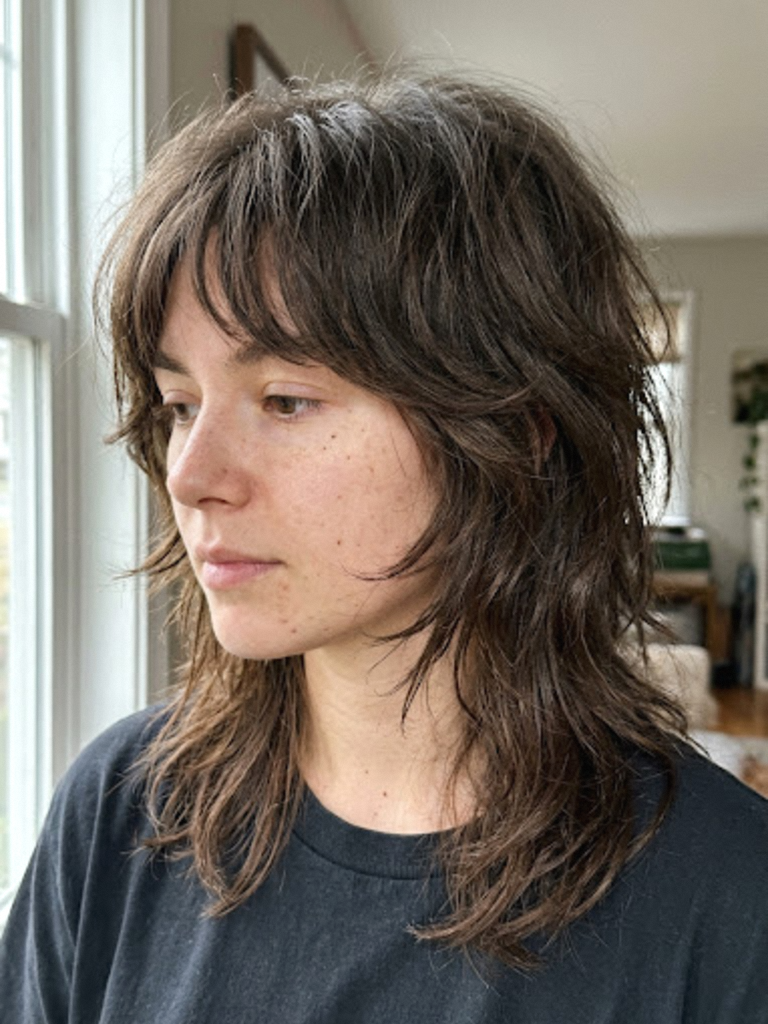
The Wolf Cut
Best for: Oval & heart faces, hair that holds a wave
The wolf cut mixes a shaggy, piece-y top with a choppy, layered bottom, basically a mullet and a shag that had a baby. On thin fine hair, the heavy layering around the crown is what sells the whole look, it builds height right where fine hair tends to go flattest first.
It leans on texture more than most cuts on this list, so plan on learning a quick texturizing-spray routine or a cheat with hot rollers. Oval and heart face shapes get the most out of the shorter crown pieces, which lift and frame at the same time.
Pro Tips
- IMO this is the one cut on this list that actually needs daily styling, budget 10 minutes for it.
- Velcro rollers at the crown, left in while the rest of your hair dries, solve the flat-top problem fast.
- Ask for the layers cut with a razor at the ends only, for softness, not at the roots.
Idea 08
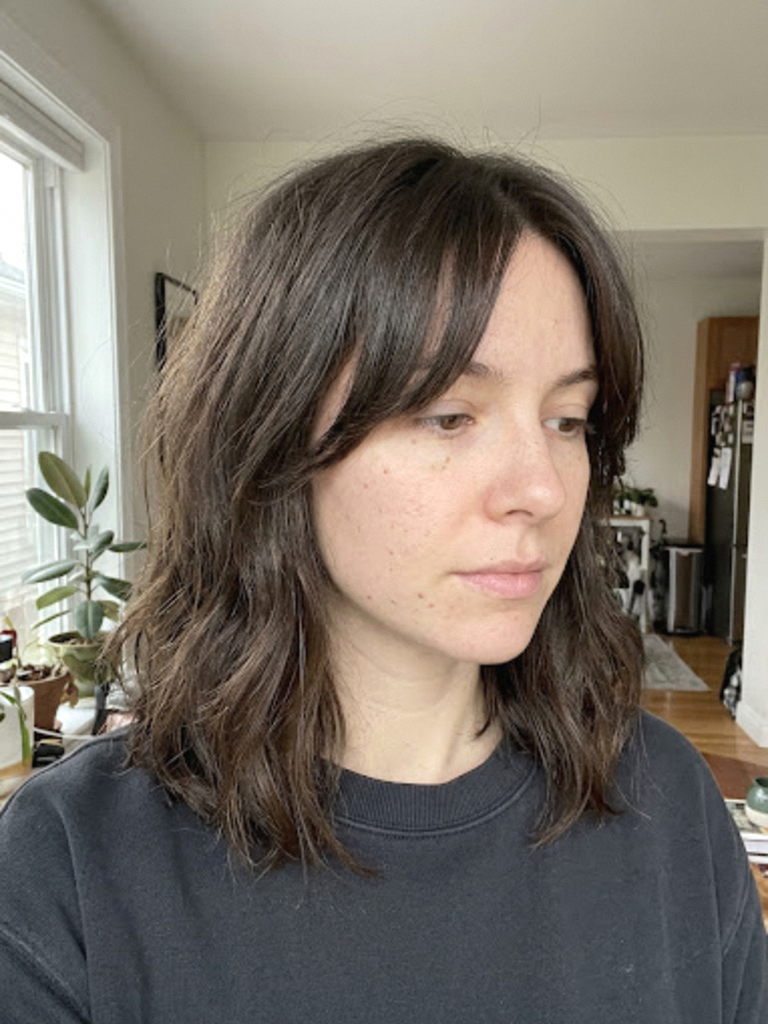
Curtain Bangs on a Lob
Best for: All face shapes, hiding a high forehead
Curtain bangs part down the middle and sweep to either side of the face, and added to a lob, they’re one of the easiest ways to fake volume in fine hair without touching the length at all. The parted shape adds width right at eye level, which is exactly where a face needs it.
Ask your stylist to cut them long enough to tuck behind your ears on bad hair days, that flexibility matters more than people think. They work on literally any face shape, and they grow out into face-framing layers instead of an awkward stage.
Pro Tips
- Round-brush them while blow-drying, air-drying leaves them stubbornly straight across your forehead.
- A tiny dab of dry shampoo at the part line keeps them from looking greasy by noon.
- Trim them yourself every 2-3 weeks between salon visits, a quarter-inch at a time, dry, never wet.
Idea 09
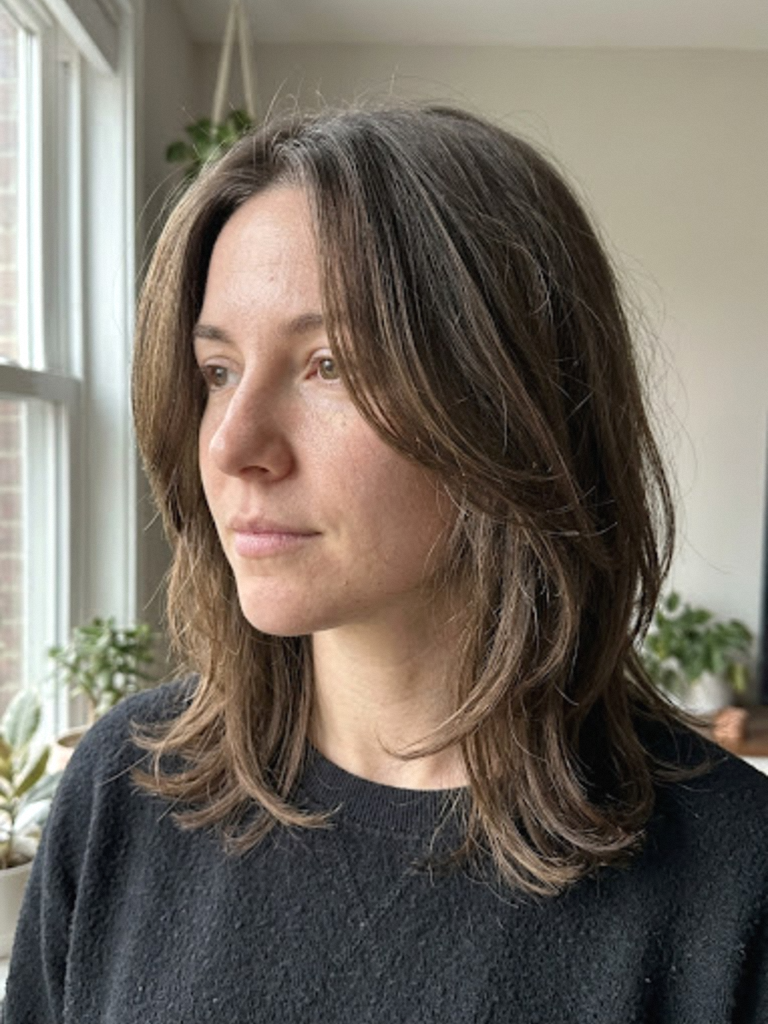
The Face-Framing Layered Lob
Best for: Round & long faces, straight to wavy hair
A face-framing layered lob keeps most of the length at one weight, with just a few long layers cut in around the front to highlight your cheekbones. It’s a gentler cousin of a fully layered cut, and that restraint matters for thin fine hair, since heavy layering removes exactly the density you’re trying to keep.
Ask for the layers to start no higher than your chin, higher than that and you lose too much weight at the ends. This shape flatters round and long faces especially well, and it air-dries into soft waves without much effort from you.
Pro Tips
- Request layers cut with scissors over a comb, not a razor, so the ends stay thick.
- A sea-salt spray scrunched in while damp brings out natural wave for extra body.
- Side-swept styling hides thinner spots near the temples better than a center part does.
Idea 10
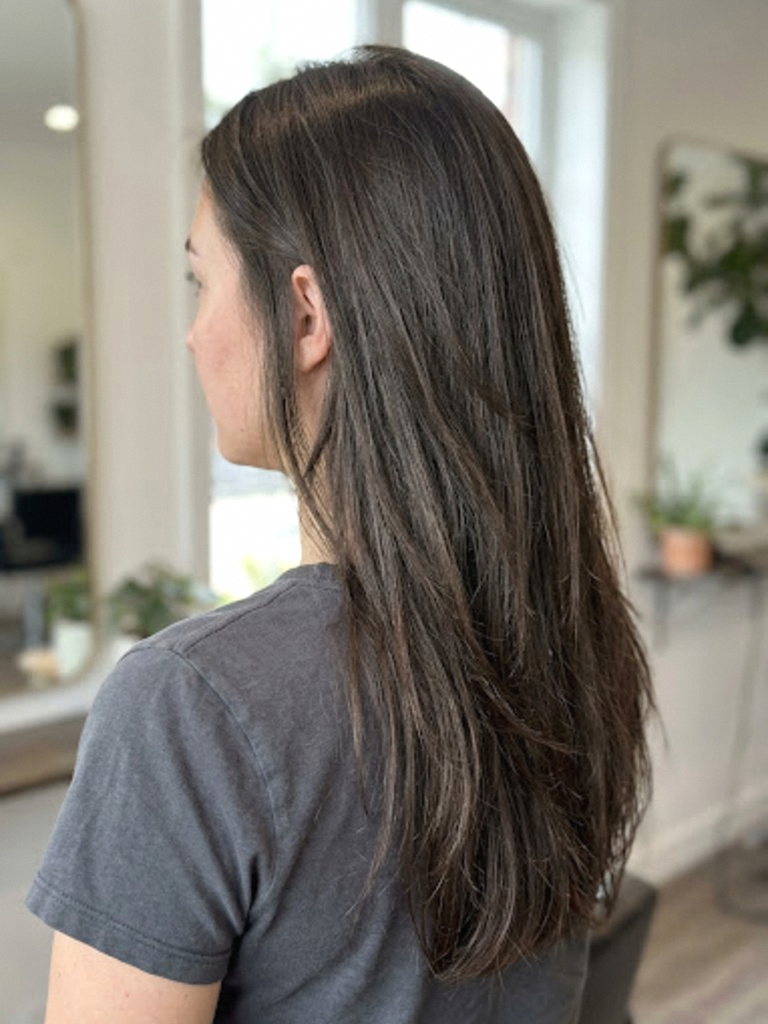
Ghost-Layered Long Hair
Best for: Long, straight hair that needs movement without losing length
Ghost layers, sometimes called invisible layers, are cut deep inside the hair rather than along the visible surface, so the length looks completely unbroken from the outside. For anyone who refuses to cut their long hair short but still wants more movement, this is one of the smartest haircuts for thin fine hair available.
The layers are placed internally, which means they add body and swing without creating the choppy ends that make fine hair look wispy. It takes a skilled stylist to cut them evenly, so this isn’t really a DIY request or a job for a quick walk-in appointment.
Pro Tips
- Ask specifically for “internal” or “invisible” layers, the wording actually matters to most stylists.
- Blow-dry upside down for 60 seconds before switching to a round brush, it lifts the roots fast.
- Skip heavy serums on top, they flatten exactly the volume these layers are built to create.
Idea 11

The Blunt Micro Bob
Best for: Oval & heart faces, very fine or sparse hair
A blunt micro bob sits above the chin, shorter than a standard bob, with a crisp, straight-across line at the ends. Of all the short haircuts for fine hair on this list, this one carries the most visual weight for the least amount of actual hair, which is basically the whole goal.
Because the cut is so short, there’s very little length to drag the roots down, so volume at the crown holds all day without much styling. It works best on oval and heart face shapes, since the shorter length can read as severe on a rounder jaw.
Pro Tips
- A root-lifting spray applied before blow-drying does more work here than any amount of teasing.
- Keep the back slightly shorter than the front for a cut that frames rather than boxes your face.
- This grows out fast, plan on a trim every 4 weeks to keep that clean line.
Idea 12
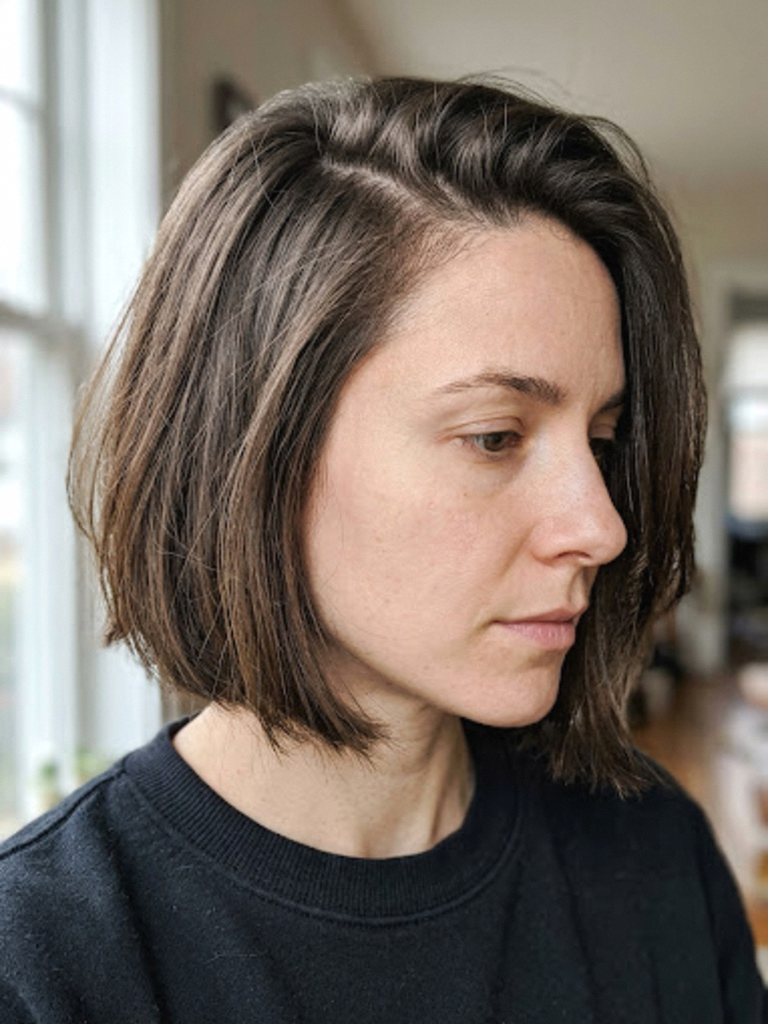
The Side-Part Jaw-Length Bob
Best for: Square & round faces
A side-part jaw-length bob sits right at the jawline and relies on an off-center part to do most of the volumizing work. Moving the part even an inch off-center lifts the roots on one side automatically, no blow-dryer required, which makes it one of the lowest-effort haircuts for thin fine hair out there.
This length flatters square and round faces by adding a diagonal line near the jaw, which softens sharp corners. Ask your stylist to cut it slightly longer on the side you part toward, so it has somewhere to tuck when you need it out of your face.
Pro Tips
- Switch which side you part on every few washes, it keeps the roots from training flat on one side.
- A flat-ironed bend at the ends, pointed inward, adds shape without a full curl.
- Dry shampoo at the part line first thing in the morning buys you an extra day between washes.
Idea 13
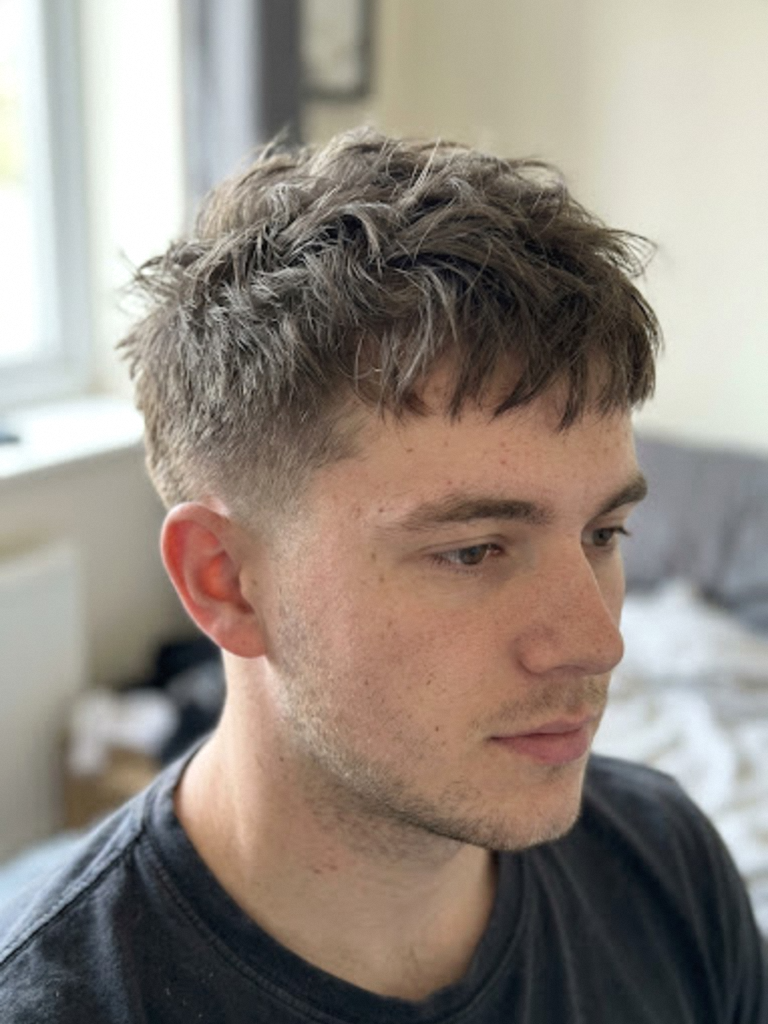
The Textured Crop
Best for: Oval & square faces, hair with a cowlick
A textured crop is cut short and choppy all over, with no single dominant length, which breaks up the scalp-to-hair ratio that makes thin hair look sparse under bright light. It’s one of the few cuts on this list that actually works in your favor if you have a cowlick.
Shorter hair follows a cowlick’s direction instead of fighting it, so the crop can use that swirl as part of the texture instead of a styling problem. A little matte paste worked through dry hair is honestly all the styling this one needs.
Pro Tips
- Ask your stylist to point-cut the crown specifically, it’s what creates the piece-y texture.
- Matte paste beats shine serum here, shine makes short, fine hair look thinner under light.
- FYI, this is one of the lowest-maintenance cuts on the whole list, styleable in under five minutes.
Idea 14
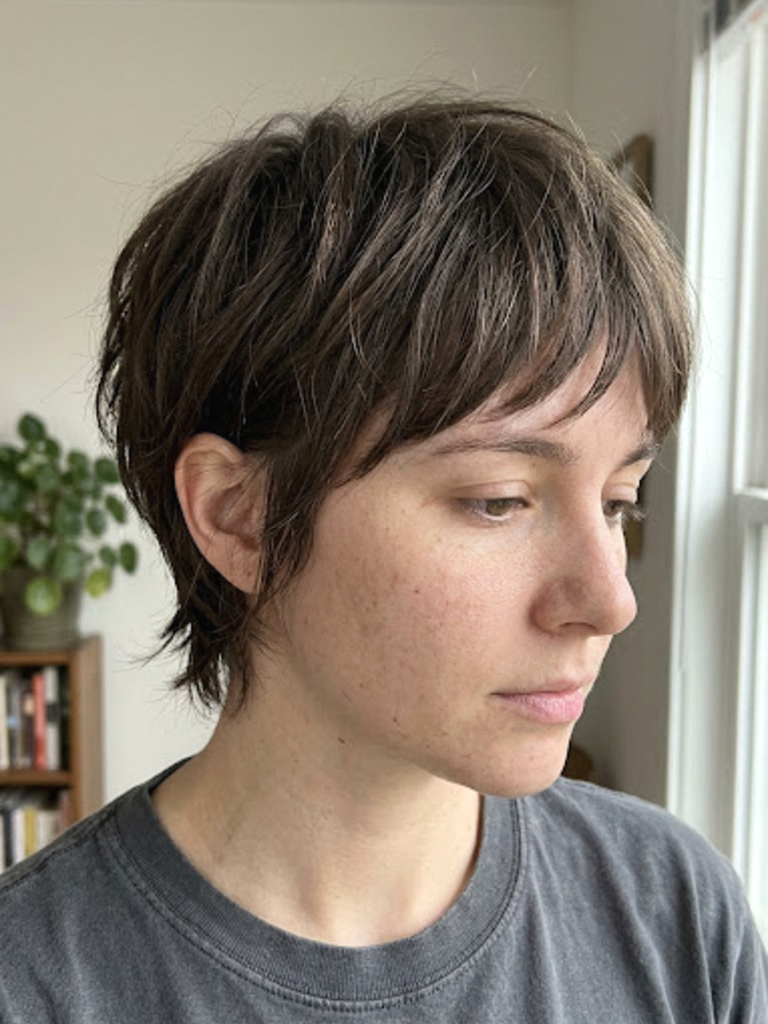
The Choppy Side-Fringe Pixie
Best for: Heart & oval faces, hiding a receding hairline
A choppy side-fringe pixie pairs short, piece-y layers with a longer fringe swept to one side, instead of a blunt fringe across the forehead. The angled fringe is doing double duty, since it covers thinning spots near the hairline while adding movement everywhere else.
This version suits heart and oval face shapes especially well, and the side-swept fringe is more forgiving to grow out than a straight-across bang. Expect your stylist to texturize heavily through the crown, since that’s where most of this cut’s volume actually comes from.
Pro Tips
- Style the fringe wet with a paddle brush, then finish with a blast of cool air to set it in place.
- A texturizing powder at the roots works faster than mousse and doesn’t leave any residue.
- Bring a photo of the exact fringe angle you want, “side-swept” means different lengths to different stylists.
Idea 15
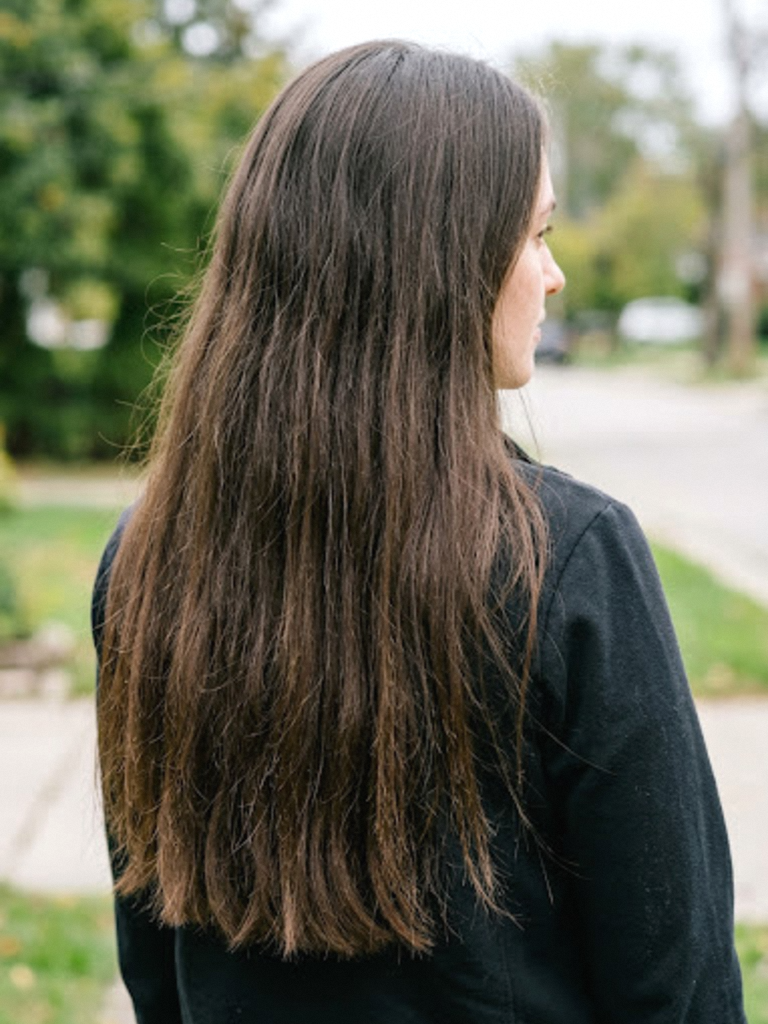
One-Length Long Hair
Best for: Anyone growing their hair out, all face shapes
One-length long hair means no layers at all, just a single clean line at the ends, cut straight across or very slightly rounded. It sounds almost too simple, but for thin fine hair that’s still long, this is genuinely one of the best haircuts for keeping maximum density at the ends.
Every layer you add removes weight, and weight is the one thing fine hair can’t spare once it gets past the shoulders. This cut suits every face shape since the length itself does the framing, and it’s the easiest option here if you’re mostly just trying to grow things out.
Pro Tips
- Get a trim every 10-12 weeks, not more, extra trims just remove the density you’re protecting.
- A weightless leave-in conditioner on the ends only keeps them from splitting without flattening the roots.
- Braid it overnight to cut down on tangling, fine hair this long snags easily while you sleep.
Idea 16
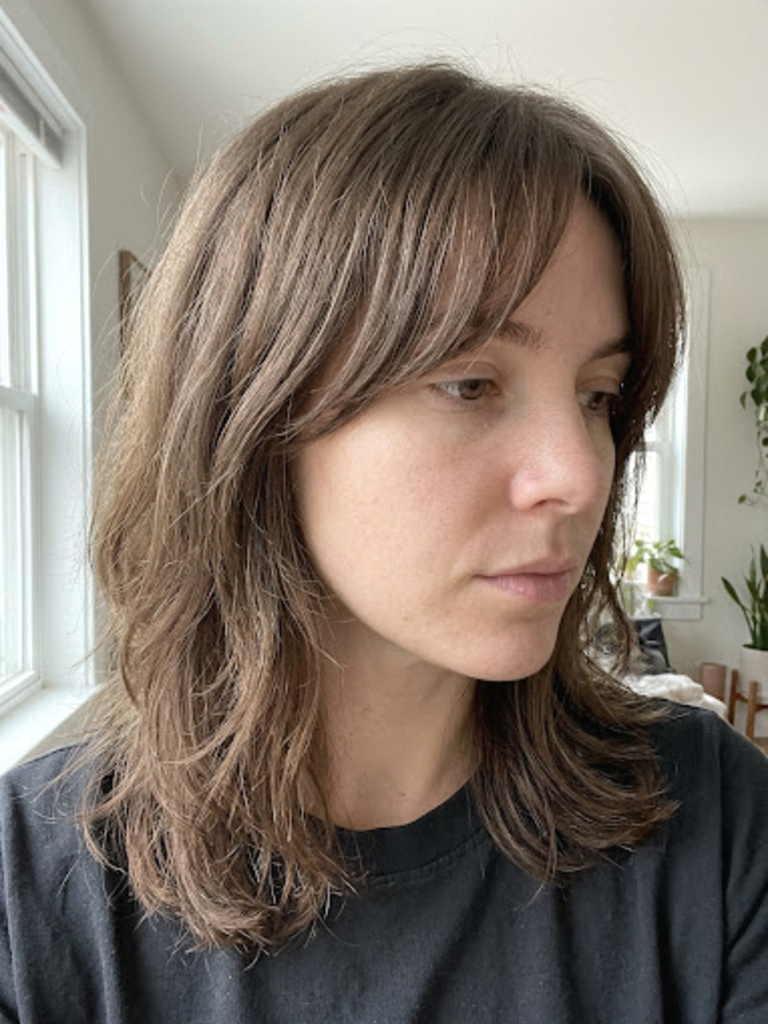
Curtain Bangs on Shoulder-Length Hair
Best for: All face shapes, especially those wanting to soften a strong brow
Curtain bangs on shoulder-length hair work the same magic as curtain bangs on a lob, parting at the center and sweeping outward, but the extra length below gives the whole look more weight to work with. It’s a softer, lower-commitment way to add face-framing volume to fine hair.
This combination plays especially well with a slight wave, since the bend echoes the curve of the bangs themselves. Ask for the bangs to be cut a little longer than you think you want, you can always trim them shorter, but you can’t add length back.
Pro Tips
- Clip the rest of your hair back while you round-brush just the bangs, it keeps your attention where it matters.
- A small amount of texturizing cream worked between your palms tames flyaways without stiffening the piece.
- If you wear glasses, ask for the bangs cut a touch longer so the frames don’t catch on them.
Idea 17
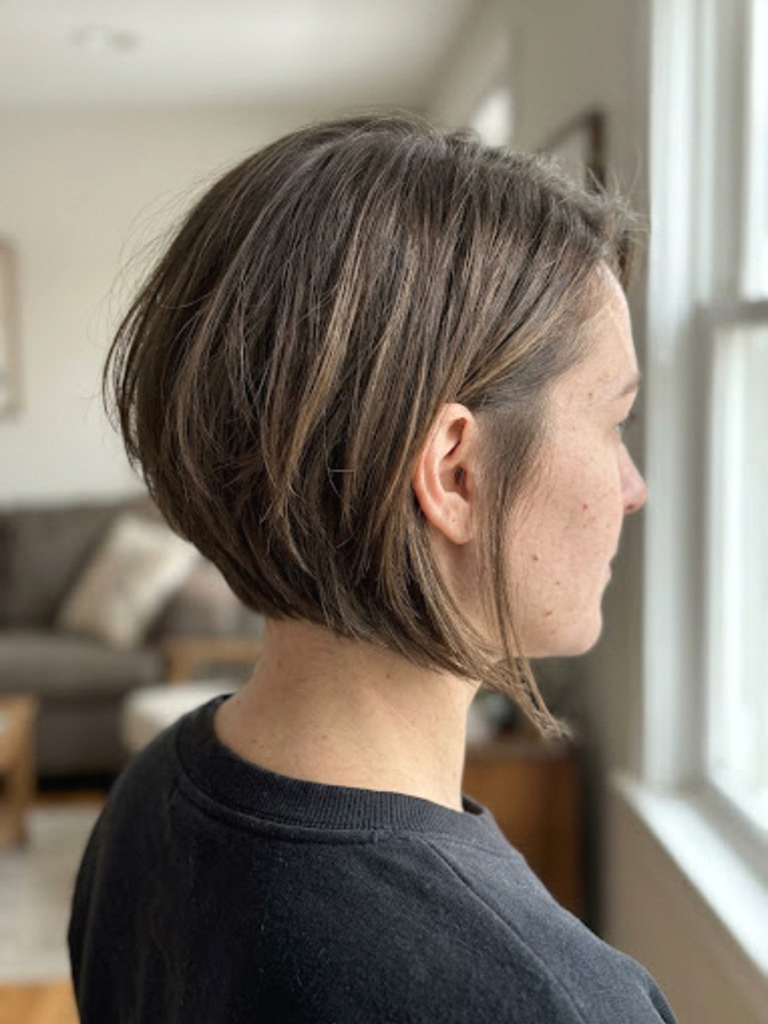
The Inverted Bob
Best for: Round & square faces
An inverted bob is stacked and shorter at the back, then gradually lengthens toward the front, creating a rounded, built-up silhouette at the crown. For thin fine hair, that stacking at the back is the entire point, it’s literally more layers of hair piled closer together.
This shape works particularly well on round and square faces because the angled front pieces soften the jawline. Ask your stylist about the degree of the stack, a steeper angle gives more height but needs more upkeep to maintain that same clean line at the back.
Pro Tips
- Sleep on your back the first night after cutting, it helps the stacked layers settle into shape.
- A volumizing mousse worked into the roots before blow-drying keeps the stack from collapsing by midday.
- Ask your stylist to “weight-reduce” the front panels if the length-to-back contrast ever feels too heavy.
Idea 18
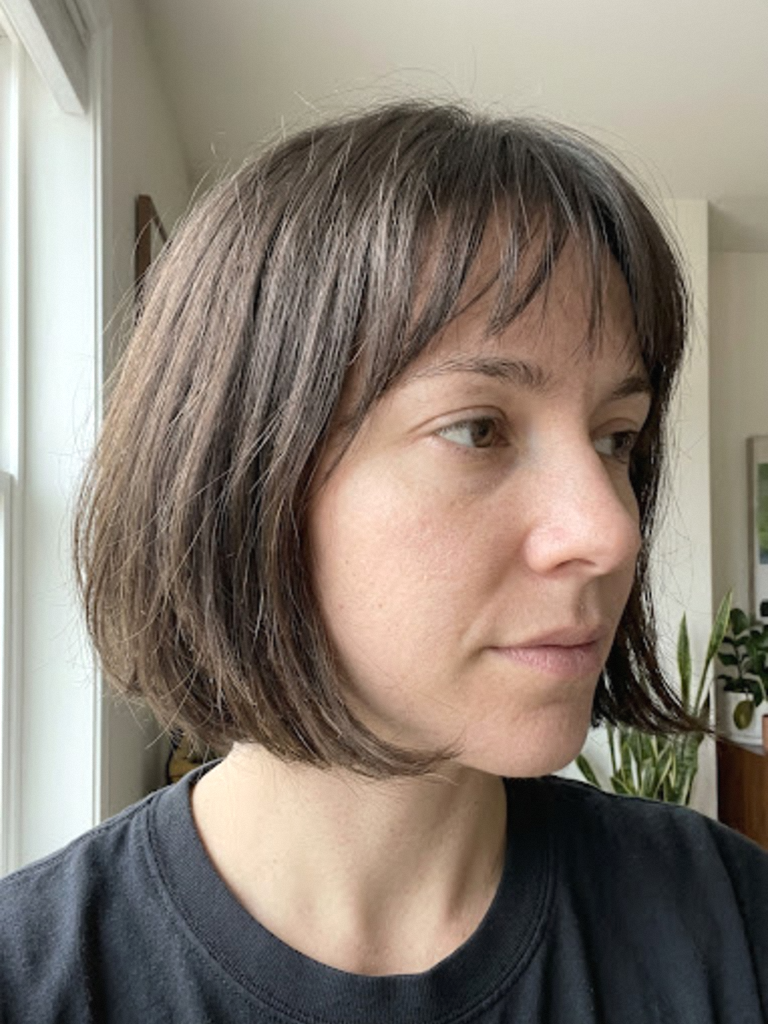
The Wispy-Bang Chin Bob
Best for: Oval & long faces
A wispy-bang chin bob pairs a classic chin-length bob with thin, feathered bangs instead of a full, blunt fringe. The wispy bangs are the key move here, since a heavy fringe on already-fine hair can look sparse fast, while thinner, feathered pieces look intentional at any density.
This combination suits oval and long face shapes well, and it shortens the appearance of the face just enough to balance out longer features. Ask for the bangs to be point-cut rather than blunt-cut, that’s what creates the feathered, see-through texture instead of a solid curtain.
Pro Tips
- Style bangs with a small round brush and low heat, high heat makes wispy bangs frizz instead of feather.
- A texturizing spray on dry bangs revives them between washes without a full restyle.
- Keep the bang trims frequent, every 3 weeks or so, wispy bangs grow out unevenly fast.
Idea 19
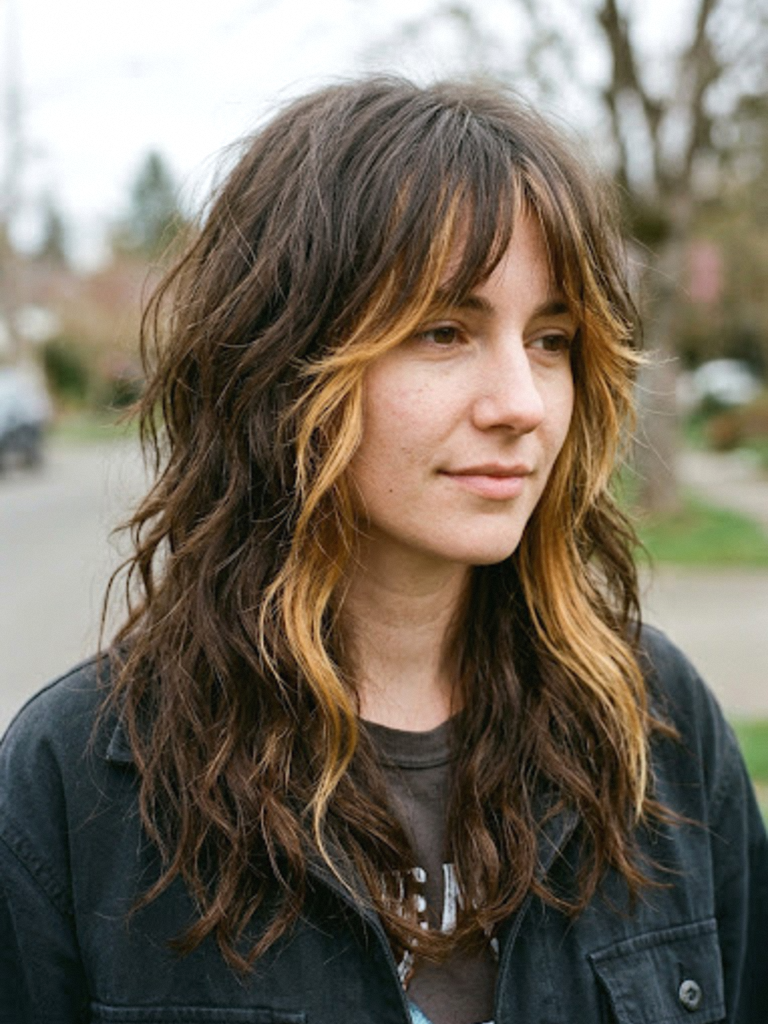
The Long Shag with Money Pieces
Best for: Oval & heart faces, hair that holds color well
A long shag layers face-framing pieces throughout longer hair, and adding money pieces, those brighter, face-framing highlight strands, pulls extra attention toward the layers that are doing the volumizing work. It’s a style choice as much as a cut, but the two work best together on fine hair.
The lighter strands catch more light than the rest of the hair, which visually separates the layers and makes the whole cut look more dimensional, not just lighter. This works especially well on oval and heart face shapes, and it’s a great compromise if you want long hair but also want it to look purposefully layered.
Pro Tips
- Ask your colorist to place money pieces starting right at the part line for the most impact.
- A diffuser on low heat brings out texture in the layers without frying the lightened strands.
- Deep-condition the highlighted pieces weekly, lightened fine hair dries out and looks even thinner if it’s damaged.
Idea 20
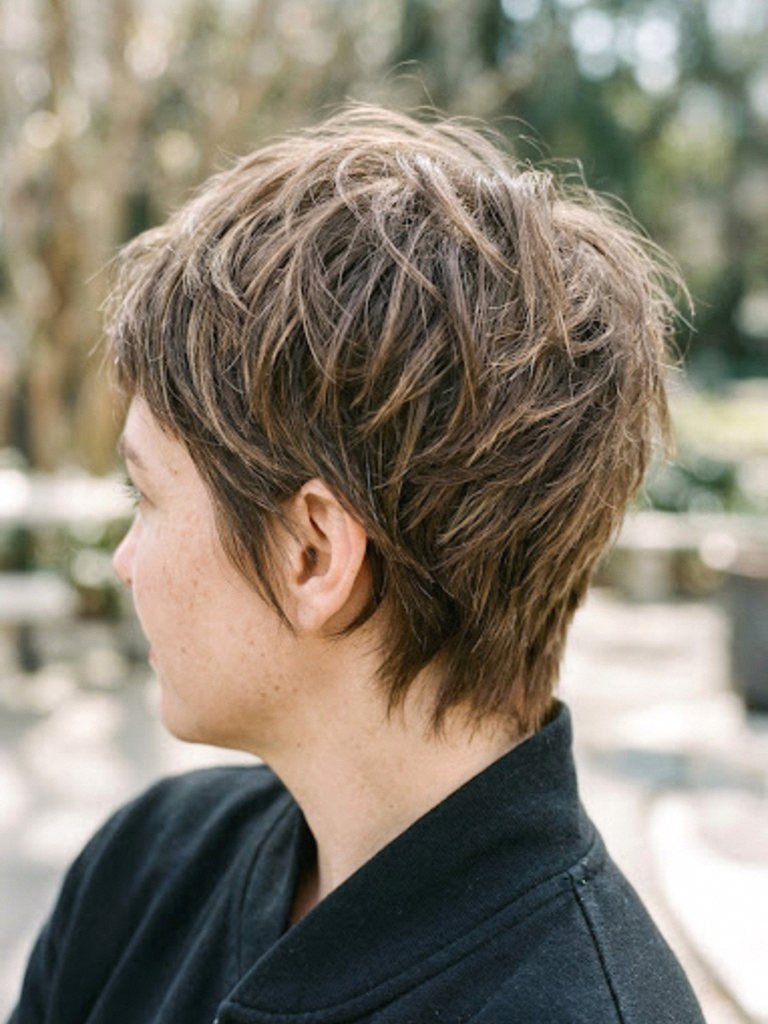
The Feathered Pixie
Best for: Oval & heart faces
A feathered pixie uses soft, tapered ends instead of the blunter lines of a classic pixie, which keeps the cut from looking severe on finer textures. Where a blunt pixie can look a little helmet-like on thin hair, the feathering breaks up the silhouette and adds softness around the face.
This cut flatters oval and heart face shapes especially well, since the feathered pieces can be directed to soften a pointed chin. It styles fast, a little texture cream rubbed between your palms and scrunched through damp hair gets you most of the way there.
Pro Tips
- Ask for feathering with thinning shears used sparingly, overdoing it can leave thin hair looking patchy.
- A cool shot from your blow-dryer at the end locks the volume in place for longer.
- This cut needs trims every 4-5 weeks to keep the feathered ends from growing out blunt.
Idea 21
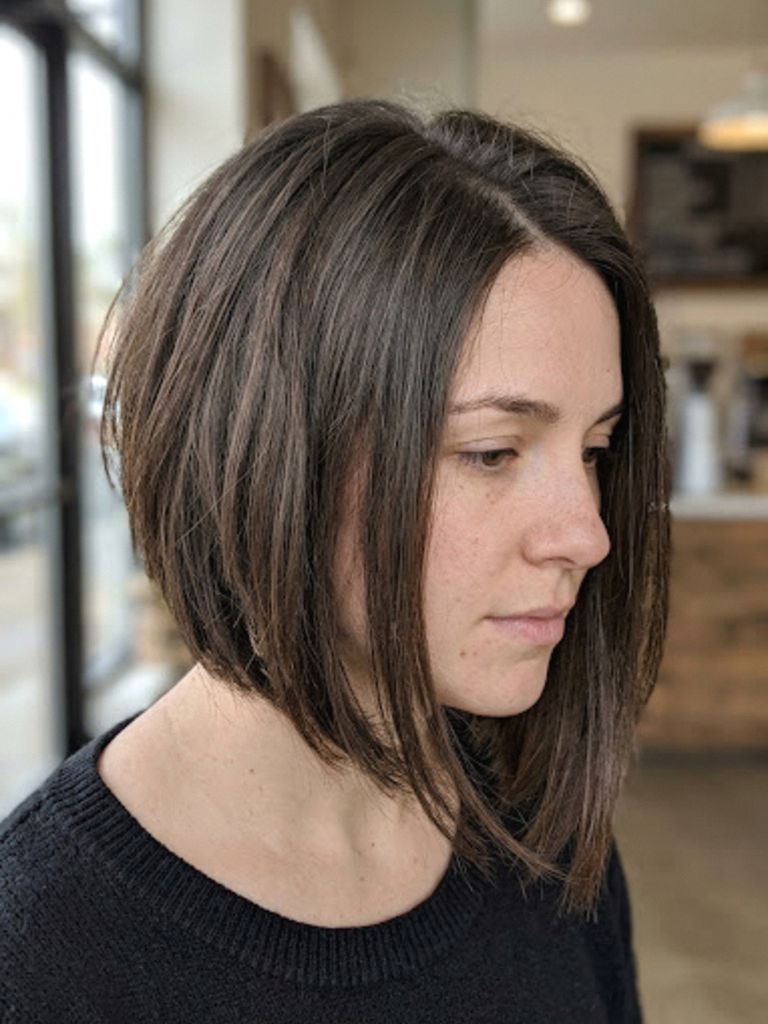
The Asymmetrical Bob
Best for: Round faces wanting an angular contrast
An asymmetrical bob is cut noticeably shorter on one side than the other, which creates a diagonal line that draws the eye along an angle instead of straight across. On thin fine hair, that diagonal line reads as more dynamic than a symmetrical cut of the same length would.
This is one of the more dramatic haircuts for thin hair on this list, and it suits round faces especially well, since the angle cuts across the widest part of the face. Talk to your stylist about how extreme you want the asymmetry, even a subtle half-inch difference changes the whole feel.
Pro Tips
- Start with a mild asymmetry if you’re nervous, you can always go more dramatic at your next appointment.
- Style with a flat iron bent slightly inward on the shorter side to keep both sides balanced.
- This cut shows regrowth unevenly, so plan on trims every 5-6 weeks to maintain the angle.
Idea 22
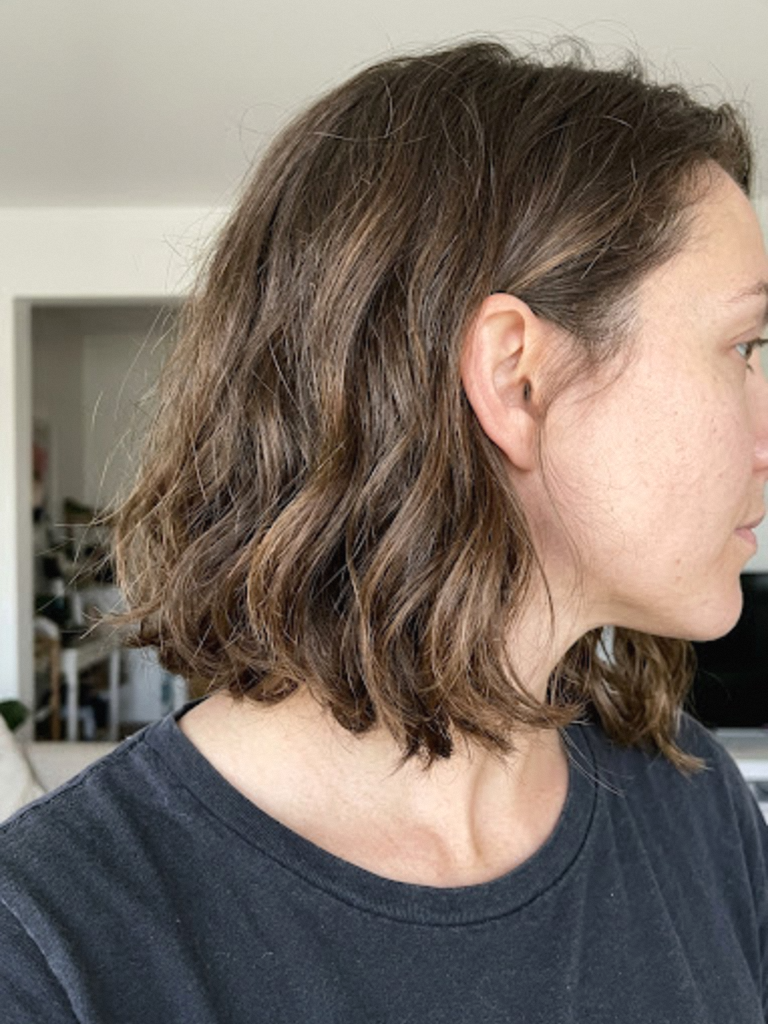
The Wavy Collarbone Lob
Best for: All face shapes, hair with natural wave
A wavy collarbone lob is cut to hit right at the collarbone and is styled to work with natural waves rather than against them. Texture is doing a lot of the heavy lifting for volume here, since every bend in a wave creates a little extra lift that straight hair doesn’t get for free.
If your hair has even a loose wave, this is one of the easiest haircuts for thin fine hair to style on a weekday morning. Ask for the ends to be cut with a slight texturizing finish so the waves have somewhere to separate instead of clumping into one solid piece.
Pro Tips
- Scrunch a lightweight curl cream into damp hair, then let it air-dry or diffuse on low heat.
- Avoid brushing dry waves, it breaks up the pattern, finger-comb instead.
- Sleep in a loose braid to wake up with waves intact instead of flat, slept-on hair.
Idea 23
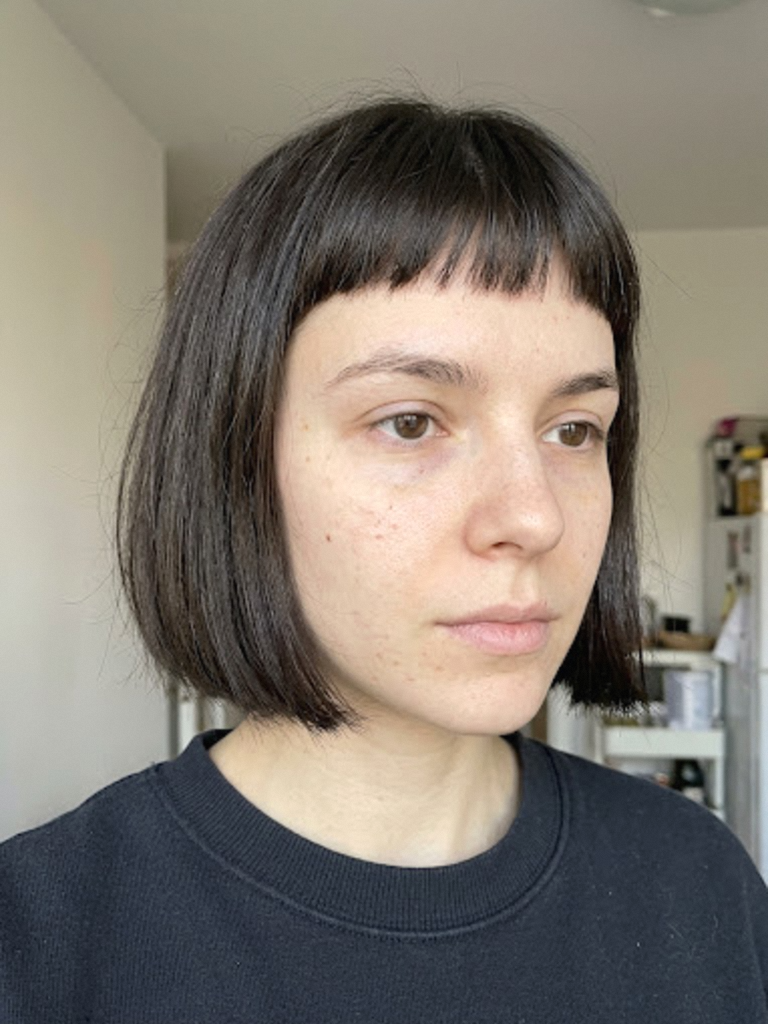
The Micro-Fringe Blunt Cut
Best for: Oval faces, those wanting a bold look
A micro-fringe sits high on the forehead, well above the brow, and pairs well with a blunt cut at any length since the short bangs become the main visual statement. It’s a bolder pick on this list, but it genuinely solves a specific thin-hair problem: a flat, receding-looking hairline.
The short length of a micro-fringe needs a healthy amount of density at the very front hairline to look intentional rather than sparse, so it’s worth asking your stylist for an honest opinion first. It pairs best with oval face shapes, since the fringe shortens a longer forehead.
Pro Tips
- Ask for a consultation only, with no commitment, before committing to this length of fringe.
- Style with a small round brush pointed down and in, for a soft curve rather than straight-across stiffness.
- Trim it yourself every 2 weeks, a micro-fringe grows into your eyes faster than you’d expect.
Idea 24
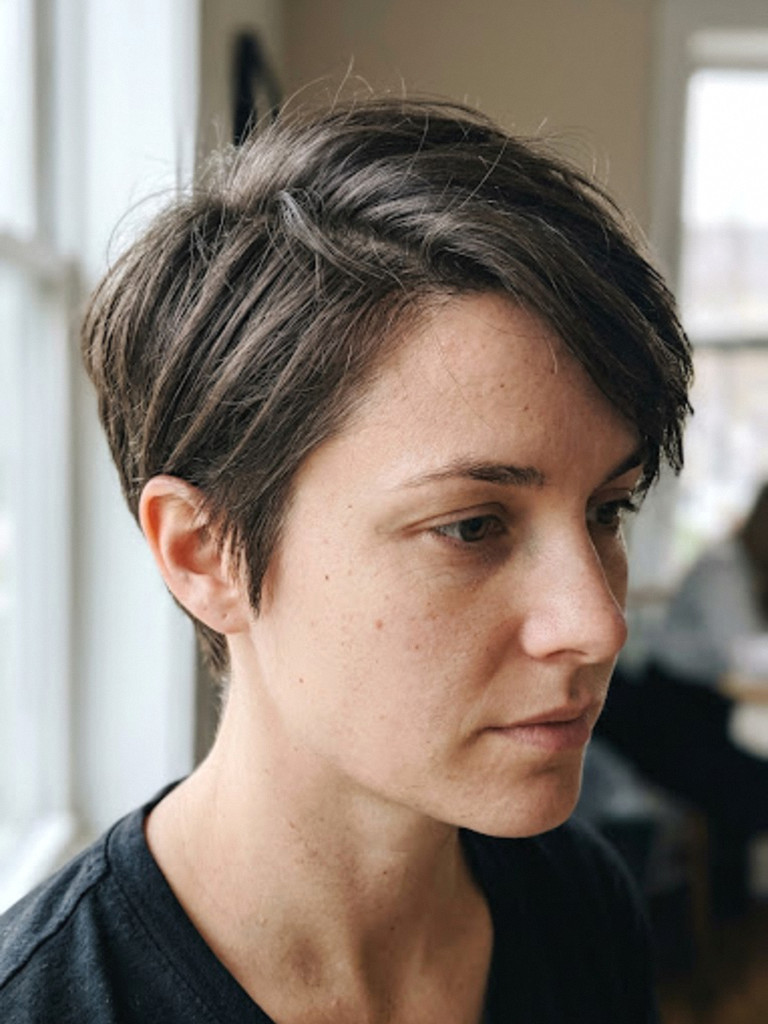
The Side-Swept Pixie
Best for: Square & heart faces
A side-swept pixie keeps length on top and directs it diagonally across the forehead instead of straight back, which adds visual width right where fine hair at the crown tends to look thinnest. It’s a softer, more wearable cousin of the choppy side-fringe pixie higher up this list.
This version suits square and heart face shapes, since the diagonal sweep breaks up strong angles at the forehead and temples. It styles with a round brush and a medium-hold cream, swept in one direction and set with a quick blast of cool air.
Pro Tips
- Use a flexible-hold product, stiff gels can make short, fine hair look sparse instead of full.
- Switch your sweep direction occasionally to keep the roots from training flat in one spot.
- This grows out into a longer side-fringe pixie, so it’s a flexible choice if you’re unsure about commitment.
Idea 25
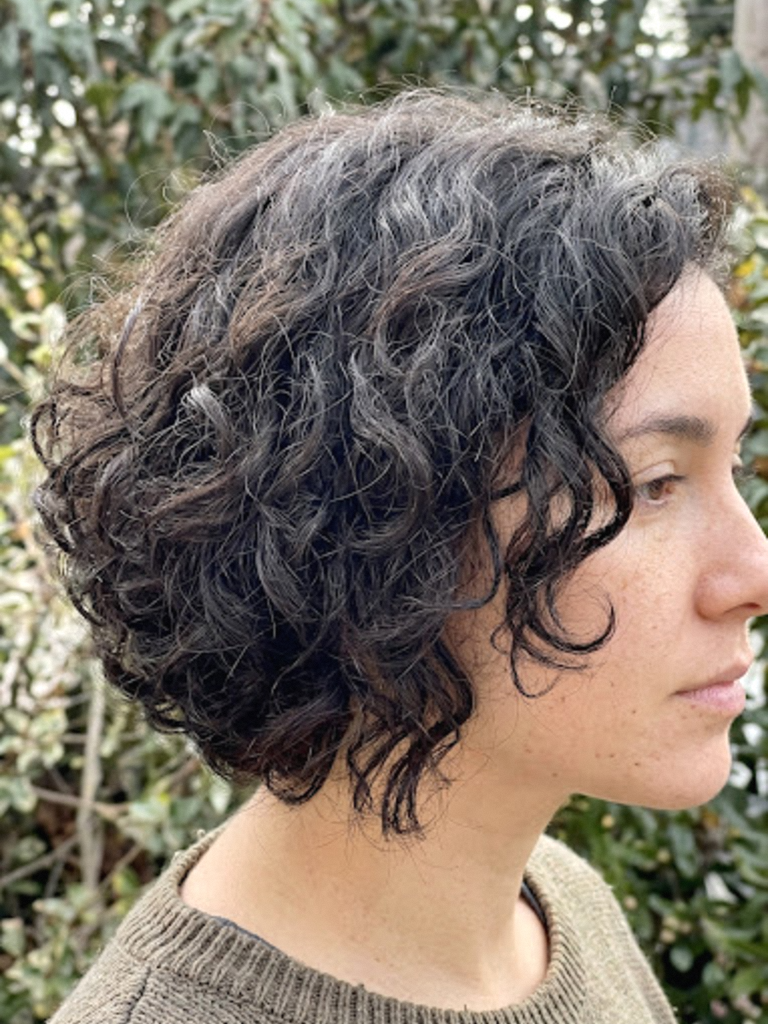
The Curly Bob
Best for: Naturally curly or coily fine hair
A curly bob is cut dry, curl by curl, rather than wet, since curls shrink up significantly once they dry and a wet cut can end up much shorter than planned. For fine, curly hair, this cut avoids the trap of adding too many layers, which makes curly fine hair look scraggly instead of full.
Ask specifically for a dry-cutting specialist if your salon offers one, this technique matters more for curly hair than almost any other factor on this list. A blunter perimeter keeps curls clumped together into fuller-looking ringlets instead of separating into thin, straggly pieces.
Pro Tips
- Never brush dry curls, it breaks the curl pattern and makes fine, curly hair look frizzy and thin.
- Apply a curl cream to soaking-wet hair and scrunch upward, don’t touch it again until fully dry.
- Sleep on a silk pillowcase, it cuts down on the friction that causes curls to tangle and break.
Idea 26
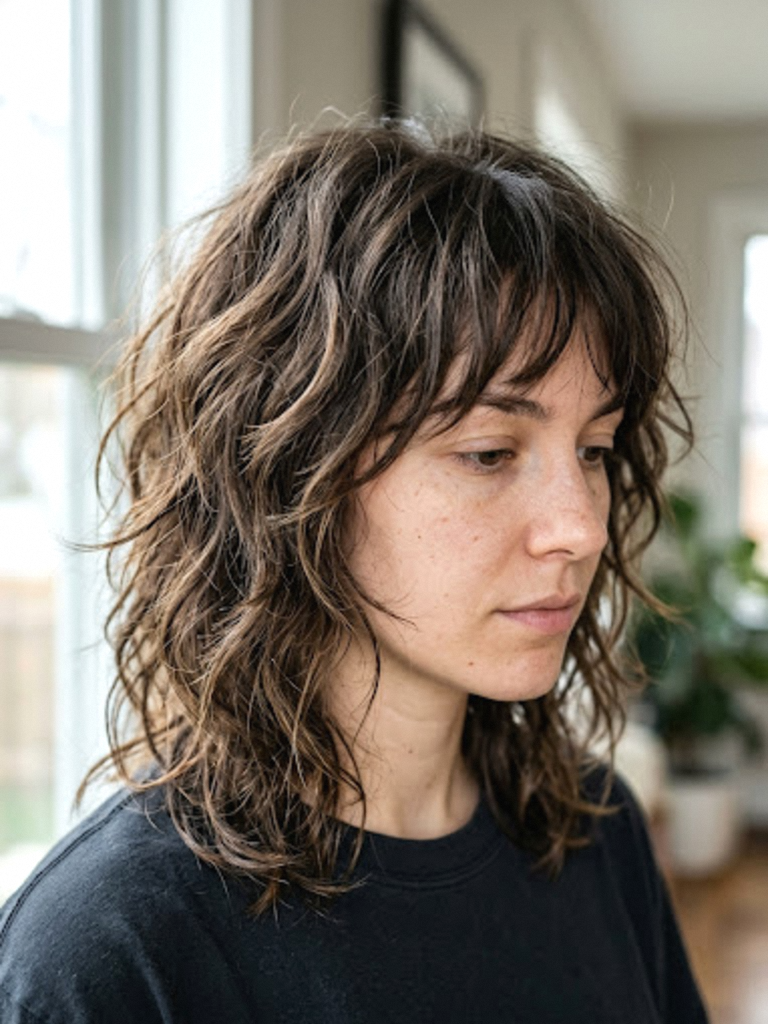
The Wavy Shag
Best for: Naturally wavy fine hair, oval & round faces
A wavy shag leans into natural texture with layers cut specifically to separate and define each wave instead of blending them into one smooth shape. For wavy, fine hair, this is a far better haircut than anything built around sleek, straight styling, since it works with your texture instead of fighting it.
The layers here are usually cut a bit longer and less choppy than a straight-hair shag would get, since fine, wavy hair doesn’t need as much thinning to move well. It suits oval and round faces, and it genuinely looks better the second or third day after washing.
Pro Tips
- Apply curl cream to damp hair and let it air-dry at least partway before touching it again.
- A diffuser on medium heat speeds up drying without disrupting the wave pattern.
- Refresh day-two waves with a spray bottle of water mixed with a little leave-in conditioner.
Idea 27
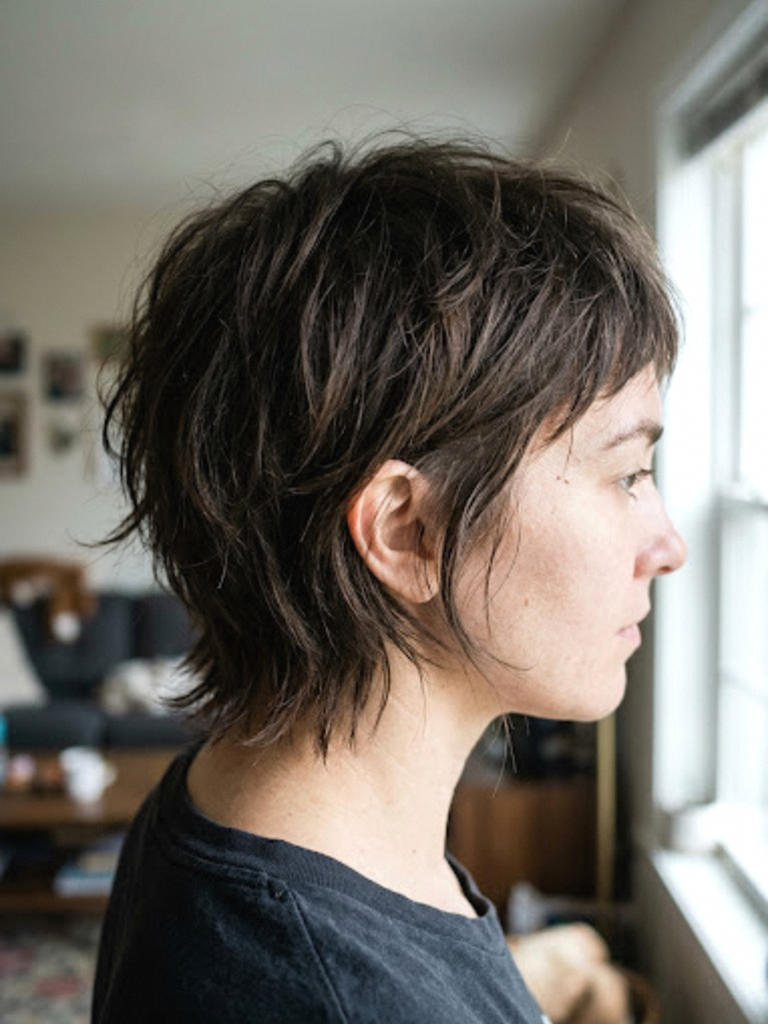
The Low-Maintenance Bixie
Best for: Busy mornings, square or oval faces
This is a bixie cut specifically simplified for speed, fewer choppy pieces up top, a cleaner line at the nape, and a style that holds up on dry shampoo alone. If you’ve read this whole list wondering which haircut for thin fine hair needs the least daily effort, this is probably it.
Ask your stylist to prioritize a shape that air-dries well over one that needs constant product and heat styling. It suits square and oval faces, and most people can get away with washing just twice a week once the cut settles into its natural fall.
Pro Tips
- Apply a small amount of paste to dry hair each morning, no blow-dryer required most days.
- Dry shampoo at the roots the night before cuts your morning routine down even further.
- Ask for a shape that looks good “air-dried” at your consultation, not just blow-dried in the salon chair.
Idea 28
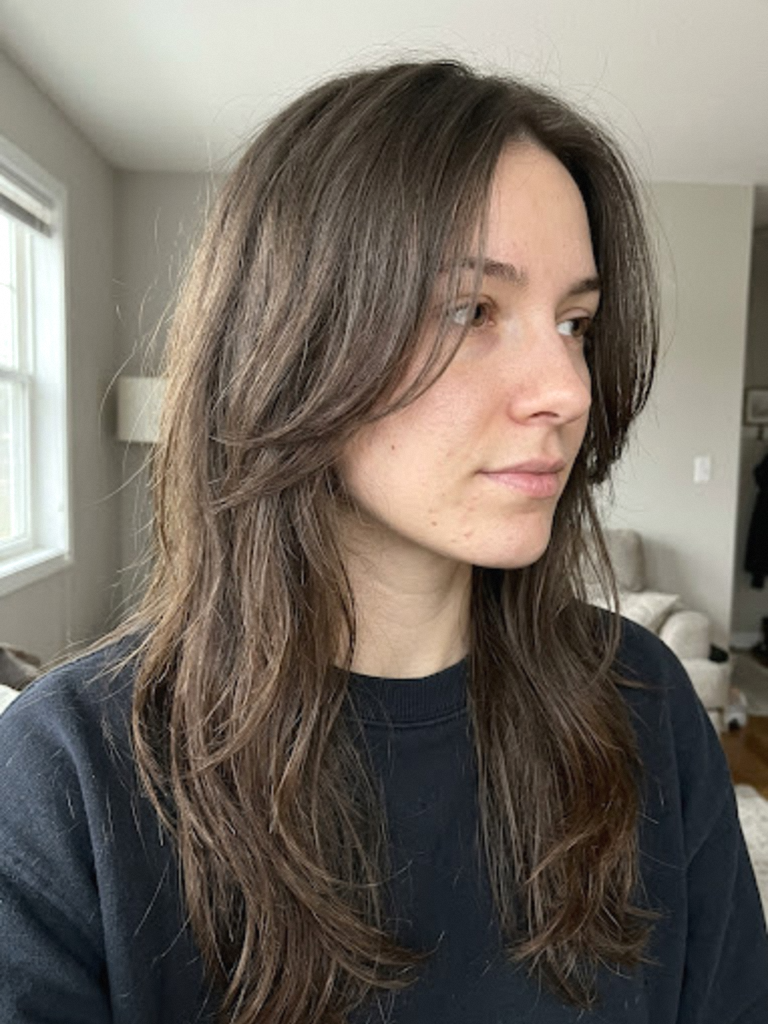
Face-Framing Layers on Long Hair
Best for: All face shapes, hair past the shoulders
Face-framing layers are cut only around the front of the face, leaving the rest of the length at one weight, which is a gentler option than a full shag for anyone with long, thin fine hair who isn’t ready for layers throughout. The front pieces do the volumizing work while the back stays dense.
This approach keeps as much length and weight as possible while still adding movement near your face, which is exactly where most people actually want it. It flatters every face shape, since the layers can be cut to start higher or lower depending on which features you want to soften.
Pro Tips
- Ask for the shortest layer to land at your cheekbone, not higher, shorter layers near long hair can look oddly separated.
- Curl just the face-framing pieces for an evening look without curling your whole head.
- A lightweight oil on the ends only prevents split ends without weighing down the layers up front.
Idea 29

The Short Shag (Over 50)
Best for: Women over 50, hair thinning with age
A short shag built for hair that’s thinning with age uses shorter, denser layers around the crown than a younger version of the same cut would get. Hair naturally gets finer with age for a lot of people, and this is one of the most reliable haircuts for thin hair over 50 because it builds density exactly where it’s typically lost first.
Ask your stylist to focus the layering around the top and crown rather than the ends, since that’s usually where volume loss shows up most after 50. This shape pairs well with a slightly warmer color, since contrast between your color and your scalp can also read as more or less volume.
Pro Tips
- A root-lifting mousse applied before blow-drying matters more here than any other product in your routine.
- Ask about a “volumizing” perm on the crown only if styling for lift every day feels like too much.
- Keep layers shorter around the crown and slightly longer at the ends for the fullest-looking result.
Idea 30
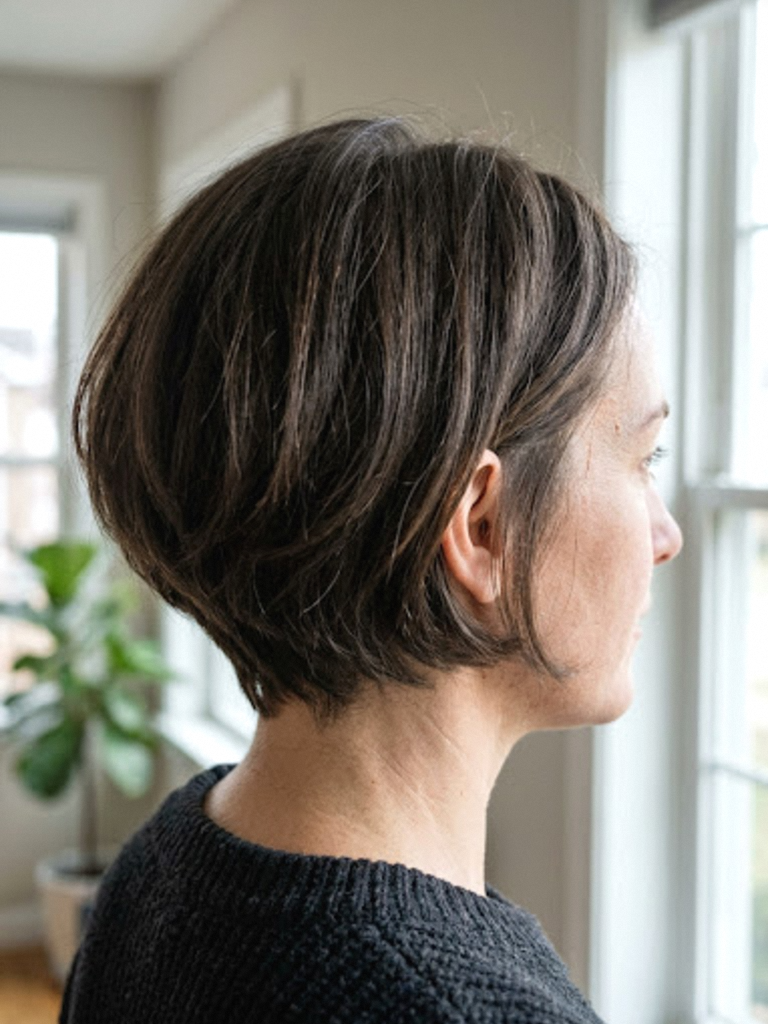
The Rounded Crown-Lift Bob
Best for: Thinning at the crown specifically
A rounded crown-lift bob is cut with extra internal layering concentrated right at the crown, rather than evenly through the whole head, which specifically targets the one spot where thinning often shows up first for a lot of people. Everywhere else, the cut stays close to one length for density.
This is a more targeted approach than a general layered bob, and it’s worth mentioning your specific concern area to your stylist by name rather than just asking for “volume” in general. It works for most face shapes, since the overall silhouette stays a classic, rounded bob.
Pro Tips
- Point to the exact spot that bothers you in the mirror during your consultation, specificity helps your stylist a lot.
- A volumizing powder tapped directly onto the crown does more than any spray applied to the whole head.
- Avoid flat-ironing the crown area specifically, heat styling there tends to undo the cut’s built-in lift.
Idea 31
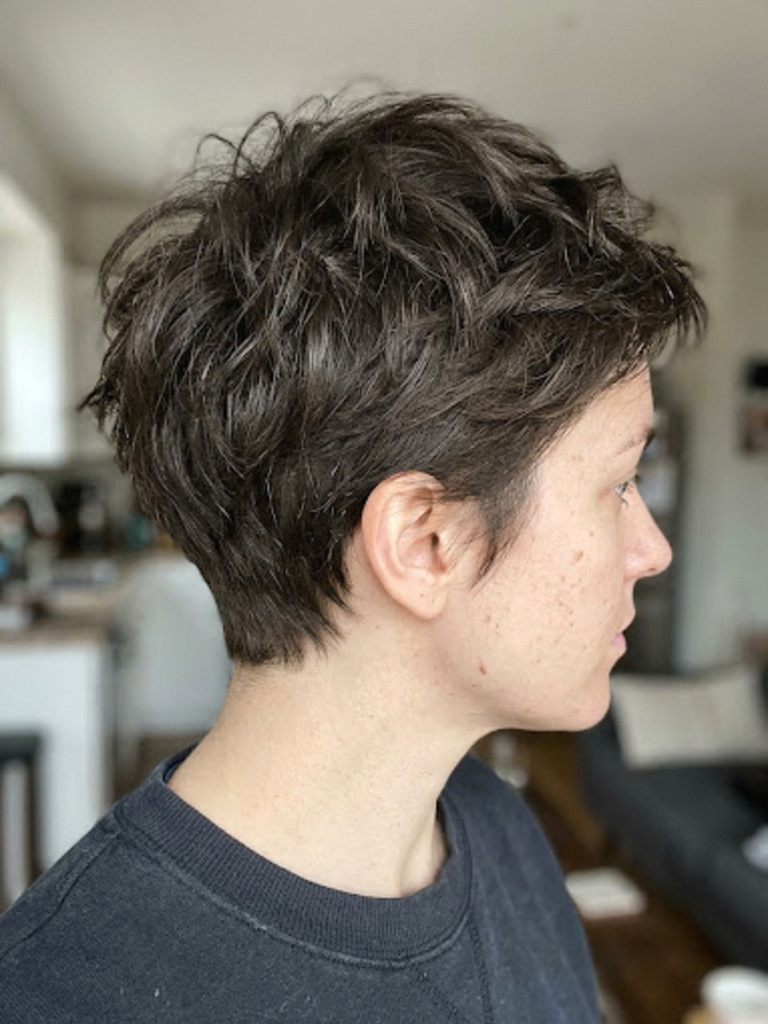
The Tapered Volume Pixie
Best for: Oval & round faces, very fine hair
A tapered volume pixie keeps noticeably more length and fullness at the crown than a standard pixie, while tapering down close at the neck and around the ears. The height at the crown is built in through the cut itself, not through styling, so it survives humidity and long days far better than a teased style would.
This is one of the more structured haircuts for thin fine hair on this list, and it works best on oval and round faces since the added height elongates the face slightly. It does need a skilled cut to get the internal layering right, so this isn’t the best pick for a rushed appointment.
Pro Tips
- Ask specifically for “weight left in at the crown” so your stylist doesn’t over-thin that area.
- Style by blow-drying the crown pieces upward and away from your head, not flat down.
- A light-hold spray, applied while the hair is still slightly damp, locks in the shape before it fully sets.
Idea 32
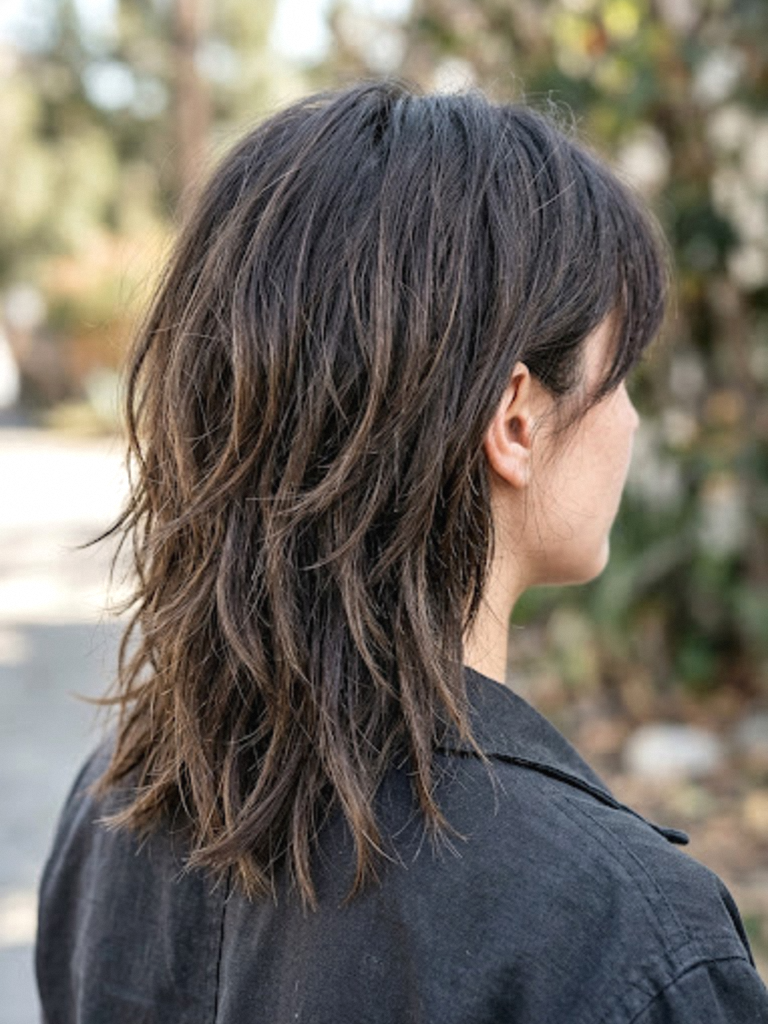
The Textured V-Layer Lob
Best for: Round & oval faces, hair with slight wave
A textured V-layer lob cuts the back section into a soft point, shaped like a V, with shorter layers cascading toward the front on either side. The V shape concentrates length at the center back, which adds the illusion of thickness exactly where a ponytail would reveal how fine your hair really is.
This cut rounds out the list nicely since it combines a trend-forward shape with a practical volume trick, the V-point does the same density-stacking job as a blunt bob, just with softer edges throughout. It suits round and oval faces, and a little wave brings out the V shape even more clearly.
Pro Tips
- Ask your stylist to keep the V-point subtle at first, it’s easier to deepen the angle later than to fix an overly dramatic one.
- Texturizing spray along the front layers keeps them from looking stiff next to the softer back point.
- This style photographs especially well from the back, worth knowing if that’s ever a styling goal for you.
My Choice
Thirty-two haircuts is a lot to scroll through, but that’s kind of the point. Thin, fine hair isn’t one single texture with one single fix, it’s a whole category, and the right cut depends on your face shape, your natural wave (or lack of one), and how much time you actually want to spend on your hair each morning. Pick two or three that caught your eye and bring them all to your consultation.
Save this post, pin your favorite cut, or just screenshot the ones you like and show them straight to your stylist, that’s honestly the fastest way to get the exact look you’re picturing. And if your first cut doesn’t nail it? Hair grows back, so there’s always a next appointment to get it right. 💇♀️
FAQ
What’s the difference between thin hair and fine hair?
Thin hair is about density, how many individual strands you have per square inch of scalp. Fine hair is about the diameter of each strand, meaning each hair is naturally thinner than average. You can have fine hair that’s also thick in volume, or thin hair made of coarser strands, though a lot of people deal with both at once.
What’s the best haircut length for thin, fine hair?
Shorter and medium lengths, anywhere from a pixie to a collarbone-length lob, generally hold volume better than hair past the shoulders. Length adds weight, and weight pulls hair flat, so the shorter the cut, the less your own hair has to fight against gravity. That said, one-length long hair with zero layers can still work if you’re not ready to cut it short.
Should you get bangs with thin, fine hair?
Yes, bangs are one of the more reliable ways to add visual volume to fine hair, especially curtain bangs or a soft, wispy fringe. Avoid a heavy, blunt fringe cut all one length, since it can look sparse fast on finer strands. A feathered or side-swept bang style tends to look fuller at any density.
What haircuts should you avoid with thin, fine hair?
Heavy, choppy layers all through long hair are usually the biggest mistake, since they strip out density without adding much in return. Razor cuts on very fine hair can also thin the ends further instead of adding texture. As a general rule, fewer and longer layers work better on fine hair than lots of short, choppy ones.
How often should you get a trim to keep thin, fine hair looking full?
Every 6 to 8 weeks is the standard recommendation for most of the cuts on this list, though shorter styles like a pixie or crop often need a trim every 4 weeks. Split ends make hair look thinner and more see-through than it actually is, so regular trims matter more for fine hair than for thicker textures.
