
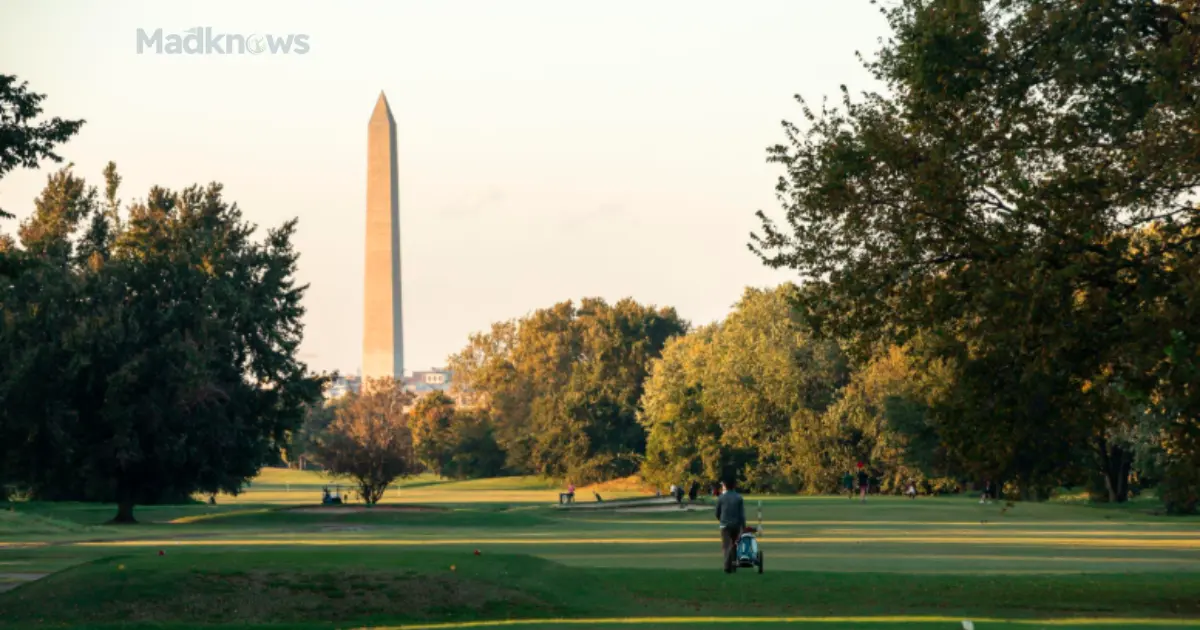
A proposed transformation of East Potomac Golf Links into a championship-level venue is raising questions about the future of affordable golf in Washington, D.C., as residents share memories of a course that has served generations of players.
WASHINGTON, D.C. — President Donald Trump’s proposed redevelopment of East Potomac Golf Links has prompted opposition from local golfers and park users, who fear that one of the nation’s capital’s most accessible recreational spaces could lose much of its traditional character.
Trump announced on October 18 that the historic public golf facility would close on November 15 for approximately 15 months while undergoing a major redesign.
The proposed transformation, developed with involvement from renowned golf architect Tom Fazio, aims to create a championship-standard course capable of hosting elite professional tournaments.
However, the project faces an ongoing federal legal challenge, and its final design, construction timetable and future pricing have not been established.
In a Washington Post feature published October 25, residents described the importance of East Potomac Park and Hains Point in their lives, highlighting the significance of a public landscape used by golfers, cyclists, runners and families.
What Would Change at East Potomac Golf Links?
East Potomac Golf Links currently offers several playing options designed to accommodate different abilities.
The facility includes the 18-hole Blue Course, nine-hole White Course and nine-hole par-three Red Course, alongside a driving range, practice facilities and historic miniature golf.
According to Washington Post reporting, the course hosted approximately 124,500 rounds in 2025, making it the Washington region’s busiest public golf facility.
Trump’s proposed redevelopment would replace the existing courses with a single 18-hole championship layout, supported by redesigned practice facilities and a new clubhouse.
The president has said the new course would remain publicly accessible and could accommodate major competitions, including events such as the U.S. Open and Ryder Cup.
However, neither tournament has been awarded to the proposed facility.
The future cost of playing East Potomac also remains unknown.
That uncertainty has concerned golfers who currently use the facility as an affordable alternative to private clubs and more expensive resort courses.
Why Local Golfers Want to Preserve East Potomac
For many Washington residents, East Potomac is more than a place to play golf.
The course has introduced generations of beginners to the sport while providing experienced players with accessible practice and competition.
In its October 25 feature, The Washington Post collected personal accounts from people whose memories stretch across several decades.
One golfer described returning to the sport at East Potomac during the COVID-19 pandemic because its nine-hole course was convenient and affordable.
Another recalled learning to play there without the pressure often associated with more exclusive golf facilities.
Other residents remembered family outings, running events, fishing trips and cherry blossom visits.
Their experiences reveal why the redevelopment has generated concern beyond the golfing community.
The design released alongside Trump’s announcement appears to remove Ohio Drive, a scenic road around Hains Point widely used by cyclists and runners.
The rendering also raises questions about the future of a grove of cherry trees and the park’s historic miniature golf course.
These changes have not been confirmed as elements of a completed, approved construction plan.
East Potomac’s History Extends Beyond Golf
East Potomac has an important place in the history of American public golf.
The course opened in 1920, with its early layout designed by prominent architect Walter J. Travis.
It formed part of a wider effort to make recreation available to Washington residents who could not afford private club memberships.
However, that history also includes racial segregation.
In June 1941, three African American golfers — Asa Williams, George Williams and Cecil R. Shamwell — challenged discriminatory restrictions by playing a full round at East Potomac.
The protest contributed to decisions that expanded access to federally operated golf facilities.
The National Park Service recognizes the course’s significance in the history of recreational access and civil rights.
That legacy makes the current debate particularly important.
Supporters of the redevelopment see an opportunity to create a modern championship facility, while opponents question whether a more ambitious design could reduce opportunities for everyday golfers.
Federal Judge Temporarily Blocks Further Tree Removal
The dispute over East Potomac’s future has already reached federal court.
The D.C. Preservation League and two local golfers have challenged the administration’s approach to the property.
The legal proceedings intensified after National Park Service crews removed more than 400 trees from the course in October.
U.S. District Judge Ana C. Reyes subsequently issued an order preventing further tree cutting through October 26 and requiring advance notice before certain irreversible changes.
Government officials have maintained that the removal work was associated with historic landscape restoration rather than implementation of the president’s proposed championship redesign.
The administration has also argued that the National Park Service has not completed its review and that no final agency action has been taken on the broader redevelopment proposal.
The plaintiffs dispute aspects of the government’s approach and have sought further court protection.
The legal proceedings therefore remain important to determining what work can move forward and under what conditions.
Can a Championship Course Remain Affordable?
One of the central questions is whether East Potomac can become a championship-level venue without losing its accessibility.
A redesigned course could potentially improve playing conditions, modernize facilities and attract greater attention to Washington golf.
However, replacing the existing 36-hole operation with a single championship course could also affect the number and variety of playing opportunities available.
The current facility accommodates beginners, experienced golfers and people seeking shorter rounds.
A single 18-hole layout would offer a different recreational model.
Whether that change would lead to higher prices or fewer affordable tee times remains uncertain because future operating arrangements have not been announced.
Trump has stated that the redeveloped course would be open to the public, but that commitment does not yet establish how much golfers would pay or how the facility would be managed.
What Happens Next for East Potomac Golf Links?
The next important stage is the continuation of federal court proceedings, with the existing restriction on additional tree removal scheduled to remain in effect through October 26.
The administration’s announced November 15 closure date also approaches, although the legal challenge and unfinished review process create uncertainty over whether construction can begin as proposed.
For Washington golfers, the issue is not simply whether East Potomac should be renovated.
It is whether the city can retain the affordability, historic character and variety of recreational opportunities that have defined the property for generations.
The October 25 Washington Post feature illustrates how deeply those experiences are connected to the community.
The eventual outcome will depend on legal decisions, the development of a final plan and the rules governing future public access.
Until those matters are resolved, the future of East Potomac Golf Links remains uncertain.