
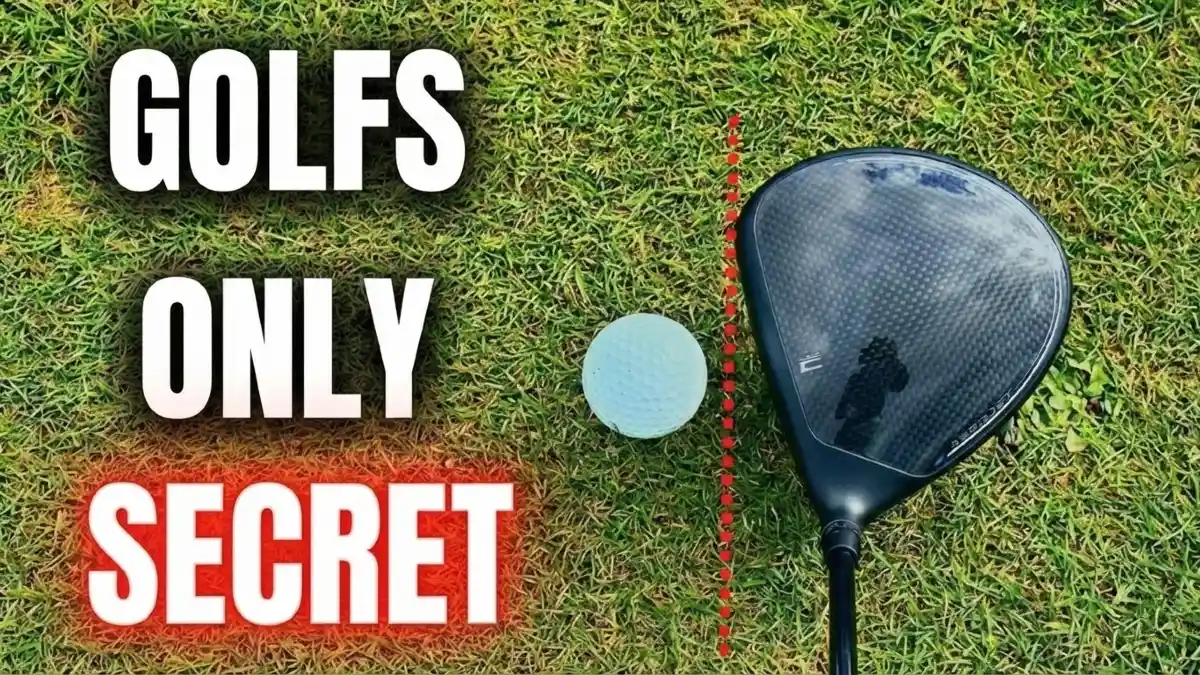
100 percent of golfers who master this one counterintuitive move play their best golf ever. Many players swing out of their shoes but still lose distance and slice the ball into the woods.
Their hands and clubhead move at the exact same speed through impact. This ruins any chance for real power and forces the clubface wide open.
AlexElliotGolf explains that players must slow their hands down to speed the club up. This guide reveals a proven drill to square the clubface and perfect the golf release.
The Speed Trap: Why Fast Hands Ruin The Golf Swing

Have golfers ever recorded their swing and noticed the lead elbow popping out? This creates a flawed chicken wing motion. The lead arm, elbow, and clubhead move in a straight line through impact. This position is a massive speed trap.
Many amateur slicers have hands moving way too fast at the exact moment of impact. Matching hand speed to clubhead speed destroys power completely.
Golfers who drag the handle forward prevent the clubface from rotating naturally. This mistake results in an open face and a weak slice.
To achieve a proper golf release, the hands must actively slow down. This braking action allows the clubhead to pass the hands. Hand speed must be significantly lower than clubhead speed at impact.
This single mechanical change helps increase clubhead speed dramatically. Most players think swinging their arms faster creates more distance. That common thought is completely wrong.
True power comes from slowing the hands down so the clubhead can whip through the ball. The arms should remain fully extended. The trail wrist stays flexed. The lead wrist becomes flat or perfectly bowed.
Now that players know why the chicken wing destroys their speed, they can look at the science of how to fix it.
The Science Of The Whip: The Golf Kinematic Sequence
Does the golf swing feel like hard work with no reward? The secret lies in the Kinematic Sequence. This is simply the chain reaction of power. Energy transfers from the pelvis to the chest, then to the arms, and finally to the club.
For maximum power, the hands must reach peak speed and then decelerate right before impact. This rapid deceleration acts like slamming the brakes in a car so the passenger flies forward. It creates a massive whip effect.
This whip effect causes a huge surge in speed. It also naturally closes the face.
The Release Factor
-
Male Pros: RF 5.0
Professional male golfers average a Release Factor of 5.0. Their clubhead moves 5 times faster than their hands at impact.
-
Female Pros: RF 4.8
Professional female golfers demonstrate nearly identical elite efficiency, averaging a massive Release Factor of 4.8.
-
The Braking Effect
Elite players actually decelerate their hands by roughly 6 mph just before impact, transferring energy down the shaft.
-
Maximum Velocity
This sudden and violent braking motion is exactly what shoots the clubhead speed up to an explosive 110 mph or more.
Here is what the data from 3D motion capture systems like ENSO and Sportsbox AI proves:
- Professional male golfers average a Release Factor of 5.0.
- This means their clubhead moves 5 times faster than their hands at impact.
- Professional female golfers average a Release Factor of 4.8.
- Elite players actually decelerate their hands by roughly 6 mph just before impact.
- This sudden braking shoots the clubhead speed up to 110 mph or more.
Knowing this golf kinematic sequence is half the battle. Amateurs try to pull the club through the ball. Professionals let the clubhead release past their hands. It is time to build this exact muscle memory with Stage 1.
Stage 1: The Plate Hold Arm Rotation Drill
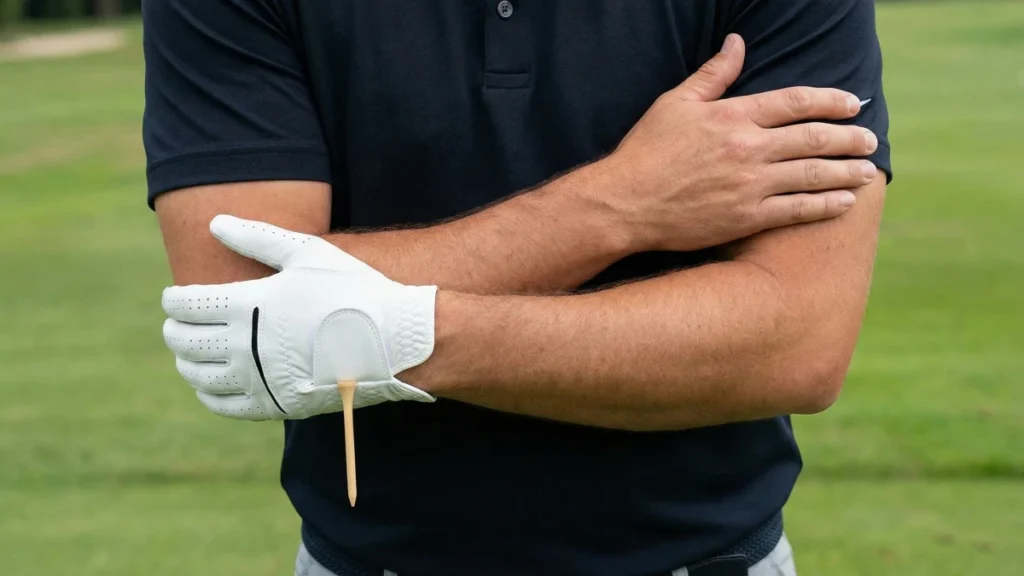
How exactly should the lead arm move through impact? This first stage fixes the flawed position where the palm faces the sky. Ninety percent of slicers suffer from that exact problem.
- Put a standard golf tee peg in the back of the lead glove for a clear visual reference.
- Place the trail hand on the lead bicep to fully isolate the lead arm.
- Rotate the lead arm so the tee peg points straight to the ground.
This motion simulates holding a heavy plate against the side of the body. Golfers must feel this specific physical sensation in their lead bicep and forearm.
When the tee peg points away, the hands and club speed are too closely matched. Pointing the tee down helps square the clubface properly. Getting this strange feeling right sets up the next stage perfectly.
Stage 2: The One Handed Speed Drill
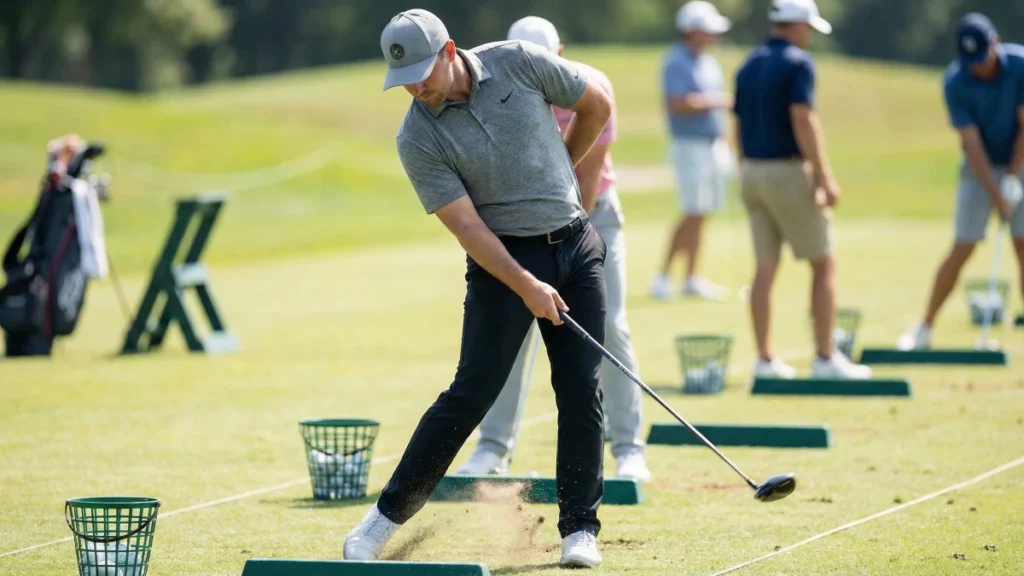
Are players ready to feel real speed without using their body? This next drill isolates the release motion entirely.
- Put both feet closely together to remove all lower body movement.
- Take smooth practice swings using only the lead hand.
- Listen for a loud swoosh sound directly at the bottom of the swing arc.
This loud sound proves the clubhead is moving significantly faster than the hand. The heavy weight of the club naturally forces the wrist into proper extension.
This extension squares the face without any conscious manipulation by the golfer. Many players will feel a complete lack of control at first. They must embrace this strange new feeling.
Letting the club release freely actually provides much more control over the final ball flight. This simple drill is the absolute fastest way to increase clubhead speed. Master this swoosh sound before moving to the final stage.
Stage 3: The Glove Logo Finish

What is the best way to take this new feeling to the actual golf course? It is time to hit real golf balls.
- Keep the tee peg in the glove and set up to a golf ball.
- Focus entirely on the final follow through position instead of looking at the ball.
- Swing smoothly and stop the club completely at shoulder height.
At this strict finishing position, the tee peg and the glove logo must point behind the golfer or down to the ground. They must never point up at the bright sky.
Forcing this exact finish guarantees a proper golf release. It proves the hands successfully slowed down. It also ensures golfers square the clubface perfectly right through the impact zone.
Here is the stripped down, highly concise version of the table:
| Stage | Goal | Action Steps | Result |
| 1: Plate Hold | Square the clubface. | 1. Put a tee in the back of the lead glove. 2. Put the trail hand on the lead bicep. 3. Rotate the lead arm so the tee points down. | Fixes the open palm. Feels like holding a heavy plate. |
| 2: One Handed Speed | Make the clubhead swing faster than the hands. | 1. Put both feet close together. 2. Take practice swings using only the lead hand. 3. Listen for a loud swoosh sound at the bottom. | The wrist extends naturally. The club releases freely for maximum speed. |
| 3: Glove Logo Finish | Transfer the correct release to real golf shots. | 1. Set up to a ball with the tee still in the glove. 2. Swing and stop the club completely at shoulder height. | The tee and glove logo point down or behind you. This guarantees a proper release. |
Conclusion
To play great golf, hand speed must always be slower than clubhead speed. Decelerating the hands at the perfect moment releases the club automatically. This chain reaction generates maximum speed and completely eliminates the weak slice. Swinging the arms faster will only ruin the golf swing.
Grab a tee peg and head to the driving range today. Run through this simple three stage drill. Practice the one handed swoosh until it feels completely natural. Then drop a comment below with how many yards were gained on the driver today! This is the absolute best way to square the clubface.